


Marvel Rivals Blood Hunt Gear Guide: Enhancement, Refining, Dew of Insight Refunds, and Upgrade Priorities
Learn how Blood Hunt gear enhancement, refining, Dew of Insight, and upgrade priorities work in Marvel Rivals after the July 23 update.
The July 23 update gives Marvel Rivals Blood Hunt players something the mode urgently needed: more control over progression. Before the patch, a long session could produce a warehouse of gear without producing the one combination of useful stats a hero needed. Enhancement and refining do not remove random drops, but they change the question from “Did the perfect item drop?” to “Is this item close enough to become part of a real build?”
That distinction matters because Blood Hunt is now scheduled to remain available until October 9, 2026, at 09:00 UTC. The Double XP period lasts until October 5 at the same time. With Nightmare expanded to Floor 300, gear is no longer a short event-side distraction. It is a progression system that rewards selecting a direction, improving near-complete pieces, and refusing to invest in attractive gear that does not serve the hero's actual combat plan.
This guide focuses on decisions rather than a universal tier list. Blood Hunt heroes do not all value the same effects, and a perfect-looking stat can be useless if it does not interact with the ability that carries the build.
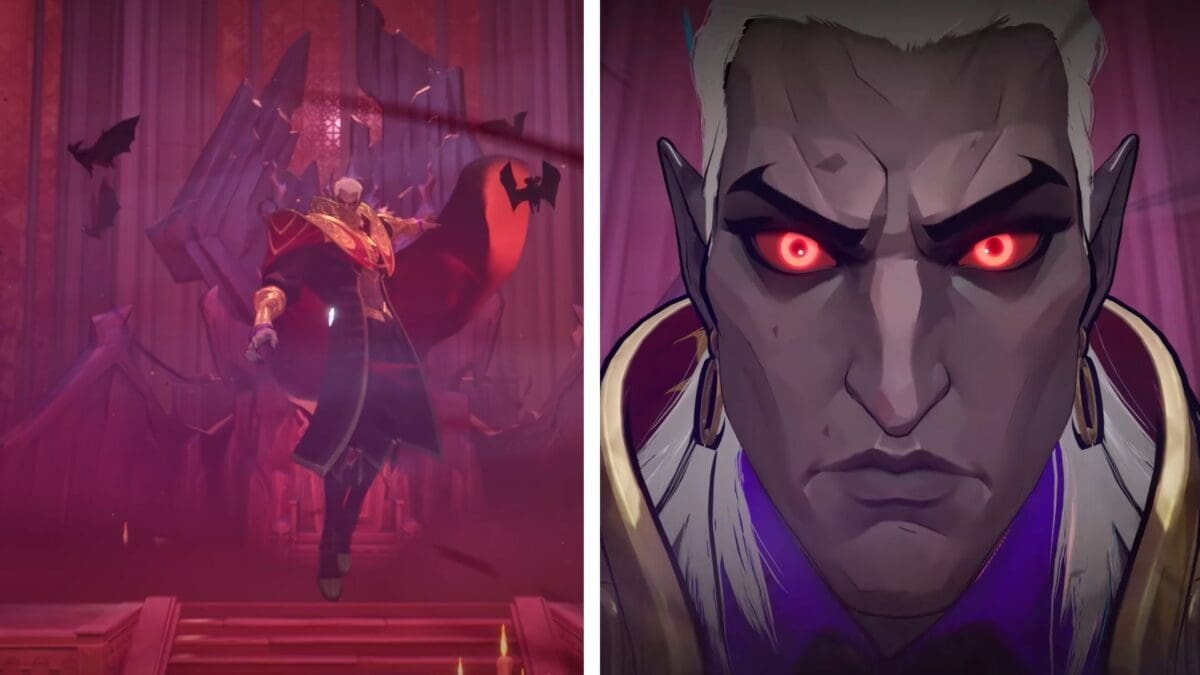
What Changed on July 23
The patch introduced four connected changes:
Gear Enhancement raises the value of existing gear and unlocks higher stat bonuses.
Gear Refining rerolls a chosen stat so a nearly useful item can better match a custom hero build.
Dew of Insight can drop from enemies and grants an immediate burst of EX to a hero selected by the player.
Nightmare now extends to Floor 300, with 100 Units awarded for clearing Floor 260 with each hero, limited to one reward per hero.
These additions change both the floor and ceiling of progression. Enhancement makes a good item stronger. Refining can repair one weak part of an otherwise promising item. Dew of Insight reduces the friction of raising a hero that has fallen behind. The extra Nightmare floors then provide a place where those improvements matter.
The systems should not be treated independently. A refined item still needs enough overall quality to justify enhancement, and a high-level hero still needs a coherent set of gear to use that experience effectively.
Start With the Four Gear Slots
Blood Hunt builds use four equipment positions: Weapon, Armor, Accessory, and Exclusive gear. It is tempting to compare every new drop with the currently equipped item by looking at one large number, but each slot should be judged by the job it performs in the build.
Weapon gear usually deserves attention when damage output is the limiting factor. Armor is more valuable when a hero fails because of incoming damage, poor sustain, or an inability to remain active during dangerous waves. Accessories often provide flexible supporting effects. Exclusive gear can define how a particular hero's Blood Hunt kit functions and may deserve priority even when another item displays stronger generic bonuses.
Ask three questions for every slot:
What ability or mechanic produces most of this hero's successful clears?
What currently stops the build from progressing: damage, survival, uptime, control, or consistency?
Does the item solve that problem directly, or does it merely have a high rarity and several unrelated bonuses?
A piece can be powerful in isolation and still be wrong for the build. Gear evaluation begins with the hero's win condition, not the color of the drop.
Enhancement and Refining Have Different Jobs
Enhancement and refining are related, but they should not be used for the same purpose.
Enhancement is for increasing the strength of a piece that already belongs in the build. If the gear has a clear role, supports the hero's primary loop, and is unlikely to be replaced immediately, enhancement turns that established value into larger bonuses.
Refining is for correcting a specific weakness. It is most useful when an item is close to being excellent but contains a stat that contributes little to the intended setup. The player chooses the stat to reroll, creating a controlled way to improve the item's fit without waiting for the entire combination to drop again.
A simple decision rule works well:
Good identity, good stats: enhance.
Good identity, one poor stat: consider refining, then enhance if the result completes the piece.
Wrong identity, high rarity: keep temporarily or recycle according to your account needs, but do not invest heavily.
Several poor stats: continue farming instead of trying to rescue the item.
Refining should not become a justification for keeping everything. It provides control over one problem, not permission to rebuild a fundamentally mismatched piece from the ground up.
The Gear Triage Scorecard
Use a quick scorecard before spending materials. It turns an emotional “this might become good” decision into a repeatable process.
Test | Strong candidate | Weak candidate |
|---|---|---|
Build identity | Directly supports the hero's main damage, sustain, control, or uptime loop | Bonuses point toward several unrelated playstyles |
Useful stat count | Most current stats contribute to the same plan | Multiple stats provide little value in the intended build |
Refining value | One selected reroll could complete the item | Several rerolls would be needed to make the piece coherent |
Replacement risk | Current slot is weak and no near-term guaranteed replacement is expected | The piece is only a temporary bridge or duplicates a stronger item |
Content relevance | Helps solve the floor or enemy pattern blocking progress | Improves a stat that is not causing current failures |
An item that passes four or five tests is a serious enhancement candidate. A piece that passes two tests may be a temporary equip but should not consume premium resources. A piece that passes only one test is inventory noise, regardless of rarity.
The scorecard is especially useful after farming sessions. Evaluate the full batch at once instead of upgrading each drop as soon as it appears. Side-by-side comparison makes redundant effects and weak combinations easier to see.
Build Around a Combat Loop, Not a Stat Collection
A Blood Hunt build should be describable in one sentence. For example: keep a damaging area active while moving through waves; generate frequent ability uses; survive close-range pressure long enough to maintain output; or amplify a signature attack that clears elites.
If the build cannot be summarized, its gear may be pulling in too many directions. Enhancement magnifies what is already present, so a confused build simply becomes a more expensive confused build.
Create a short hierarchy for each hero:
Primary engine: the ability, passive, or interaction that carries the run.
Enabler: the effect that increases uptime, resource generation, range, area, or frequency.
Failure protection: survivability, recovery, crowd control, or another answer to the run's most common loss condition.
Luxury effect: useful only after the first three categories are stable.
Enhance the primary engine first. Refine toward an enabler when one weak stat is preventing synergy. Add luxury effects only when the build already clears reliably.
When to Enhance Gear
Enhancement is most efficient when the piece has survived a trial period. Equip it, run content near the hero's current limit, and observe whether it changes the failure pattern. If damage increases but the hero still dies at the same point, the next upgrade may belong in Armor rather than the Weapon slot. If survival is comfortable but bosses take too long, offensive enhancement becomes easier to justify.
Good enhancement moments include:
A piece completes a two- or three-item interaction central to the build.
The item replaces a clearly weaker slot and is unlikely to be discarded soon.
The hero is approaching a milestone floor and one stat category is visibly behind.
A successful refinement turns a near-complete item into a coherent long-term piece.
The upgrade helps several planned farming sessions, not just one easy stage.
Delay enhancement when you are still testing the hero, when the equipped item has no clear role, or when a newly unlocked difficulty can drop substantially better base gear. Investment timing is part of progression efficiency.
When Refining Is Worth the Cost
Refining has the highest value on gear that is already difficult to replace. The ideal target contains several relevant stats and one obvious outlier. Replacing that outlier can create a piece that would otherwise require many more drops to reproduce.
Before refining, decide what outcomes would be acceptable. Do not aim only for one perfect roll unless the rest of the build is already mature. A reroll that produces a second useful option may be enough to advance several floors, and continued chasing can consume resources better spent on another slot.
Use refining in three stages:
Define the problem stat and confirm that it truly contributes little.
List two or three acceptable replacement outcomes.
Stop when the item becomes good enough for the current progression target.
This stop rule prevents an upgrade system from becoming an endless perfection chase. Blood Hunt's extended duration provides time to improve builds gradually; it does not require every slot to become ideal during the first weekend.
Dew of Insight and Hero Experience Routing
Enemies can now drop Dew of Insight during Blood Hunt combat. The item grants an immediate burst of EX to a hero chosen by the player. That choice makes the drop more strategic than ordinary automatic experience.
Dew of Insight is best used to correct progression imbalance. If one hero is already clearing efficiently and another needs levels to access a functional setup, the stronger hero can continue farming while the Dew supports the weaker one. It can also help prepare a specialist whose kit is better suited to a future Nightmare milestone.
Avoid spreading every Dew evenly across the roster. Equal levels do not necessarily produce equal account value. A focused hero capable of reaching higher floors may improve future gear income and make it easier to support secondary heroes later.
A practical routing order is:
Raise one reliable farming hero enough to maintain efficient clears.
Support a second hero that covers a different weakness or playstyle.
Invest in heroes you intend to take toward Floor 260.
Use surplus Dew on experimental or collection-focused progression.
The item does not replace playing and learning a hero. Experience can unlock power, but it cannot teach positioning, ability timing, or how a build reacts to specific enemy waves.
A Thirty-Minute Farming Routine
Long, unfocused sessions create inventory fatigue. A controlled thirty-minute routine makes the new systems easier to use.
First five minutes: choose one hero, one target slot, and one progression objective. Examples include finding a better Accessory, testing whether an enhanced Weapon solves an elite damage check, or collecting experience for a secondary hero.
Next twenty minutes: run the most efficient difficulty the hero can clear consistently. The highest unlocked floor is not always the best farming floor. Failed or extremely slow runs reduce rewards per minute and make build testing harder to interpret.
Final five minutes: sort drops into three groups.
Equip or invest: coherent pieces that improve the target slot.
Hold for testing: plausible alternatives that need comparison.
Recycle or discard according to available systems: items with no clear role.
Then spend Dew of Insight intentionally and record the next objective. Ending with a decision prevents the inventory from becoming a backlog that must be re-evaluated from scratch later.
Preparing for Nightmare Floor 260 and Beyond
The new ceiling reaches Floor 300, but Floor 260 is the major account incentive because clearing it with any hero awards 100 Units, limited to one reward per hero. This reward structure encourages multiple developed heroes, yet it does not mean players should build the entire roster simultaneously.
Progress in waves. Take the strongest hero toward the milestone first, learning enemy patterns and identifying which gear checks are universal. Use that experience to build a second hero more efficiently. Some problems can be solved through gear; others require a different hero's kit, stronger execution, or co-op support.
When progress stops, diagnose the failure:
Time-out or slow elite kills usually indicate insufficient effective damage or poor ability uptime.
Repeated deaths during a specific wave suggest survival, positioning, or control problems.
Inconsistent clears may point to a build that relies too heavily on one random interaction.
Performance problems at high floors require graphics and stability troubleshooting, not more gear.
Enhancement should answer a diagnosed issue. Refining should improve synergy. Neither system can fix an incorrect difficulty choice or a misunderstood mechanic.
The Extension Changes the Best Strategy
Blood Hunt now runs until October 9, while Double XP continues until October 5. That longer schedule reduces the value of reckless early investment. Players have time to farm better base pieces, test several heroes, and refine only when an item proves its place.
Create three horizons:
Immediate: establish one functioning build and learn enhancement and refining.
Mid-cycle: develop a second hero, improve weak slots, and climb toward major Nightmare milestones.
Final month: finish targeted hero clears, use remaining materials, and collect unclaimed rewards before the mode closes.
The extension does not remove deadlines. Keep October 5 and October 9 separate. The experience bonus ends before the mode itself, so hero leveling should not be postponed until the final days.
Spending and Account Planning
Blood Hunt progression is earned through the mode, and a purchase does not replace gear evaluation or execution. Players should first understand the update, review their inventory, and decide whether any broader account spending fits their normal Marvel Rivals plans.
For supported purchases, Topuplist provides a straightforward way to review top-up options. Visit the dedicated Marvel Rivals top-up page, verify the platform, account details, region, product description, and final price, and never assume that paid currency directly grants Blood Hunt gear or clears PvE progression.
Good spending information should preserve that distinction. Cosmetics and account purchases are optional; enhancement materials, build quality, and Nightmare progress still depend on playing the mode.
Upgrade Mistakes to Avoid
Enhancing rarity instead of synergy
A rare item with unrelated bonuses can be less useful than a modest piece that strengthens the hero's main loop.
Refining an item with several bad stats
One controlled reroll cannot rescue a piece that lacks a coherent foundation.
Chasing perfection before reaching the next floor
A good-enough item that solves the current obstacle is more valuable than an expensive search for a theoretical maximum.
Dividing Dew of Insight equally
Focused experience creates a capable farming hero faster and improves future resource acquisition.
Using the highest difficulty for every run
Efficient, reliable clears often produce better progress than repeated failures at the maximum unlocked floor.
Ignoring the event extension dates
Double XP ends on October 5, four days before Blood Hunt closes on October 9. Plan leveling and final clears separately.
Frequently Asked Questions
What does Gear Enhancement do in Marvel Rivals Blood Hunt?
Gear Enhancement improves existing gear and unlocks higher stat bonuses. It is best used on pieces that already support a clear hero build and are likely to remain equipped.
What is Gear Refining?
Gear Refining lets players reroll a selected stat on a piece of gear. It is designed to improve a near-complete item, not to transform an entirely mismatched piece into perfect equipment.
What is Dew of Insight?
Dew of Insight is a new enemy drop that grants an immediate burst of EX to a hero selected by the player. It is useful for supporting a secondary hero without requiring that hero to perform every farming run.
Which gear should I enhance first?
Prioritize the slot that supports the hero's main combat engine or fixes the problem currently blocking progress. Do not use rarity alone as the deciding factor.
Should I refine before enhancing?
Refine first when one poor stat prevents an otherwise strong piece from fitting the build. If the item is already coherent, enhancement can be the more direct improvement.
How high does Blood Hunt Nightmare go now?
Nightmare Difficulty extends to Floor 300 after the July 23 patch. Clearing Floor 260 with a hero awards 100 Units once for that hero.
When does Blood Hunt end?
Blood Hunt is scheduled to end on October 9, 2026, at 09:00 UTC. The Double XP event ends earlier, on October 5 at 09:00 UTC.
Final Upgrade Priorities
The best post-patch gear is not necessarily the item with the most impressive individual roll. It is the item that advances a coherent combat loop, survives comparison with realistic replacements, and solves a problem visible in actual runs.
Use enhancement to strengthen proven pieces. Use refining to repair one meaningful weakness. Route Dew of Insight toward heroes with a defined purpose. Farm at a difficulty that respects both clear speed and drop quality. Most importantly, use the longer event window to make deliberate improvements rather than converting every new material into the first legendary item that appears.