

Is Magic Chess: Go Go Third-Party Top Up Safe? Risks and Security Tips
Buying cheap MCGG Diamonds from unofficial sellers can get your account banned or stolen. Here is what is risky and how to top up safely.
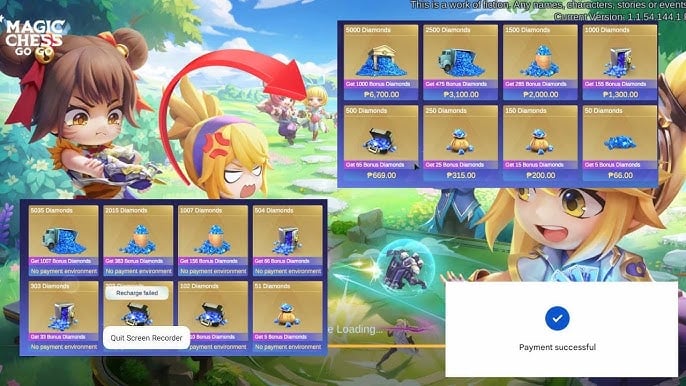
You have probably seen them — social media posts, Discord messages, and marketplace listings promising Magic Chess: Go Go Diamonds at half the in-game price, or even "buy one get one free." When a new Commander skin or the Go Go Pass season track tempts you, those deals look like an easy win. But before you send payment to an unfamiliar seller, ask the question every cautious player should: is a third-party Magic Chess: Go Go top up actually safe?
The short answer is nuanced. Not every seller outside the official app store is a scam, but the category carries real dangers the official store does not. This guide breaks down what can go wrong, how Moonton's rules come into play, and the habits that keep your account and your Diamonds protected.
For a clean, password-free experience, consider a Magic Chess: Go Go top-up at Topuplist through the official Topuplist storefront, which credits Diamonds straight to your User ID and Zone ID without asking for a login.
Why Players Look for Cheaper Magic Chess: Go Go Diamonds
Diamonds are the premium currency in Magic Chess: Go Go, used for Commander skins, chessboard cosmetics, and the Go Go Pass reward track. Unlike battle-pass points or event tokens, Diamonds persist across seasons, so players accumulate them steadily. That recurring demand is exactly what attracts grey-market sellers. On social media you will see "50% off Diamonds," "instant top up, no waiting," or "top up via our agent" — and the appeal is obvious. Diamonds are not cheap when bought in bulk through the App Store or Google Play, which take a platform cut on every in-app purchase. But the lower price a reseller advertises usually comes from somewhere, and that "somewhere" is where the risk lives.
The distinction most newcomers miss is between two very different seller models. A direct (UID-based) top up only ever asks for your User ID and Zone ID, then credits Diamonds to your account without ever touching your login. An account-sharing "top up," by contrast, asks you to hand over your Moonton, email, or platform password so a stranger can log in and "add" Diamonds manually. The first model is merely a cheaper checkout; the second gives a stranger the keys to your entire account, including any payment methods and linked profiles attached to it. Understanding which one a seller is offering is the single most important safety skill in this whole space — and, as we will see, only one of them is compatible with Moonton's rules.
MCGG Diamonds attract grey-market activity because the game sits inside the massive Mobile Legends: Bang Bang ecosystem, where discount resellers are already familiar. Scammers ride that familiarity, knowing players expect cheap Diamonds to be a normal thing to hunt for. The expectation itself is what makes the bait work.
Is Third-Party Magic Chess: Go Go Top Up Actually Safe? The Real Risks
Moonton's own Code of Conduct for partners explicitly prohibits "account selling, sharing or trading" services, and the in-game Terms of Service treat unauthorized account access and fraudulent transactions as bannable. That does not mean every cheap Diamond purchase triggers a ban — but it does mean the account-sharing model sits squarely outside what the publisher permits. If a seller logs into your account, you have shared credentials, and that footprint is visible to Moonton's systems. You can read the publisher's positioning for yourself at en.moonton.com.
The more immediate danger for most players is simpler: theft. Any service that asks for your password can drain your Diamonds, spend your linked payment methods, lock you out, or sell the account outright. "Free Diamond generator" sites are the clearest example — they promise unlimited Diamonds, ask for your ID or login, then either install malware or simply harvest your credentials. No legitimate top up ever needs your password; the official flow only requires your User ID and Zone ID, as the official Magic Chess: Go Go site confirms. If a checkout asks for anything beyond those two numbers, that is your signal to stop.
Then there is the refund scam, the most common way players lose Diamonds they already spent. A seller tops up your account using a stolen or fraudulent card, the Diamonds appear, you spend them — and days later the card's real owner disputes the charge. The bank reverses the payment, Moonton removes the Diamonds, and if you already spent them your balance goes negative. Moonton's penalty rules treat malicious refunds and abnormal transactions as grounds for diamond retrieval and suspensions ranging from 7 days to permanent. You end up paying twice: once to the scammer, once to restore the balance you thought you had bought.
Fake "instant Diamond" storefronts are the third pillar. These are impersonation sites — domains a letter or two off from a known brand, no HTTPS padlock, no real support — that take payment and deliver nothing. Because they operate through social DMs and personal payment apps, there is no chargeback path and no company to pursue. By the time you realize the Diamonds are not coming, the listing and the "seller" have vanished.
Finally, even a well-meaning UID-based reseller can make a data-entry error: type your Zone ID wrong and the Diamonds land on a different account. Because Diamonds are credited to the ID you provide, a wrong digit is hard to undo. If Diamonds ever fail to arrive after a payment, our missing-Diamonds troubleshooter walks through recovery, and our User ID & Zone ID guide shows how to verify the pair before you ever press pay.
Third-party risk | What actually happens | Who it hurts most |
Account-sharing login | Stranger gets your password; account drained or sold | Anyone who shared a login |
Refund / stolen-card scam | Bank reverses payment; Moonton claws back Diamonds, balance goes negative | Players who already spent the Diamonds |
Fake storefront | Payment taken, no Diamonds, no recourse | First-time bargain hunters |
Reseller ID typo | Diamonds credited to a stranger's account | Careless or rushed buyers |
Can You Get Banned for Buying Diamonds From a Third Party?
Let's separate myth from mechanism. Moonton bans accounts for specific violations: cheating and modified clients, exploiting bugs, malicious refunds and fraudulent transactions, account selling or boosting, and unauthorized account access. Buying Diamonds through a UID-based channel that uses official gateways is not, by itself, on that list. What lands players in trouble is the how: shared credentials, disputed payments, or Diamonds traced back to stolen funds.
A review is most often triggered by two footprints. The first is the account-sharing login itself — an unfamiliar login leaves a mark Moonton's systems can correlate. The second is a payment dispute: when a chargeback hits Moonton, the receiving account is the one that gets clawed back, not the scammer's. That is why "I used a trusted seller" is no defense once a fraudulent payment is involved — the publisher sees the destination account, not the middleman.
Account-region adds a quieter complication. Magic Chess: Go Go separates Global and Russian account regions, and the packs tied to your registration region are not interchangeable. A reseller who promises "cheap Diamonds from another region" may be routing through a mismatched account setup that Moonton's systems flag as abnormal. Our region-restrictions explainer goes deeper on why your account's region — not the server — controls which packs apply. The point here is narrower: region gymnastics to chase a discount is itself a red flag that can draw a review.
So when a seller promises "100% safe, guaranteed no ban," read it as marketing, not a fact. No third party can control Moonton's review systems or guarantee that the payment method behind your Diamonds was clean. The only party that can make that promise credibly is the one that never asks for your password and never routes questionable payments: an authorized, UID-only checkout.
How to Top Up Magic Chess: Go Go Safely — Security Tips
The habits that keep you safe are boring, which is exactly why they work. A Magic Chess: Go Go top-up at Topuplist through the official Topuplist storefront follows every one of them — UID-only, protected payments, no login sharing — but the principles apply no matter where you buy.
Use an authorized storefront — never share your password. A legitimate top up needs only your User ID and Zone ID. If a site or "agent" asks for your Moonton, email, Facebook, Google, or Apple login — or a one-time verification code — close the tab. That single rule eliminates the vast majority of account-theft scams.
Verify your User ID + Zone ID before every order. Open the game, tap your avatar in the upper-left, and read off both the User ID and the Zone ID exactly as shown. Match them against the checkout screen before you confirm. A one-digit Zone ID error sends Diamonds to a stranger's account, and most orders cannot be reversed once credited. Our User ID & Zone ID guide lays out the four-step verify routine if you want a checklist to follow.
Enable Moonton account binding / 2FA. Bind your Magic Chess: Go Go account to a verified email or platform login and turn on two-factor authentication wherever Moonton offers it. If credentials ever leak, 2FA is the difference between a nuisance and a total loss.
Pay with traceable, buyer-protected methods. Credit cards, app-store billing, and reputable wallets all offer dispute channels; irreversible transfers, gift cards, and crypto do not. If a "deal" only accepts crypto or "friends and family" transfers, that is a feature, not a bug — it removes your recourse on purpose.
Check official region/pack availability before buying. Make sure the Diamonds you are buying match your account's registration region so they actually land. If a payment ever hangs, our payment-pending guide explains the realistic wait windows and when to escalate.
Red Flags: How to Spot a Dangerous Diamond Seller
Most scams announce themselves if you know what to look for. The non-negotiable red flag is any request for your login or password — that alone means leave immediately. A close second is price: legitimate distribution savings exist (no platform cut, local-currency pricing), but a price 50–70% below the official store with no explanation almost always means stolen funds or a bait-and-vanish plan. Scammers often "complete" a tiny first order to build trust, then disappear after a larger payment, so a cheap test buy is not proof of safety.
Other tells: no order number, no receipt, and no reachable support; a URL that is a letter off from a known brand; pressure tactics ("deal expires in 10 minutes"); and payment only through private chat apps or irreversible methods. Finally, be wary of "pre-registered accounts" or bundled account sales — selling or trading accounts violates Moonton's Terms of Service, and these listings frequently double as account-theft vectors.
Red flag | Why it is dangerous |
Asks for your password or verification code | Direct path to account theft |
Price 50%+ below official store | Usually stolen funds or bait-and-vanish |
No receipt, order ID, or support | No way to recover a failed order |
"Pre-registered" or bundled account sales | Account trading violates ToS; theft vector |
Crypto or "friends and family" only | No chargeback, no recourse |
URL a letter off a known brand | Impersonation / phishing site |
Safer Alternatives: Where to Top Up MCGG Without the Risk
You do not have to choose between "pay full price in the app" and "risk my account." The safe middle path is an authorized, UID-only web storefront: you get the lower price of a direct top up without ever handing over a password. The official in-app store is the zero-friction baseline, while an authorized storefront credits the same Diamonds through official gateways at a better rate.
That is the model a Magic Chess: Go Go top-up at Topuplist follows through the official Topuplist storefront: it asks only for your User ID and Zone ID, processes payment through protected channels, and delivers Diamonds to your account — no login sharing, no manual "agent" access, no mystery about where the Diamonds came from. You keep the discount and the account safety at the same time.
If you have already used a risky seller, contain the damage: change your password and linked email immediately, enable 2FA, review your purchase history for unauthorized charges, and contact Moonton support through official channels with proof of ownership. If you only ever shared your ID (never your password) and the Diamonds arrived, your exposure is lower — but watch your balance for unexpected deductions and keep your order records.
FAQ
1. Is buying Magic Chess: Go Go Diamonds from a third party illegal?
It is not illegal in the sense of breaking the law, but it sits in a grey zone. Moonton's Terms of Service and partner Code of Conduct prohibit account sharing and fraudulent transactions, and many unofficial sellers operate through exactly those methods. A UID-only authorized checkout is the lower-risk end of the spectrum; an account-login "top up" is the high-risk end.
2. Can Moonton ban me for using a UID-based top up?
A top up that only uses your User ID and Zone ID through official gateways is not, by itself, a bannable act under Moonton's listed violation categories. The bans that do happen after third-party purchases trace back to shared credentials, disputed or stolen-card payments, or Diamonds reversed by the publisher — not to the act of buying outside the app store.
3. What should I do if a seller asks for my password?
Leave immediately. No legitimate Diamond top up needs your Moonton, email, or platform password, and any "agent" who logs into your account is a theft risk. If you already shared it, change the password and linked email now and enable two-factor authentication before anything else.
4. Why did my Diamonds disappear after a cheap top up?
The most common cause is a refund scam: the seller funded your Diamonds with a stolen or disputed card, the bank reversed the charge, and Moonton removed the Diamonds — sometimes pushing your balance negative if you had already spent them. A wrong Zone ID can also route Diamonds to another account. Our missing-Diamonds guide covers both recovery paths.
5. How do I know if a Diamond seller is legitimate?
Check three things: they ask only for your User ID and Zone ID (never a password), they show a real domain with HTTPS and reachable support, and they accept buyer-protected payment. Prices moderately below the official store are plausible; prices 50%+ below it are a classic scam signal.
6. What is the safest way to top up Magic Chess: Go Go?
Use the official in-app store for zero friction, or an authorized UID-only web storefront for a better rate without sharing a login. Verify your User ID and Zone ID on every order, pay through a protected channel, and enable 2FA on your account. That combination removes nearly every risk covered in this article.