


How to Fish on Steam: Co-op Progression, Early Priorities and Price Guide
How to Fish released on Steam on August 20, 2026, and its appeal is much broader than the title suggests. Dazed Games describes it as a physics-based fishing simulator for one to four players, but fishing is only the entry point: players catch and sell creatures, buy gear and weapons, complete quests, defeat bosses, travel to more dangerous islands, chase rare fish variants, attempt trick shots and sometimes gamble their earnings. Anyone comparing purchase options can visit Topuplist, a game recharge platform; the How to Fish purchase page currently lists the Standard Edition at $3.96.
 Steam Games


The game has also found a strong audience quickly. On September 16, Steam showed 95% positive feedback across more than 23,000 user reviews. That figure will continue to move as new reviews arrive, but it establishes the current context: this is no longer a tiny unreleased curiosity. It is a compact, intentionally unruly co-op game whose progression gives the physical comedy a reason to continue beyond the first chaotic fishing session.
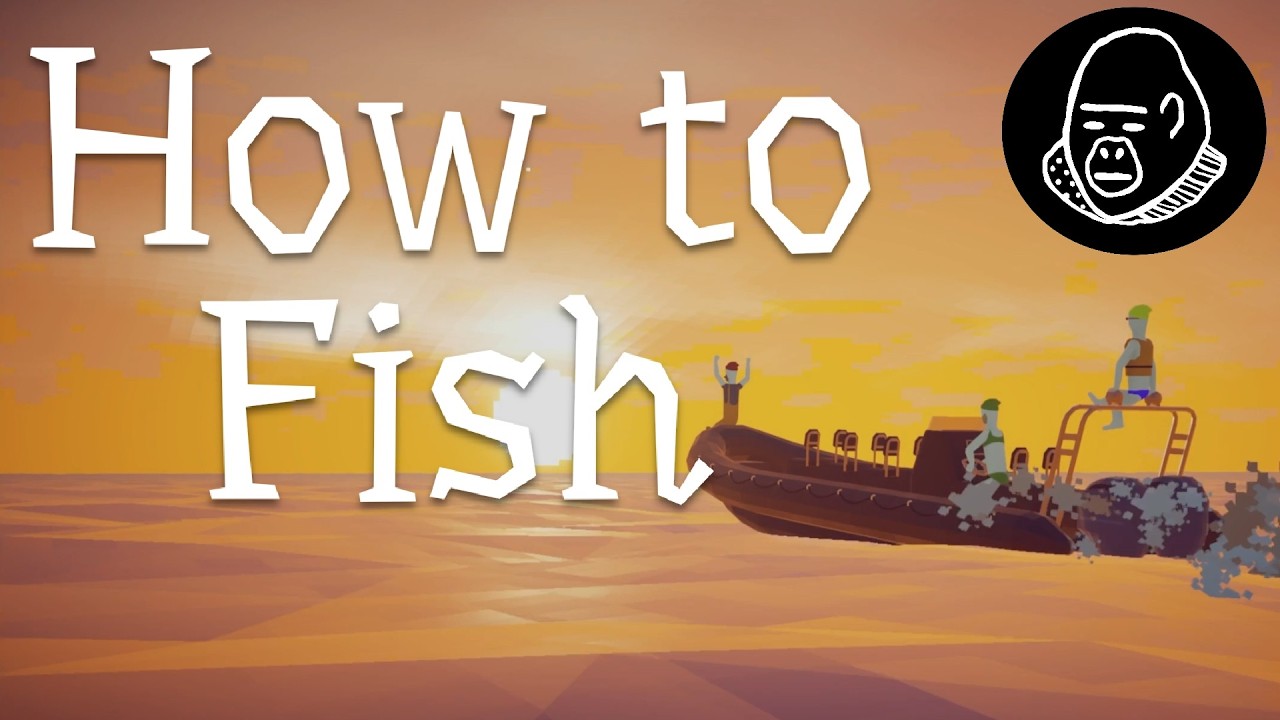
How to Fish at a Glance
Detail | Current information | Why it matters |
|---|---|---|
Release status | Released August 20, 2026 | The game is available now rather than in preorder or Early Access. |
Developer and publisher | Dazed Games | The same independent studio develops and publishes the game. |
Player count | One to four players | It supports single-player and online co-op instead of requiring a full group. |
Core progression | Catch, fight, sell, upgrade, complete quests and unlock islands | Fishing supplies the economy, while quests and bosses move the journey forward. |
Steam reception checked September 16 | 95% positive from more than 23,000 reviews | Current reception is exceptionally strong, although review totals are not fixed. |
Steam US list price checked September 16 | $7.99 | This is the reference price used for the comparison later in the article. |
The official genre labels include Action, Casual, Indie and Simulation, which is a better description than treating it as a realistic angling game. Players looking for carefully modeled rods, tournament rules or a quiet lake simulator should adjust expectations. The identity here comes from exaggerated physics, combat, improvised problem-solving and co-op reactions. The fishing system matters because it feeds the economy and collection hunt, not because the game tries to reproduce a serious sporting discipline.
The Progression Loop Is More Important Than the Joke
The basic loop starts with limited equipment. Catching fish creates something that can be sold, and selling creates money for better fishing gear, weapons and other useful equipment. Quests then give that equipment a purpose: they direct the group toward objectives, while boss fights gate progress into new islands. Those later destinations contain more dangerous creatures and access to better gear, so the economy and the adventure are connected rather than separate modes.
This structure changes how a new player should view a successful catch. A fish is not only a collectible. It can be income, quest progress or a rare variant worth recording before sale. A run is therefore a series of small decisions about immediate cash versus longer-term progression. The safest early policy is to inspect current quests and collection needs before liquidating everything. Selling ordinary catches to fund a meaningful upgrade is productive; selling an unfamiliar rare variant without checking its value to the collection can create avoidable repeat work.
Weapons are equally important to the game's rhythm. The official description explicitly combines killing fish and fighting bosses with conventional catching. That means an upgrade plan focused only on the rod can leave a player able to hook stronger creatures but poorly prepared for the fights surrounding progression. A balanced loadout is generally more useful than buying several small upgrades in one category simply because they are immediately affordable.
The useful mental model: fish create money, money improves equipment, equipment makes quests and bosses more manageable, and those objectives open islands with stronger creatures and better rewards.
A Practical First-Session Route
The game is built to generate surprises, so an opening route should create stability without trying to optimize every minute. Start by learning how casting, pulling, carrying and selling respond to the physics. Use early common catches to understand the transaction loop. Before spending, check the next visible objective and identify whether its friction comes from catching, survival or combat. The best first purchase is the upgrade that removes that immediate bottleneck, not automatically the most expensive item in the shop.
Learn one complete catch-and-sale cycle. Finish the process from locating a creature to receiving money before wandering too far from the starting area.
Read available quests. Let an actual progression requirement guide the first upgrade rather than buying equipment with no near-term use.
Keep an unfamiliar or visibly unusual catch until it is checked. Rare variants are part of the stated collection goal, so do not treat every fish as identical inventory.
Buy for the next obstacle. Improve fishing capability when catches are the bottleneck and improve combat capability when dangerous creatures or a boss stop progress.
Attempt the next quest before grinding a large cash reserve. A newly opened island may offer better opportunities than repeating the weakest starting catches.
Use trick shots after the basic income loop is reliable. Bonus money is valuable, but inconsistent attempts should not replace dependable progress when the group still lacks basic gear.
This route does not require exact item prices or a named "best" weapon. Those details can change with balancing, while the decision rule remains useful: solve the obstacle currently blocking progression and avoid sinking early money into equipment that does not help the next quest. It also keeps the discovery intact, which matters in a comedy-driven game where unexpected interactions are part of the reward.
How to Divide Work in Online Co-op
Online co-op supports up to four players. A group does not need rigid roles, but a little coordination prevents the physics from turning every trip into duplicated effort. During an income run, one player can focus on securing catches while another handles transport or sells completed catches. When the group approaches a dangerous creature or boss, everyone should regroup rather than allowing one player to trigger a fight while the others are still carrying valuables elsewhere.
Shared planning matters most at the shop. If every player makes a different impulse purchase, the team may still lack the capability needed for the next objective. Discuss the current blocker first, then decide whether the group needs stronger fishing gear, additional combat power or simply another attempt with its existing equipment. This is not about turning a casual game into a formal raid; it is about making sure the money earned together produces visible progress.
Co-op also makes experimentation less costly. One player can attempt a difficult trick shot while the others preserve a stable catch route. A teammate can observe how a creature reacts while another stays positioned to recover the situation. The result is a sensible split between reliable income and risky bonus attempts. Once the team understands an island, roles can rotate so that one person is not permanently assigned to the least entertaining job.
Solo Play Requires a Different Pace
Single-player is officially supported, so a solo buyer is not purchasing an unusable party game. The difference is that every stage of the loop belongs to one person: controlling a catch, protecting it, moving it, selling it and handling combat. Progress may therefore feel more deliberate, and a failed experiment has no teammate available to stabilize the run.
A solo player benefits from shorter, complete trips. Bank the value of a successful catch instead of stacking several risky objectives into one outing. Upgrade one clear limitation at a time and learn the safe route through an island before chasing rare variants or elaborate shots. This approach may produce less spectacular footage, but it reduces the time lost when a physics mishap erases several unfinished goals at once.
The choice between solo and co-op is ultimately about the desired experience. Solo emphasizes control, observation and self-directed progression. Co-op increases speed, recovery options and unpredictable comedy. The underlying quests, islands, fish collection and equipment economy remain the reasons to continue in either mode.
Rare Variants, Trick Shots and Gambling Serve Different Goals
Three optional systems can look like alternative ways to make money, but they should not be treated as interchangeable. Rare fish variants support collection. Trick shots reward execution with additional income. Gambling introduces volatility: it can increase money, but by definition it can also undermine a carefully built upgrade fund. Players get better results when each system has a separate budget and purpose.
For collection progress, pause when a catch looks different and confirm whether the variant has already been recorded. For trick shots, practice with catches or situations the group can afford to lose, then use the bonus as acceleration rather than required income. For gambling, set aside only money that is not needed for the next progression purchase. The next rod or weapon is a known improvement; a wager is not.
This distinction is especially useful in a group. Agree on the amount reserved for the next equipment target before anyone gambles shared earnings. Otherwise, a funny side activity can quietly become the reason the team repeats an old island. The game includes risk for entertainment, but players still control whether that risk reaches the core progression budget.
Bosses and New Islands Mark the Real Milestones
Quests and bosses are the bridge between the economy and exploration. The official description says that completing quests and fighting bosses advances players to new islands, where creatures become more dangerous and gear improves. Reaching another island is therefore a better measure of progress than simply holding a large amount of money.
Before a boss attempt, convert loose money into upgrades that directly help the encounter, finish nearby quest requirements and make sure co-op players are present rather than scattered. If the attempt fails, identify whether the problem was control, damage, survival or equipment. Repeating the same approach after a mechanical mistake may be enough; farming for upgrades is useful only when the equipment itself is the limitation.
After unlocking a new island, perform a survey run before spending heavily again. Learn what is dangerous, what can be caught reliably and what new equipment becomes available. Better rewards do not help if the group loses them repeatedly while trying to use an old route designed for an easier area.
Current Price Comparison: Steam US vs Topuplist
Purchase option | Current listed price | Difference from Steam US list price | Important note |
|---|---|---|---|
Steam US listing | $7.99 | Reference price | Regional Steam prices can differ from the US listing. |
Topuplist How to Fish purchase page | $3.96 | $4.03 lower, approximately 50.4% | The order page asks for a valid Steam friend invite link; check the live price, account region and delivery terms before payment. |
The comparison shows a substantial advertised saving, but it should be read precisely. It compares the price displayed by Topuplist with the Steam US list price checked on September 16; it does not establish that every Steam region charges $7.99. Prices, fees and availability can change. A buyer should confirm the selected edition, final checkout total and whether the receiving Steam account is eligible for the offered delivery method.
The friend-invite field also means buyers should prepare the correct Steam invite link rather than a profile nickname that another user could duplicate. The page permits the same valid invite link in both requested order fields. Do not infer a Steam activation key from the listing when the purchase form is designed around a friend connection, and do not confuse the $3.96 Standard Edition with a bundle containing another Dazed Games title.
Price conclusion: the displayed Topuplist price is about half of the checked Steam US list price, but the live checkout price, supported Steam account region and delivery conditions should be verified for each order.
Language, Controls and PC Requirements
The Steam listing includes single-player, online co-op, 28 achievements, full controller support, Steam Family Sharing and save-anytime support. It lists 16 supported languages, including English, Simplified Chinese, Traditional Chinese, Japanese and Korean, with interface, full audio and subtitles indicated on the store page. That breadth makes mixed-language groups easier to organize than an English-only release.
The minimum Windows specification is relatively modest: a 64-bit version of Windows 10 or later, an Intel Core i5-5257U, AMD Ryzen 3 1200 or equivalent processor, 8 GB of RAM, a GeForce GTX 1050, AMD RX 460 or equivalent graphics card, broadband internet and 1 GB of available storage. Online co-op naturally requires a connection, while single-player remains available as its own listed feature.
Dazed Games says console and Mac versions are planned but does not provide a release date. Players on those platforms should not buy the Steam Windows version on the assumption that another build is already available. The confirmed product discussed here is the current Steam PC release.
Who Should Buy How to Fish Now?
How to Fish is a strong match for players who enjoy physics-driven co-op, short-term improvisation and a progression loop that gives the chaos direction. It also suits collectors who want rare variants to pursue and solo players willing to take a more careful pace. The overwhelmingly positive current reception suggests that the premise is working for a broad audience, but the review score does not change the game's identity.
Players seeking a realistic fishing simulation, a competitive angling league or a story-heavy role-playing game should watch gameplay before buying. Combat, strange creatures, weapons and slapstick are not side details; they are central to the design. Likewise, someone who dislikes unstable physics may not enjoy the very system that produces the game's funniest co-op moments.
For the right group, the value is easy to understand. The game provides a complete released product with solo and online co-op, island progression, bosses, collection goals and achievements at a low base price. The current lower-priced Topuplist option makes the entry cost more attractive, provided the account and delivery conditions fit the buyer.
FAQ
Is How to Fish fully released on Steam?
Yes. Dazed Games released it on August 20, 2026. It is sold as a released game, not as an upcoming preorder or an Early Access title.
Can How to Fish be played alone?
Yes. The Steam page lists both single-player and online co-op. Co-op supports a total of one to four players, so a four-person team is optional rather than required.
Is it a realistic fishing simulator?
No. Fishing drives the economy, but the game also includes exaggerated physics, weapons, dangerous creatures, boss fights, quests, trick shots and gambling. It is better understood as a physics-based action and co-op adventure built around fishing.
What should a new player spend money on first?
Spend on the equipment that solves the next progression obstacle. Improve fishing gear if catches are blocking progress, or combat capability if creatures and bosses are the problem. Keep enough money for a known upgrade before using optional gambling.
Where can I find the discounted How to Fish purchase option?
The How to Fish purchase page on Topuplist currently lists the Standard Edition at $3.96, compared with a Steam US list price of $7.99. Confirm the live total, edition, Steam account region and friend-invite delivery instructions before ordering because prices and availability may change.
Is How to Fish available on consoles or Mac?
Not yet according to the developer's current FAQ. Dazed Games says console and Mac versions are planned but has not announced when they will arrive.