


Valorant Act V Map Pool Leak: Abyss Replaces Breeze
A newly circulated Valorant Act V map-pool leak reports a focused rotation: Abyss returning and Breeze leaving Competitive. Riot Games has not yet confirmed the change, so this article keeps the report separate from official facts while giving ranked players a practical preparation plan for agent pools, callouts, attack structure, defense rotations, and the first week of a possible new map environment.
A new Valorant Act V leak reports that Abyss will return to the Competitive map pool while Breeze rotates out, creating a smaller change than earlier reports that suggested several maps could move at once. Riot Games has not officially confirmed this rotation as of August 14, 2026. Players who separately prepare Valorant Points for eligible cosmetic purchases can use Topuplist and the dedicated Valorant top-up page, while ranked preparation should treat Abyss for Breeze as a reported change until official patch notes or the live queue confirm it.
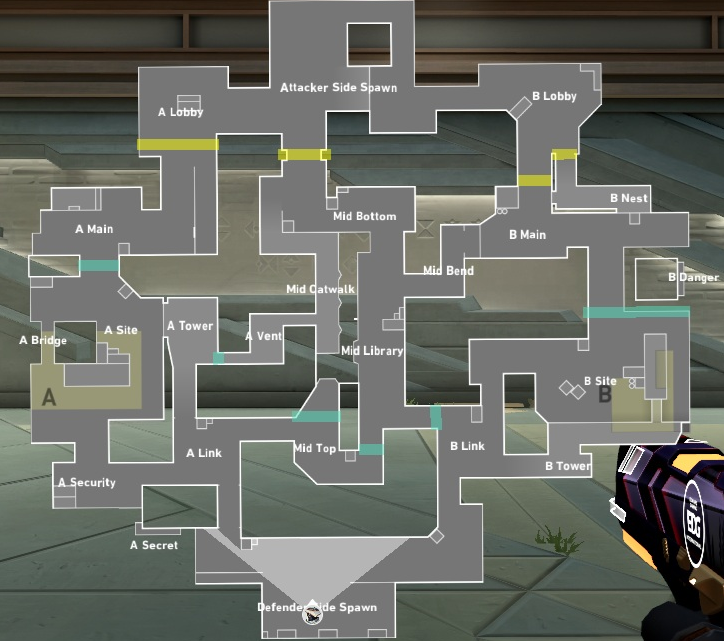
What the Latest Leak Says
The updated report describes one direct exchange: Abyss enters and Breeze leaves. That would return Abyss to Competitive while removing Breeze from the active ranked pool for Act V.
Earlier circulating claims mentioned broader possibilities involving other maps. The latest report is narrower. Players should not combine every rumor into one imaginary rotation. Abyss replacing Breeze is the current reported claim; any additional map change remains separate unless a new reliable report or Riot announcement confirms it.
Act IV is scheduled to end around August 19, which places the possible rotation at the transition into Act V. Exact regional deployment can depend on the patch schedule. The official Competitive queue and patch notes will be the final authority.
Information | Current Status |
|---|---|
Abyss returns to Competitive | Reported leak, not officially confirmed |
Breeze leaves Competitive | Reported leak, not officially confirmed |
Additional maps rotate | Not established by the latest focused report |
Act transition | Expected around the end of Act IV on August 19 |
Final confirmation | Riot patch notes and live Competitive pool |
Why Abyss Changes Ranked Preparation
Abyss creates different spatial demands from Breeze. Its layout rewards knowledge of long sightlines, vertical transitions, fast rotations, and areas where positioning errors can lead to falling from the map. Returning players may remember the broad structure while still lacking current utility lineups and timings.
The map also tests communication. A simple “A,” “B,” or “mid” call is often insufficient when enemies can pressure several connected spaces and reposition quickly. Teams benefit from precise callouts and from identifying whether control has been taken, contested, or abandoned.
Abyss should not be relearned only through Competitive matches. Use Custom Game to walk the map, confirm callout names displayed by the current client, and practice movement around ledges. Then use Unrated or other available queues to rebuild live timing before risking ranked rating.
What Players Can Stop Practicing on Breeze
If Breeze rotates out as reported, players do not need to delete every lineup or strategy. Map pools change again, and Breeze can return in a later act. The practical change is priority: daily ranked preparation should move away from Breeze and toward maps in the active pool.
Save useful Breeze notes, screenshots, or lineup references in one place. Do not spend the final days of Act IV learning a highly specialized setup unless the player still expects to queue Breeze before the transition.
Agents selected mainly for Breeze may need a broader plan. A player does not need to abandon a favorite Controller, Initiator, or Sentinel, but should confirm that at least two agents remain comfortable across the expected Act V pool.
Relearning Abyss Callouts
Start by walking from both attacker and defender spawns. Identify the direct routes to each site, the central contest areas, defender rotation paths, attacker regroup routes, and positions where sound cues reveal movement.
Use the callout names shown on the minimap as the baseline. Community names can be useful, but a mixed team is more likely to understand official map labels. Add only a few universal descriptive terms for locations that need extra precision.
Practice callouts while moving. Say the location, direction, and number of enemies: for example, one enemy leaving a central area toward a site. Avoid turning every call into a full sentence during combat.
Pay special attention to ledges and fall zones. A teammate should be able to warn another player about a dangerous movement path without using vague language.
Agent Pool Preparation
Do not lock an agent composition before Riot confirms the pool. Instead, prepare roles. Every group should have a plan for smoke coverage, information, entry pressure, site anchoring, and post-plant control.
Controllers should review smoke placement for site entries and defensive delays. A smoke that works on Breeze may have the wrong height, width, or timing on Abyss. Use the map in a custom lobby and confirm that each smoke blocks the intended angle.
Initiators should test information and clearing utility around the map's vertical geometry. Duelists need reliable entry routes rather than relying on one surprise jump. Sentinels should verify where utility can be placed legally and whether it actually watches the desired path.
Flexible players should choose one primary agent and one substitute. The substitute should cover the same team need when the preferred agent is selected by someone else or performs poorly in the eventual meta.
Attack-Side Planning
Abyss attack rounds need controlled space. A five-player rush can work, but repeated unstructured pushes become predictable. Build three basic rounds: a direct site hit, a default that gathers information, and a pressure round that threatens one area before finishing elsewhere.
Identify who holds flank control and when that responsibility changes. A player watching the rear for too long may arrive late to the site, while abandoning it too early can expose the team.
Utility should clear specific defender positions. Do not throw every ability at the first choke point. Keep enough control for the plant and post-plant, especially when the site offers several retake paths.
After planting, choose positions that can trade. Vertical or distant angles look powerful but can isolate players. The spike location should match the post-plant positions the team can realistically reach.
Defense-Side Planning
Defenders should agree on the first response to pressure. One player may delay while another gathers information or rotates. If everyone gives up space immediately, attackers can enter with utility remaining. If everyone fights alone, the site collapses through untraded deaths.
Use early information to distinguish a commitment from a fake. Call utility, spike sighting, and player count. Do not rotate the entire defense because one ability appears.
Retake routes should be planned before the round. Decide which teammates enter together and which utility begins the retake. On a map with dangerous edges, rushed movement can lose a round without enemy damage.
Save rounds also need clarity. If the retake is no longer realistic, preserve expensive weapons instead of entering one at a time. The economy remains part of map strategy.
Economy Planning on a Returning Map
Map familiarity includes knowing which rounds support a full execute and which require a lower-cost plan. On Abyss, long sightlines can make rifles and Operators influential, but buying one expensive weapon without team utility can weaken the entire round. Agree on full buys, light buys, and saves before leaving spawn.
Practice low-cost defensive positions and attack routes that still allow weapon recovery. A returning map often tempts players to copy old highlight angles; the better economy plan is one that keeps teammates able to trade and preserves expensive weapons when a retake becomes unrealistic.
First-Week Ranked Strategy
The first week after a pool change produces uneven map knowledge. Some players studied Abyss in advance, while others return with outdated habits. This creates an advantage for teams that use simple, repeatable plans.
Avoid complicated strategies requiring every teammate to remember an exact lineup. Use clear defaults, paired entries, and trade spacing. Adjust after learning how opponents defend.
Watch for players overusing remembered positions. A common angle can become easy to pre-aim. Change defensive setups without abandoning team support.
Keep a short post-match note: which site entry failed, which defensive rotation was late, and which callout caused confusion. One concrete correction after each match improves faster than collecting dozens of clips.
How to Verify the Rotation When Act V Arrives
Read the official patch notes and open the Competitive queue information. Check whether Abyss appears and Breeze is absent. If the leak is wrong or incomplete, discard the preparation assumptions and follow the live pool.
Do not treat a map appearing in another mode as proof that it is active in Competitive. Rotation can differ between Competitive, Unrated, Swiftplay, and special queues.
If Riot confirms a different change, update agent practice accordingly. Preparation on Abyss is not completely wasted because the map can still appear elsewhere, but ranked priority should always follow the official live pool.
Leak Reliability and Responsible Expectations
A map-pool leak is easier to verify than a character-kit rumor because the result becomes visible at the act transition. Until then, it remains a report. Use words such as “reported,” “leaked,” and “expected,” not “confirmed.”
The narrower Abyss-for-Breeze report may be more plausible than a long list, but plausibility is not official evidence. Players can prepare without presenting the claim as a Riot announcement.
This approach gives the leak practical value while limiting misinformation: learn Abyss, preserve Breeze notes, and wait for the official pool before making irreversible ranked plans.
Final Takeaway
The latest Valorant Act V leak reports Abyss returning and Breeze rotating out. It does not officially establish additional map changes. Ranked players can use the remaining Act IV time to refresh Abyss callouts, role coverage, entry plans, retakes, and safe movement, while keeping Breeze resources for a future return.
When Act V arrives, verify the Competitive pool in official patch notes and the live client. If the report is correct, prepared fundamentals will matter more than a collection of fragile lineups.
FAQ
Is Abyss officially confirmed for Valorant Act V?
No. Its reported return is a leak as of August 14, 2026. Riot patch notes or the live Competitive pool must confirm it.
Which map is reported to leave?
The latest focused report says Breeze will rotate out as Abyss returns.
Are Icebox, Ascent, or Lotus also changing?
The updated report does not establish additional changes. Do not combine older claims into the current leak without new evidence.
When is Act V expected to begin?
Act IV is scheduled to end around August 19, placing the act transition near that date. Regional timing should be checked in the client.
Should I delete my Breeze lineups?
No. Save them for a future rotation, but shift current ranked practice toward the expected active pool.
Can I recharge Valorant Points through Topuplist?
Players preparing an eligible cosmetic purchase can visit Topuplist or use the Valorant top-up page. Map-pool access and ranked participation do not require a purchase.