


VALORANT Premier V26A4 Playoffs: Qualification and Schedule Guide
VALORANT Premier Stage V26A4 reaches its Playoffs on August 15-16, 2026. Most teams qualify by reaching a Premier Score of at least 600, while Contender and Invite divisions continue to use placement-based qualification. This guide explains the official qualification rules, two-day structure, zone-specific schedule checks, roster preparation, map planning, and match-day administration without predicting brackets or inventing rewards.
VALORANT Premier Stage V26A4 reaches its Playoffs on August 15 and 16, 2026, after a regular stage that began July 1. Most participating teams qualify with a Premier Score of at least 600, while Contender and Invite divisions use placement-based qualification. Players who independently plan to recharge VALORANT Points for an eligible in-game purchase can use Topuplist and the dedicated VALORANT top-up page, but Premier entry, qualification, and match readiness should be handled through the official in-client Premier hub.
Riot has confirmed the dates and the main qualification structure. Exact match start times depend on the team's zone and must be checked in the client. This guide does not invent a universal start time, bracket opponent, map order, reward, or advancement result.
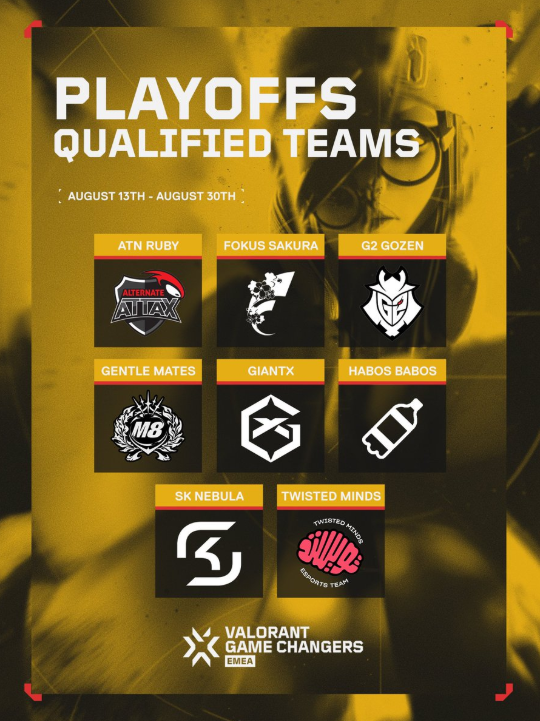
Official V26A4 Playoff Rules
The Stage V26A4 announcement states that regular Premier matches began July 1. Teams outside the highest competitive divisions qualify for Playoffs by reaching at least 600 Premier Score. Contender and Invite teams follow placement-based qualification and should use their standings page for the relevant cutoff.
The Playoffs use a two-day schedule. The first round is played August 15. Teams that advance return August 16 for the finals.
Item | Official information |
|---|---|
Stage | Premier V26A4 |
Standard qualification | At least 600 Premier Score |
Contender and Invite | Qualification based on placement |
First playoff round | August 15, 2026 |
Finals | August 16, 2026 |
Exact start time | Check the in-client schedule for the team's zone |
The word “Playoffs” should not be treated as one global lobby. Premier is organized through divisions and zones, so the relevant schedule and standings are the ones shown for the registered team.
Confirm Qualification in the Client
A team captain should open the Premier hub and verify qualification status before match day. A screenshot of an earlier score is useful for records but does not replace the live status after the regular stage is complete.
Teams using the 600-point route should confirm that the displayed Premier Score has reached the requirement and that the Playoffs section identifies the team as eligible. Contender and Invite teams should ignore the standard score shortcut and review their placement in the standings.
If the status looks wrong, capture the team page, standings, match history, zone, division, and account region before contacting support. Do not wait until the scheduled check-in window to investigate an administrative problem.
Check the Correct Zone Time
Riot explicitly directs players to the in-client schedule for start times. Premier zones can use different windows, and a date copied from another region may be several hours away from the team's actual queue period.
Every starter should record the August 15 window in local time. The team should also understand the August 16 return schedule before committing to other plans. Advancing from the first round creates an immediate obligation to play again the next day.
Use one shared time reference in team messages. Writing only “eight o'clock” creates avoidable confusion when players live in different time zones. Include the date, clock time, and time zone.
Log in early enough to handle a small client update, restart, or voice setup issue. The useful target is not merely being online when the match starts; it is having the complete roster ready before the official queue or check-in period closes.
Lock the Eligible Roster
Premier uses the registered team and its eligibility rules. Before Playoffs, confirm that every intended starter can access the team, has no account restriction, and meets the competitive requirements displayed in the client.
Do not assume a friend can be added at the last minute. Roster windows and eligibility can restrict changes. Use only options provided by the live Premier interface and current official rules.
Assign five starters and identify available substitutes within the eligible roster. Each player should confirm their preferred roles, backup agents, communication availability, and both playoff dates.
A substitute plan should be specific. “Someone can fill” is not enough. Decide who replaces each role, which agents remain available, and how the map plan changes if a particular starter is absent.
Build a Short Map Plan
A playoff plan does not need a huge strategy document. It needs a reliable approach for the maps that can appear under the current Premier format.
For each relevant map, define the normal composition, backup composition, defensive opening, attacking default, pistol approach, and two timeout topics. Keep the document short enough that players can recall it under pressure.
Do not copy a professional composition without checking whether the team can execute it. An agent lineup becomes useful only when players understand utility timing, spacing, trade paths, and post-plant responsibilities.
Review recent Premier match history to identify repeated weaknesses. If the team repeatedly loses anti-eco rounds, defensive retakes, or late attacking decisions, address those specific patterns instead of adding entirely new strategies two days before Playoffs.
Practice the Match-Day Routine
Run one rehearsal using the same voice channel, player order, warm-up length, and map communication intended for the Playoffs. Administrative consistency reduces stress.
Every player should complete a client and account check before the rehearsal. Confirm that VALORANT launches normally, voice settings work, the correct input device is selected, and no required game update remains.
This is not a technical troubleshooting article. The point is simply to discover ordinary readiness problems before the official window. If a genuine client problem appears, use Riot's official support guidance rather than random system changes from an unrelated video.
The team leader should practice inviting the roster, opening the Premier page, and identifying the correct queue. A clear owner for administrative actions prevents five people from assuming someone else handled them.
Define Communication Roles
A playoff team benefits from a small number of clear communication responsibilities. Choose the primary round caller, a secondary caller when the leader dies, and one player responsible for economy reminders.
Call information that changes a decision: enemy position, utility used, Spike status, player count, damage, and timing. Avoid filling the channel with frustration or explanations while teammates are still playing the round.
After a loss, use the buy phase to state one adjustment. Long arguments should wait until a timeout or after the map. Premier brackets punish teams that carry one mistake into several rounds.
Agree on timeout triggers before the match. Examples include repeated opening deaths, a failed read across several rounds, or confusion about the opponent's defensive setup. A timeout is more effective when the team already knows what question it needs to answer.
Economy Preparation
Playoff pressure often damages economy discipline. Players may force after a close loss because the previous round felt winnable, or save too aggressively because elimination feels near.
Use the same economy principles practiced during the stage. Track team credits, ultimate availability, opponent weapon pickups, and the strategic purpose of the next buy. A mixed purchase should be deliberate, not the result of five separate decisions.
Assign one player to make the final buy call. Teammates can provide information, but the conclusion should be clear before the barrier drops.
Remember that an opponent's economy can influence strategy. If the other team is likely on weaker weapons, do not provide isolated close-range fights without utility support. If the opponent saved expensive weapons, account for them in the next round.
What Happens After the First Round
Teams that advance on August 15 return for the finals on August 16. Save match notes immediately after the first round, but do not spend the entire evening replaying every mistake.
Record the opponent's repeated setups, successful team calls, and two or three issues requiring correction. Then confirm the next-day schedule in the client and allow players enough time to rest.
Do not announce an opponent before the bracket officially updates. Premier results and bracket progression should be taken from the in-client page. A community screenshot can be incomplete or refer to another division.
The August 16 final is a separate match-day preparation task. Repeat the roster, schedule, and client checks even if nothing went wrong on day one.
Rewards and Advancement
Players should read the live Premier page for any reward, crest, division, or future advancement information attached to this stage. The August dates and qualification route do not, by themselves, establish every reward or later competitive consequence.
Do not promise a title, player card, promotion, or higher-level tournament route unless the current official rules list it for the relevant division and region.
The immediate objective is straightforward: confirm eligibility, enter the correct playoff window, win the first round, and return for the finals if the bracket advances the team.
Spending Is Not Part of Qualification
Premier performance is based on competition, not cosmetic ownership. A skin, Battle Pass, or VALORANT Point balance does not increase Premier Score or create Playoff eligibility.
Teams should keep purchases separate from match administration. Do not recharge during a check-in window, and do not change a familiar weapon skin immediately before the first match if its audio or animation feels distracting.
Players who choose an eligible purchase at another time can verify their Riot account region and required VALORANT Point amount before using Topuplist and the VALORANT top-up page. Never provide a password, login approval, or verification code for a recharge.
Final Preparation Plan
The V26A4 Playoffs have a clear official structure. Standard teams need at least 600 Premier Score; Contender and Invite teams qualify by placement. The first round is August 15, and advancing teams return August 16.
The highest-value preparation is administrative clarity followed by focused practice. Confirm qualification, zone time, eligible roster, map plan, communication roles, and the next-day commitment. Avoid last-minute roster assumptions or universal schedule posts that ignore regional zones.
Once the team enters the lobby, the preparation document has done its job. Play the practiced compositions, communicate useful information, and use the official bracket to determine what comes next.
FAQ
When are the VALORANT Premier V26A4 Playoffs?
The first round is scheduled for August 15, 2026. Teams that advance return for the finals on August 16.
How much Premier Score is required?
Most teams qualify with at least 600 Premier Score. Contender and Invite divisions use placement-based qualification instead.
What time do the Playoffs start?
Start times depend on the team's zone. Riot directs teams to check the in-client Premier schedule for the correct window.
Can a team add any substitute before Playoffs?
Teams must follow the roster and eligibility options shown in the live Premier system and current rules. Do not assume a last-minute addition is permitted.
Where can players recharge VALORANT Points?
After verifying an optional eligible purchase and the correct account region, players can use Topuplist and the dedicated VALORANT top-up page.