

MICO PK Battle Guide: Rules, Gifts, Ranking and Winning Tips
If you have watched a MICO Live stream for more than ten minutes, you have probably seen it happen: two streamers' rooms suddenly merge side by side, a countdown clock appears, and the chat explodes with gift animations flying toward one side, then the other. That is a PK battle — the single most competitive, most lucrative, and fastest-growing format on MICO Live.
PK battles turn a casual viewing session into a real-time competition where audiences fight for their favorite streamer's victory. For streamers, they are the quickest path to new followers, higher rankings, and bigger earnings. But they also carry risk: entering a PK unprepared can cost you momentum, audience trust, and coins.
This guide breaks down everything you need to know — from the core mechanics of how PK scoring works, to gift strategies that maximize your score, to the tactical decisions that separate consistent winners from streamers who burn out after every loss.
Important note: MICO's Terms of Use (Section 2.1 and 6.1) confirm that MICO provides live broadcast services and paid gift features, but do not document PK battle mechanics specifically. The PK rules, scoring formulas, gift eligibility, and ranking systems described below are based on in-app functionality as experienced by active MICO streamers and verified against multiple community reports. Specific PK parameters may vary by region and update — always check the current in-app PK interface for the latest rules.
1. What Is a PK Battle on MICO?
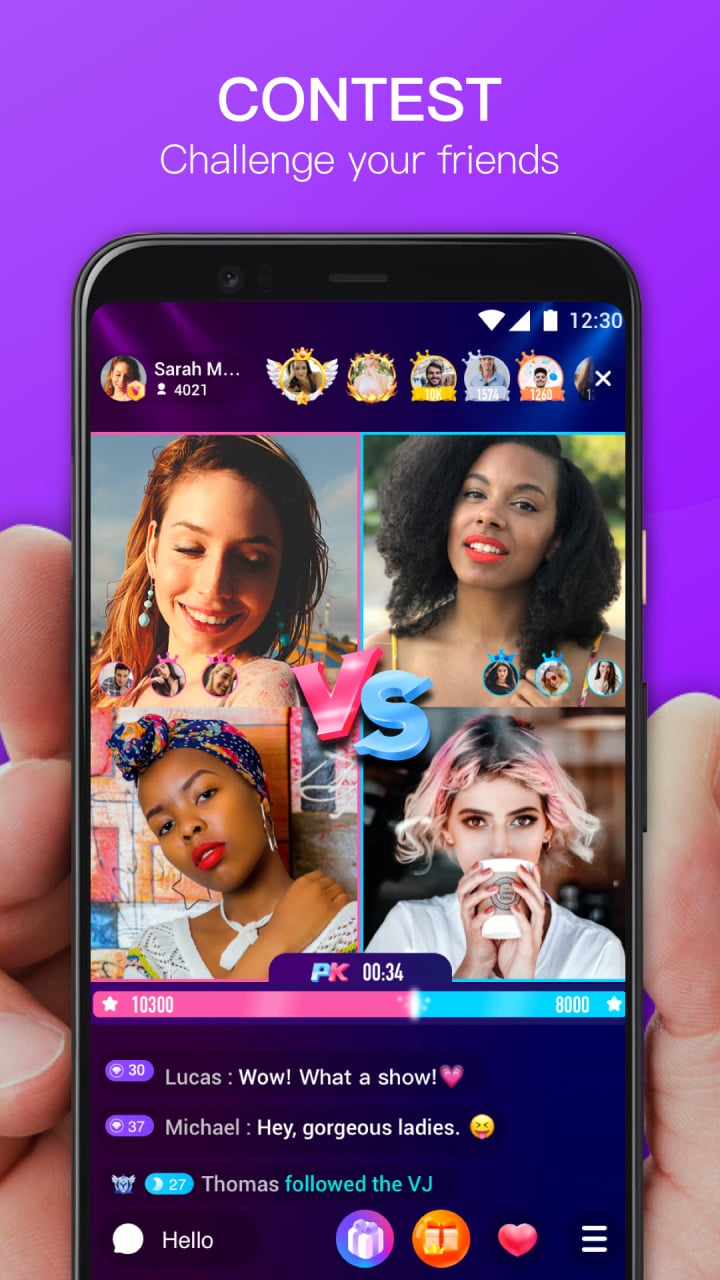
A PK battle is a timed, gift-based 1v1 competition between two live streamers. When both streamers agree to enter a PK, the system connects their rooms and displays them side by side on a split screen. A countdown timer starts — typically 5 minutes — and every gift each streamer receives during that window adds to their PK score.
When the timer expires, the streamer with the higher PK score wins. The loser enters a punishment phase (usually 2 minutes), where they perform a fun challenge chosen by the winner — singing a song, making funny faces, doing a short dance, or answering personal questions from chat.
Here is what the PK flow looks like in practice:
The split-screen format means that every viewer in both rooms can see the competition unfold simultaneously. This is what makes PK so powerful for growth: your audience sees the opponent, and the opponent's audience sees you. Every PK is a cross-promotion event.
PK battles are especially popular in MICO's MENA region, where national pride fuels dramatic gift wars. MICO has adapted PK specifically for Middle Eastern users — retaining the competitive format while respecting cultural boundaries around content and interaction. Country-based PK events, where audiences rally behind streamers representing their nation, have become a signature MICO phenomenon in Saudi Arabia, UAE, and Egypt.
2. PK Scoring: How Gifts Turn Into Points
During a PK battle, the gifts your audience sends are converted into PK points that appear on a visible scoreboard. The conversion follows a simple principle:
Every paid gift sent to a streamer during PK adds to that streamer's PK score, proportional to the gift's coin value.
While the exact conversion formula (for instance, whether 1 coin equals 1 PK point, or whether there is a rounding threshold) is only displayed inside the MICO app during an active PK, the general rule is consistent across MICO and similar live-streaming platforms:
Higher-value gifts generate more PK points
Free gifts (roses, hearts, basic stickers) typically do not count toward PK score
Paid gifts purchased with MICO Coins are the primary scoring mechanism
Gift animations (luxury effects like yachts, castles, lions) carry premium PK point values
This scoring structure creates a direct link between audience spending and competitive outcome. A streamer with fewer viewers but one or two high-spending supporters ("big gifters") can beat a streamer with a larger but lower-spending audience.
Which Gifts Count in PK?
Based on community experience and the general livestream PK format, the following gift categories typically affect PK scoring:
The key takeaway: PK battles are driven by paid gifts. This means streamers need audiences who are willing to spend coins, and gifters need enough coins to sustain their support through the full 5-minute battle.
Need coins before your next PK? Recharge MICO Coins instantly on Topuplist — fast delivery, secure payment, and no login credentials required.
3. PK Types: Targeted vs. Random Match
MICO offers two primary ways to enter a PK battle:
Targeted PK (Invite-Based)
You choose your opponent. This is the preferred method for experienced streamers:
Start your live stream
Tap the PK button in your streaming controls
Search for a specific streamer by ID, or select from your PK history / recommended list
Send the invitation — the opponent has a short window (typically 10 seconds) to accept
If accepted, the PK begins immediately
Targeted PK advantages:
You control the matchup — pick someone at your level for a fair fight
You can coordinate with the opponent beforehand (agree on fun punishments, set expectations)
You can build ongoing "PK rivalries" that audiences follow like a sports league
You can choose duration (some PK types allow 5/10/20-minute options, depending on app version)
Targeted PK settings:
Streamers can toggle "accept PK invitations" on or off in PK Settings
You can further restrict invitations to only followers, blocking random challenges from strangers
Default setting: accept invitations from followed streamers only
Random PK (Auto-Match)
The system pairs you with another streamer automatically:
Start your live stream
Tap the PK button and select "Random Match"
The system searches for an available streamer within 60 seconds
If matched, the opponent receives a pop-up invitation
If they accept, PK begins
Random PK advantages:
Quick and effortless — no need to find an opponent
Great for new streamers building initial exposure
Surprising matchups can create entertaining content
Random PK risks:
You cannot control the opponent's size or skill level — you might be matched against a much larger streamer
The opponent may decline, wasting your match window
No pre-battle coordination means punishments can be awkward
Which Should You Choose?
4. Pre-PK Preparation: The Checklist
Entering a PK without preparation is the most common mistake new streamers make. Here is what experienced MICO broadcasters do before every battle:
Audience Readiness
Alert your regular viewers 10–15 minutes before the PK: "PK coming up in 10 minutes, get your coins ready!"
Confirm at least 1–2 mid-tier gifters are present. A streamer with no paid-gift supporters will almost certainly lose, regardless of audience size
Set expectations: tell your chat what kind of PK you are entering, who the opponent is, and what the punishment will be if you lose
Technical Setup
Close other apps that might cause lag or interruption during PK
Test your audio: PK splits two rooms — audio issues (echo, feedback) are the most common technical failure
Do not open the opponent's room in another tab — this causes audio echo that disrupts both streams
Avoid playing background music simultaneously with your opponent — the overlapping audio creates a messy experience
Content Preparation
Prepare a "show rundown": know what you will perform, say, or demonstrate during each minute of the PK
Pre-plan your punishment ideas: if you win, what challenge will you give the loser? Make it entertaining and audience-friendly
Have a recovery plan for losing: if you lose, perform the punishment with enthusiasm — audiences respect streamers who handle defeat gracefully
Coins & Recharge
Ensure your supporters have sufficient coins. The average 5-minute PK in MENA can generate hundreds to thousands of coins in gifts. In extreme cases, country-based PK events have seen individual users spend tens of thousands of dollars in a single session.
If your regular gifters need to recharge before supporting you, point them to a reliable and affordable source
5. Gift Strategy: Maximizing Your PK Score
PK scoring is proportional to gift value, so the strategy is not just "send more gifts" — it is about when and what you send.
The Psychology of PK Gifting
PK battles activate competitive instincts in audiences. When your score falls behind, your supporters feel urgency and increase their gifting. When you are ahead, they may coast. Understanding this dynamic lets you influence the battle's rhythm:
Early momentum is critical: The first 60 seconds set the psychological tone. If your audience sends a strong gift early, it signals that you are competitive and encourages further support
The "comeback effect": When a streamer falls behind, their audience often rallies harder. A strategic early deficit followed by a dramatic comeback creates the most memorable PK experiences
The "last-minute surge": The final 30 seconds of a PK battle are the most intense. In MICO's India vs. Saudi PK event, an Indian streamer received 1 million coins (approximately 10,000 USD) in the last 30 seconds to win,this kind of dramatic finish is what makes PK culturally resonant in competitive regions
Gift Tier Strategy for Supporters
For Streamers: Influencing Gift Flow
As a streamer, you cannot directly control what your audience spends, but you can influence their behavior through real-time communication:
Call out score gaps: "We are 500 points behind! Can anyone help?" — this triggers urgency
Acknowledge every gift: Naming the gifter and thanking them publicly encourages continued spending and motivates others
Create rivalry narratives: "Let's show [opponent's name] that our room is stronger!" — this gives your audience a cause, not just a reason
Never complain about losing: Stay enthusiastic regardless of score. Audiences support streamers who are fun, not streamers who are desperate
6. The Punishment Phase: Making Loss Work for You
When you lose a PK, you enter a punishment phase. This is not a penalty — it is a content opportunity.
The punishment phase typically lasts about 2 minutes and is set by the winning streamer. Common punishments include:
Singing a song (chosen by the winner or chat)
Performing a short dance
Making funny faces or expressions
Answering personal questions from chat
Doing a talent showcase (drawing, rap, impression)
Smart streamers treat punishment as engagement gold:
Perform with full energy: A streamer who sings enthusiastically after losing gains more respect than one who sulks. Your audience sees your personality, not your score
Use punishment to showcase talent: If you sing well, dance well, or have a unique skill, punishment is free advertising for your abilities
Turn punishment into interaction: Invite chat to choose the song, pick the dance style, or vote on questions — this turns a loss into a high-engagement mini-event
Never refuse or negotiate down: Audiences remember streamers who accept punishment gracefully. Refusing makes you look weak; embracing it makes you look confident
The punishment phase is also where cross-audience conversion happens most effectively. The winner's audience is still watching, and if you perform well during punishment, they may follow you. This is the hidden growth mechanism that makes even lost PKs valuable.
7. Ranking Impact: How PK Drives Growth
PK battles are not just entertainment — they are MICO's primary growth engine for streamers. Here is how winning (and even losing) affects your platform trajectory:
Ranking Boosts
When you win a PK:
Your streamer ranking increases — MICO's ranking algorithm weights PK victories as a growth signal
You gain exposure to the opponent's audience — their viewers see your room, your talent, and your personality during the battle and punishment phase
You earn more coins from the gifts received during PK than from a typical stream of the same duration, because competitive urgency drives higher spending
Audience Growth Mechanics
The Growth Loop
A well-executed PK creates a virtuous cycle:
Enter PK → new audience sees your content
Win or perform well → new viewers follow you
Larger audience → more gifters available for next PK
More gifters → higher PK score → more wins
More wins → higher ranking → more organic discovery
This is why established MICO streamers in MENA treat PK as a core business activity, not occasional entertainment. MICO retained PK, group broadcasting, and co-streaming as "strong payment-driving formats" specifically because they create this growth loop.
8. Common PK Mistakes and How to Avoid Them
Mistake 1: PK Against a Much Larger Streamer
New streamers sometimes accept PK invitations from streamers with 10x or 100x their follower count. This almost guarantees a loss, and the score gap can be so large that your audience feels helpless rather than motivated.
Fix: Only PK against streamers at a similar level. If you have 200 followers, target someone with 150–500. Use Targeted PK to control matchups.
Mistake 2: Entering PK With No Gifters Present
If none of your current viewers are willing to spend coins, your PK score will stay near zero regardless of how entertaining you are. PK scoring requires paid gifts — free engagement does not count.
Fix: Alert your regular gifters before the PK. Confirm at least 1–2 supporters are ready. If none are present, postpone the PK.
Mistake 3: Ignoring Audio Setup
Echo, feedback, and overlapping audio are the most common technical failures in PK. These make both streams unpleasant to watch and can drive viewers away mid-battle.
Fix: Never open the opponent's stream in another window. Disable sound effects that might clash. Test your microphone before going live.
Mistake 4: Sulking After a Loss
Audiences watch PK for entertainment, not drama. A streamer who complains, acts defeated, or refuses punishment loses audience respect — and followers.
Fix: Accept punishment with enthusiasm. Treat every loss as content. The punishment phase is where cross-audience growth happens most efficiently.
Mistake 5: Over-PK (Burning Out Your Audience)
Some streamers enter PK battles every 15 minutes, depleting their gifters' coin reserves and making the format feel repetitive. Audiences eventually stop caring.
Fix: Space PK battles strategically. 2–3 well-timed PKs per stream session (one early for momentum, one mid-stream for engagement, one finale for excitement) is far more effective than constant battles.
Mistake 6: Leaving a PK Mid-Battle
Exiting a PK before the timer expires counts as an automatic loss and may trigger a cool-down penalty that temporarily restricts your ability to start new PKs.
Fix: Stay in every PK until the timer ends, even if you are far behind. The punishment phase still generates content and cross-audience visibility.
9. PK Strategy by Streamer Level
Beginner Streamers (New to MICO Live)
Start with Random PK against similarly new streamers for practice
Focus on punishment performance — this is where beginners gain followers fastest
Do not worry about winning; focus on being entertaining
Build your first 5–10 regular viewers before attempting competitive PKs
Accept PK invitations only from followed streamers to avoid mismatched battles
Intermediate Streamers (Regular Audience, Some Gifters)
Switch to Targeted PK with planned rivals
Coordinate with 1–2 mid-tier gifters before every battle
Build PK rivalry narratives — audiences follow ongoing rivalries like sports fans follow teams
Space PKs every 30–45 minutes during a 2–3 hour stream
Use PK to break up stream monotony and re-engage viewers who might drift away
Advanced Streamers (Large Audience, Multiple Big Gifters)
Use PK as a scheduled event — announce PK times in advance to maximize audience and gifter readiness
Target strategic opponents: streamers whose audiences overlap with your content niche for maximum follow conversion
Coordinate multi-PK sessions (PK tournaments) during special events
Leverage PK wins for ranking pushes during platform leaderboard competitions
Consider country-based or themed PKs during MICO events — these generate the highest engagement in MENA
10. Coins and Recharge: Fueling Your PK Strategy
Every PK battle depends on coins. Your audience needs coins to send gifts, and as a streamer, you need your supporters to have coins available when the battle starts.
Key Coin Facts for PK
MICO Coins are the only currency for sending paid gifts during PK
Coins are region-locked: MENA accounts use MENA coin packages; Global accounts use Global packages (per MICO Terms Section 6.4)
Coins are non-refundable once purchased (MICO Terms Section 6.5)
PK scoring only counts paid gifts — free gifts do not contribute
Recharge Before PK: Practical Tips
Alert your top gifters 15 minutes before PK: Give them time to recharge if their coin balance is low
Recommend affordable recharge sources: In-app purchases charge premium rates (especially on iOS, where Apple's commission inflates coin costs). Third-party platforms offer better per-coin value
Keep your own coin reserve: If you are a gifter yourself (supporting friends or agency colleagues), maintain a buffer of 2,000–5,000 coins for spontaneous PK support
Data transparency note: MICO's Terms of Use confirm the existence of live broadcast and paid gifting features but do not document PK battle-specific rules (scoring formulas, gift eligibility, PK types, punishment durations, cool-down mechanics, or level thresholds). The PK mechanics described in this guide are based on in-app functionality observed by active MICO streamers. Specific parameters may vary by region and app version — consult the in-app PK interface for current rules.