


Identity V Mime Artist Guide: Skills, Best Build & Post-Nerf Tips (2026)
Mime Artist Cléo Decroux kit breakdown, best build, and how the June 2026 nerf affects her fake-terrain playstyle.
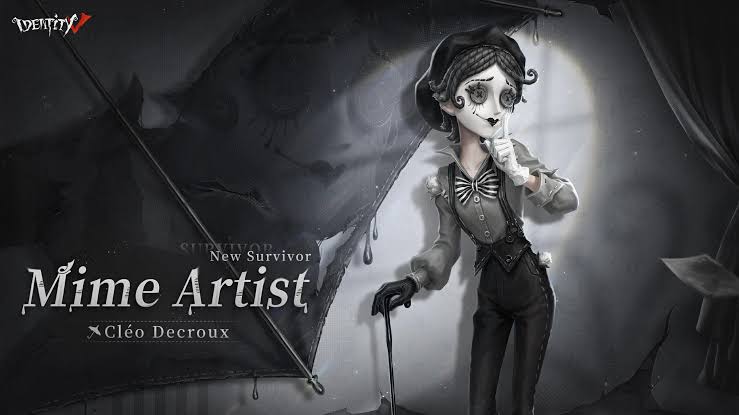
Who Is the Mime Artist (Cléo Decroux)?
The Mime Artist, whose full name is Cléo Decroux, is a new Survivor who arrived in Identity V on June 3, 2026 inside Season 42 Essence 3. Her debut S-tier costume is "Traveler of Dreams," and the Belle Époque-themed pool also carried A-tier costumes for Wax Artist ("Flaming Waltz") and Little Girl ("Young Poet"). Cléo's delusions grow unchecked in her mind, leaving her unable to find her place in reality or beneath the spotlight — a theatrical, unsettling identity that fits the manor's gothic tone.
If you want to pull for Traveler of Dreams before Season 42 closes, the official Topuplist site offers an Identity V top-up at Topuplist so your Echoes are ready the moment you decide.
Mime Artist Kit: External Traits Explained
Cléo's kit is built around fake terrain — she conjures simulated walls, pallets, and stages that confuse the Hunter without dealing damage directly. Her three external traits are Improvisation, Pent-Up, and Side Step.
Improvisation. Depending on the emotions that rise within her, the Mime Artist performs two different mime routines.
Joyful Routine: She opens the Prop Umbrella and gleefully acts it out on a windy day. In the simulated wind, the umbrella pulls her forward in a straight line for 10.1 meters. Colliding with an obstacle ends the movement early and creates a simulated wall and simulated pallet behind her. If there is not enough space on either side of the path, the simulated wall cannot be created. If there is no obstacle near where she stops, or if there is an interactable object nearby, the simulated pallet cannot be created. When there are no Survivors other than the Mime Artist within 25 meters of the Hunter, the Hunter destroys simulated pallets 15% slower. The simulated wall disappears 10 seconds after the simulated pallet is destroyed; if no pallet is created, the wall disappears 10 seconds after being created.
Anxious Routine: She tosses the Prop Umbrella, recreating the scene of returning to the stage. Centered on the umbrella, a circular simulated stage with a radius of 12.7 meters is created and lasts 15 seconds. When a Survivor enters the stage, the umbrella appears at the Survivor closest to the center and creates an area with a radius of 4.2 meters. If a Hunter is present, the umbrella prioritizes attacking the Hunter. If a Survivor is present, the umbrella pulls them in, then launches them a set distance in the chosen direction after 2 seconds (the Survivor can also be launched early). After that, the umbrella disappears. The Prop Umbrella has a 4-second cooldown.
Pent-Up. The Mime Artist gathers Emotional Fragments through different actions and can use her item only when both Joy and Anxiety are full. Switching routines changes the balance between the two emotions. Moving or interacting gains Joy Fragments over time; hitting the Hunter with a pallet fills Joy instantly; when a Hunter is within 10.1 meters, or when she is decoding, or when she or a nearby teammate is injured, she gains Anxiety Fragments over time; when her Fear increases, Anxiety fills instantly. Switching routines grants 20% more of the related Emotional Fragments, triggerable once every 30 seconds.
Side Step. During a performance, the Mime Artist uses special footwork: while performing Joyful Routine near the simulated wall, Movement Speed increases by 3%; while performing Anxious Routine on the simulated stage, Movement Speed increases by 3%.
A detailed kit breakdown is maintained on community guide hubs such as Ghosts of the Manor, which tracks each new Survivor's numbers as patches land.
The June 2026 Nerf: What Actually Changed
The June 3, 2026 patch hit the Mime Artist with a coordinated nerf package aimed at her vertical mobility, not her core kit. Three concrete changes matter:
Vertical reach restricted. Pre-nerf, the Prop Umbrella could carry Cléo to the upper level of two-story buildings — a near-free reset on maps like Sacred Heart and Leo's Memory. Post-nerf, that vertical path is gone; she stays on her current floor.
Invisible walls in narrow gaps. Specific environment shortcuts that previously let the umbrella punch through tight passages now have collision boxes, closing several known escape lanes.
Flying invincibility removed. Pre-nerf, the umbrella's takeoff frames ate hits. Post-nerf, a clean Hunter swing lands and cancels the entire animation, costing you the cooldown and the distance.
Crucially, her signature numbers stayed intact: the 10.1m Joyful dash, 12.7m Anxious stage (15s duration), 4.2m launch radius, 4-second cooldown, +3% Side Step speed, and the 15% slower pallet break when no Survivors sit within 25m of the Hunter all shipped at their values. What got removed is the "escape to a different floor for free" panic button — her chase identity of fake walls, fake pallets, and stun-stage launches is mechanically the same.
Best Persona Build for Mime Artist
Because Cléo's value comes from creating space and repositioning rather than raw vault speed, her build should lean into survivability and kite extension. A standard recommendation is:
Slot type | Suggested choice | Why |
Upstairs / Fly | Fly | Extra vault distance pairs with her dash to extend rotations. |
Drop / Tide | Tide (Window/Borrowed Time equivalent) | Buy a second chance when the Hunter catches her post-dash. |
Bottom / Breakout or Healing | Breakout | Her kit already controls space; Breakout frees a kidnapped teammate. |
Middle / Exhaust or Patience | Patience | Faster pallet drops complement her simulated pallet setups. |
Pair this with a persona that boosts decoding slightly if your team lacks a decoder, since her Anxiety gain while decoding makes her a passable secondary decoder. The goal is simple: use Joyful Routine to create a fake pallet, then loop the real one next to it.
How to Play Mime Artist After the Nerf
Post-nerf, the Mime Artist rewards intentional positioning over panic-button escapes:
Pre-place your terrain. Drop a simulated wall and pallet with Joyful Routine near a real loop before the Hunter arrives, then vault the real pallet and let the fake one buy confusion.
Use Anxious Routine offensively. The 12.7m stage can pull a chasing Hunter off your teammate or reposition a Survivor away from danger. The 2-second launch is a strong disengage if timed.
Manage your emotions. Switch routines to bank the 20% fragment bonus on cooldown; never let both meters sit full without spending.
Forget the rooftop trick. Since vertical flight is gone, plan escapes on a single floor and use the 3% speed near walls/stages to stretch the gap.
Save the 4-second cooldown. The umbrella is your only mobility tool now — wasting it on a short hop hands the Hunter a free hit.
A quick Identity V top-up at Topuplist through the official Topuplist site can fund the persona presets and gears you need to test these routes in practice mode without grinding.
Mime Artist Matchups and Counters
Cléo performs best against trajectory and teleport Hunters who commit to a path, because her stage launch disrupts their approach. She struggles against high-mobility Hunters (Mercenary, Prospector, Forward-style kite counters aside) and any Hunter that can ignore or destroy simulated terrain quickly. As a Survivor, your counters to her include simply respecting the fake pallet — many new Hunters waste time breaking a wall that is not real. For Survivors facing her on the other side (co-op modes), her pull is telegraphed by the stage radius, so stepping out early negates the launch.
Is Mime Artist Still Worth Pulling?
Community consensus lands on the same verdict: she remains a high- to S-tier Survivor. The nerfs lowered her ceiling but left the unique fake-terrain identity untouched, so she is still worth pulling for chase mains — just expect a real learning curve. Her S-tier "Traveler of Dreams" is only obtainable during the active Season 42 window, and once the season converts to a Memory Sphere the skin is no longer available through standard means. If you main Survivor and enjoy space-control playstyles, she is one of the most distinctive additions of the season.
For collectors who want the debut skin secured without the Essence grind, the official Topuplist site provides an Identity V top-up at Topuplist to cover Echoes whenever the banner is live.
Mime Artist in Ranked: Positioning Drills
Cléo's value in ranked comes from controlling a single loop, not from roaming. The drill is simple: reach a strong tile, drop a simulated wall with Joyful Routine on the approach side, then vault the real pallet so the Hunter must read two obstacles at once. The fake pallet buys a buffer because the Hunter destroys simulated pallets 15% slower when no other Survivor is within 25 meters. Practice this on tight maps like Arms Factory first, where sightlines force the Hunter through your setup. Once comfortable, layer the Anxious Routine stage on the exit path so a chasing Hunter gets pulled off-angle as you rotate to the next cipher.
Remember the post-nerf rule: no rooftop escapes. Plan everything on one floor and use the 3% speed bonus near walls and stages to stretch gaps. A Survivor who respects her limits outperforms one who wastes the 4-second cooldown on panic hops.
Synergies With Other Survivors
The Mime Artist pairs best with decoders who hold distance — a Coordinator or a Barmaid babysitting from range lets Cléo anchor a loop without splitting attention. She also enables a "bait and launch" combo: a teammate feints a rescue while Cléo drops the Anxious stage on the Hunter, pulling them away for the two-second launch window. Against a Hunter who commits to her, having a second Survivor ready to take the hit keeps the fake-terrain pressure alive.
Where she struggles is a coordinated quad that focuses her early; without a bodyguard, her lack of raw vault speed means a fast Hunter can collapse the loop before the first simulated wall matters. Draft her into compositions that already have one hard OB anchor.
Common Mistakes to Avoid
Wasting the umbrella cooldown. The 4-second Prop Umbrella cooldown is her only mobility. Spend it on a real reposition, not a three-meter hop.
Letting both emotion meters sit full. Switch routines on the 30-second bonus cooldown to bank the 20% fragment gain; idle meters are wasted uptime.
Building fake terrain too early. Drop walls only when the Hunter is near; a simulated pallet placed with no pressure just expires.
Forcing the rooftop play. It is gone post-nerf — stop trying it on two-story maps.
Neglecting the launch timing. The 2-second Anxious launch can be triggered early; wait for the Hunter to commit before launching a teammate to safety.
For players who want to test these routes without the ranked pressure, a quick Identity V top-up at Topuplist through the official Topuplist site funds the persona presets and gears you need to experiment in practice mode.
Mime Artist Skin and Collection Notes
Beyond "Traveler of Dreams," Cléo's base design — painted face, black beret, bowtie, and worn umbrella — has made her one of the most recognizable debuts of the season even before cosmetics. The Belle Époque pool she launched in also carried the A-tier "Flaming Waltz" for Wax Artist and "Young Poet" for Little Girl, so the essence is a strong pull for collectors who want the full set. Because her S-tier is only available during the active Season 42 window, deciding early avoids the Memory Sphere wait that follows season close.
Mime Artist Tier Placement and Matchmaking
Where does Cléo sit after the nerf? Most tier lists keep her in the high A to low S band. She is not a blind first-pick like the strongest contain survivors, but she is one of the few who can independently create space without a teammate's setup. In matchmaking, she performs best when the Hunter is a trapper or teleporter who commits to a path — her stage launch disrupts that commitment. She is weakest against fast, mobile Hunters who ignore her fake terrain and simply out-chase her.
For duo or squad queue, draft her alongside a decoder who can hold a distant cipher, so she is free to anchor the most-contested loop. Against a Hunter who hard-targets her, a second OB anchor draws pressure so her fake walls actually matter. The key mistake is treating her like a traditional kiter: she wins by controlling one tile, not by out-running the Hunter across the map. Her persona flexibility is another underrated strength — because her Anxiety fills while decoding, she can serve as a secondary decoder in a pinch, which lets you run a greedier decode comp without sacrificing a true decoder. The 20% fragment bonus on routine switch rewards players who actively manage emotions rather than passively holding both meters, and that skill ceiling is why experienced players rate her above her numbers alone might suggest. If you are climbing ranked this season, slot her into compositions that already have one hard anchor and one decoder, and let her own the mid-map loop while the rest of the team pressures ciphers.
How Mime Artist Compares to Other Space-Control Survivors
Cléo is not the first Survivor to manipulate terrain, but she is the first whose fake walls and pallets are purely psychological rather than physical. Compared with Night Watch, who locks down an area with her own stationary presence, the Mime Artist projects control outward through the Joyful dash and Anxious stage without needing to hold a tile herself. Against Puppeteer or Gravekeeper, whose value scales with team setups, Cléo's kit works solo — she creates her own chaos. The post-nerf floor means she no longer competes with the highest-mobility kiters for raw escape, but her ability to mislead a Hunter about which pallet is real remains unique. For players deciding between her and another space-control pick, the differentiator is independence: most control Survivors need a coordinated team to shine, while the Mime Artist's illusions do the work even in a disorganized lobby.
FAQ:
Q1: When did the Mime Artist release in Identity V?
A1: Cléo Decroux launched on June 3, 2026, inside Season 42 Essence 3, alongside her debut S-tier costume "Traveler of Dreams."
Q2: What are the Mime Artist's two routines?
A2: Joyful Routine is a 10.1m straight-line dash that leaves a simulated wall and pallet; Anxious Routine creates a 12.7m stage (15s) that attacks a Hunter or pulls and launches a Survivor.
Q3: How did the June 2026 nerf change her?
A3: It removed her vertical flight to upper floors, added collision to narrow-gap shortcuts, and made her takeoff hittable. Her core numbers (10.1m dash, 12.7m stage, 4s cooldown) were unchanged.
Q4: Is Mime Artist still good after the nerf?
A4: Yes. Community and guide-site consensus keeps her at high/S tier; the nerf cut her ceiling but preserved her fake-terrain identity.
Q5: What is the best build for Mime Artist?
A5: A space-control build using Fly, Tide, Breakout, and Patience, focused on extending kite loops with her simulated pallets and walls.
Q6: Can I still get the Traveler of Dreams skin?
A6: Only during the active Season 42 Essence window; after the season ends it moves to the Memory Sphere and is no longer obtainable via standard pulls.