


Arena Breakout Fogbound Companions Guide: Survive Misty Fog Valley
Fogbound Companions turns Arena Breakout's Valley into a low-visibility duo operation where information, spacing, and extraction discipline matter more than reckless speed. This guide explains how to divide responsibilities with a partner, move through Misty Fog Valley, evaluate the Armored Truck Convoy, survive boss pressure, and leave with meaningful loot instead of losing everything to one late decision.
Fogbound Companions asks Arena Breakout players to trust one partner in a version of Valley where fog reduces the value of long visual checks and makes every sound, silhouette, and route choice more important. Players planning optional purchases for Season 13 can prepare Bonds through Topuplist or the dedicated Arena Breakout top-up page, but successful raids still depend on equipment discipline and cooperation rather than spending. The central rule is simple: a duo should behave like one connected unit with two angles, not two solo players who happen to enter the same raid.
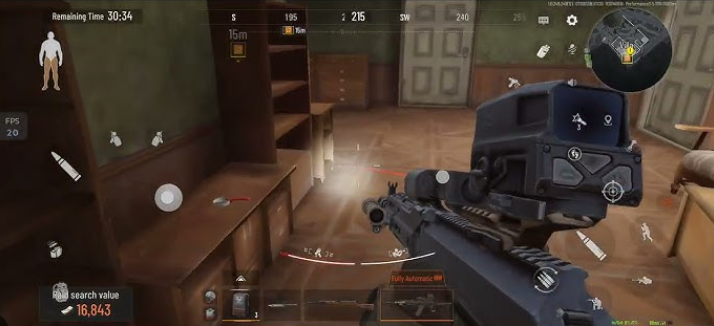
What Fog Changes About Valley
Normal Valley knowledge remains useful, but fog changes the confidence attached to that knowledge. A familiar ridge is no longer guaranteed to provide a clean overwatch position. A road that normally looks empty may contain a squad, a patrol, or a player following the convoy sound. Long-range weapons retain value, but their information advantage becomes less consistent.
Fog also compresses reaction time. Players identify threats later, so the first person who notices movement cannot spend several seconds explaining it. Duo communication should use direction, distance, and action: “left ridge, close, holding” is more useful than a long description.
The reduced visibility changes extraction risk as well. Players cannot safely assume that an open path is clear just because no enemy is visible. A duo must clear in layers, using sound and cover transitions instead of sprinting across the full route.
Build the Duo Around Two Different Jobs
The strongest pair does not carry identical equipment and make identical decisions. One player should be the contact player and the other the control player.
The contact player moves first through short transitions, checks the next piece of cover, and is prepared for sudden close-range combat. This player needs a weapon that becomes ready quickly and remains manageable while repositioning. The contact player should not run so far ahead that the control player loses a usable firing angle.
The control player watches the contact player's exposed side, listens for movement beyond the visible fog, and protects the retreat route. This role benefits from a stable weapon, enough penetration for armored targets, and patience. The control player does not need to stand hundreds of meters away; the purpose is to create a second angle and prevent both players from being surprised by the same threat.
Roles can switch after damage, ammunition loss, or terrain changes. The important part is that both players know who is moving first during the next ten seconds.
Equipment for Low-Visibility Raids
A costly kit is not automatically a good fog kit. Equipment should reduce uncertainty and allow recovery after one bad contact.
Bring medicine that can handle more than a single exchange. Fog fights often begin unexpectedly and may continue through multiple short contacts. A duo that survives the first opponent with no healing capacity becomes an easy target for the next group.
Ammunition quality matters because the raid can include armored players, militants, and boss-related pressure. Carry enough effective ammunition for the important magazine positions, but do not overload the backpack with expensive rounds that turn every extraction attempt into a financial emergency.
Optics should match realistic visibility. Extreme magnification may offer little value when fog hides distant targets, while a clear low- or medium-magnification sight helps identify shapes without sacrificing close handling. A secondary sight or weapon can solve the gap between convoy fights and building entries.
Sound information is essential. A headset that helps separate footsteps, vehicles, and gunfire provides more practical value than a small armor upgrade that empties the budget. The duo should also agree on which sounds justify stopping. If one player freezes at every distant shot while the other continues moving, spacing collapses.
Moving Through Misty Fog Valley
Use a leapfrog pattern. The contact player moves to a defined piece of cover while the control player watches. Once the position is confirmed, the control player advances. The movement is slower than a direct sprint but prevents both players from being caught in the open.
Avoid walking the exact center of roads unless the Armored Truck Convoy or another objective requires it. Road edges provide faster access to cover and make your silhouette less predictable. When crossing, choose the shortest exposed line, listen first, and cross one player at a time.
Elevation is useful, but high ground is not automatically safe. A ridge can expose a player against the foggy background. Use elevation to gain a brief information advantage, then move before nearby teams identify the silhouette.
Inside compounds, resist the urge to clear separate buildings simultaneously. Fog outside and walls inside create too many hidden routes. Clear one structure with two connected angles, then move together. A single extra loot container is not worth losing the ability to trade an elimination.
Deciding Whether to Challenge the Armored Truck Convoy
The convoy is attractive because it creates action and can be connected to valuable loot or event progress, but it is also a moving announcement of your location. Before engaging, answer four questions.
Do you have enough ammunition to finish the fight and still defend the loot? Can both players reach cover if another squad arrives? Is the extraction route still realistic after the engagement? Has nearby gunfire suggested that multiple teams are already moving toward the convoy?
If two answers are negative, let the convoy pass or follow at distance. The objective can create opportunities without being attacked immediately. Another squad may reveal its position, spend ammunition, and take damage first.
When engaging, do not stand together. One player should create consistent pressure while the other watches likely third-party approaches. After the main threat is controlled, pause before looting. The most dangerous moment is often the silence immediately after a loud fight, when another duo knows exactly where the surviving players will stand.
Boss and Elite Enemy Pressure
Season-specific boss or elite encounters should be treated as area-control events, not isolated player-versus-environment fights. Their gunfire attracts players, and their durability consumes resources that may be needed for extraction.
Identify the escape route before the first shot. If a boss pushes aggressively or another team appears, the duo needs a direction that does not pass through the same doorway. Place the control player where both the boss area and an external approach can be monitored.
Do not continue a boss fight simply because damage has already been invested. Sunk cost kills geared players. If healing is low, the approach becomes exposed, or a third party controls the exit, disengage. The boss and loot may remain available later; a destroyed kit will not.
Loot Priority: Value Must Survive the Raid
Fogbound Companions encourages greed because uncertainty makes every successful fight feel rare. Use a replacement rule: when the backpack is nearly full, every new item must be better than something already carried.
Prioritize compact high-value loot, mission items, and equipment that directly improves survival. Avoid filling space with low-value objects early if doing so makes later decisions slower. Keep enough free room for convoy, boss, or player loot when those are part of the plan.
After a major pickup, reassess the raid. The duo's objective may have changed from “find value” to “protect value.” A route that was reasonable with an empty backpack can be reckless after both players are carrying expensive items.
Raid state | Best decision | Warning sign |
|---|---|---|
Low value, strong supplies | Continue toward a planned objective | Wandering without a clear route |
High value, healthy duo | Begin a controlled extraction rotation | Taking optional fights for pride |
High value, one injured player | Use the safest available exit plan | Splitting up to save time |
Low supplies, little value | Avoid major objectives and recover | Spending expensive ammunition to chase weak loot |
Extraction Planning Starts Before the Final Minute
A safe extraction is a sequence, not a final sprint. Confirm which exits are possible, what conditions they require, and which route avoids the loudest recent fights. Do this before the backpack becomes valuable.
Approach extraction from cover and stop at a listening point. Fog can hide campers, but it also hides your approach. Use that uncertainty rather than rushing into the center of the zone.
One player should watch while the other checks the activation area. If the extraction has a timer or condition, decide who faces the most likely threat route. Do not both stare at the same entrance.
If the area feels wrong, leave before committing. An extra minute used to rotate can protect an entire raid. The duo should agree in advance that either player can call a withdrawal when information is poor.
Recovering From a Bad Contact
When the contact player takes damage, the control player should not immediately run to the same cover. First create pressure that stops the enemy from pushing. The injured player then moves or heals while the second angle remains active.
If a teammate is down, identify whether the opponent is watching the body. A rushed rescue may turn one loss into two. Use sound, utility, or a different angle to force the enemy to react before committing to the revive.
When both players are separated, use a meeting point rather than vague directions. Choose a named building, road bend, or terrain feature. Movement through fog becomes safer when both players know where the other will appear.
A Three-Raid Learning Plan
The first raid should be a route-learning run. Use a moderate kit, avoid unnecessary convoy pressure, and identify how fog affects familiar landmarks. The goal is to extract with better map timing, not to force maximum profit.
The second raid should test one major objective. Decide before deployment whether that objective is the convoy, an elite area, or a high-value compound. Build the equipment and route around that choice.
The third raid should combine information. Use the route that felt safest, challenge the objective only when the entry conditions are favorable, and begin extraction as soon as the value threshold is reached. This progression teaches more than repeating expensive all-or-nothing raids.
Final Extraction Rule
Fogbound Companions rewards pairs that share information and control greed. Use two connected angles, move one player at a time, treat the convoy as an optional risk, and change the raid plan after acquiring valuable loot.
The most important decision is often not how to win the next fight. It is whether the next fight needs to happen at all. A duo that extracts consistently will build more resources, learn more routes, and enter later raids with better options than a duo that wins several battles and loses everything at the last objective.
FAQ
Is Fogbound Companions a solo-friendly mode?
It is designed around cooperation. A solo-minded player can still aim well, but the mode becomes much safer when partners coordinate movement, cover, and extraction decisions.
Should I always attack the Armored Truck Convoy?
No. Engage only when ammunition, cover, and the extraction route support the risk. Following the convoy and allowing another team to reveal itself can be the stronger decision.
What optic is best in the fog?
A clear low- or medium-magnification optic is usually more flexible than extreme zoom. Choose an optic that works at the visibility distance you actually encounter, not the distance available on a clear map.
Do better paid items guarantee safer raids?
No. Optional spending does not replace route knowledge, ammunition discipline, or duo communication. Players who decide to purchase Bonds for eligible in-game items can use Topuplist and the Arena Breakout top-up page, but every deployed item can still be lost when raid decisions fail.