


How to Get 20 Free Draws in Arena Breakout Team Trial
Team Trial is Arena Breakout mobile Season 13’s new 8v8 team battle mode. Eliminations generate points and the team with the highest score wins, while event missions award 20 Logistical Supply Voucher draws. This guide explains how to read the live equipment rules, divide an eight-player squad into useful functions, convert eliminations into controlled score, and complete the reward route without confusing the mobile game with Arena Breakout: Infinite.
Arena Breakout mobile players preparing for Team Trial can review optional account support through Topuplist and the dedicated Arena Breakout top-up page, but the new Season 13 mode and its mission rewards should be approached through gameplay before any purchase. Team Trial places squads of eight into an 8v8 battle where eliminations generate points and the team with the highest score wins; completing the associated event missions can award 20 Logistical Supply Voucher draws.
This article covers Arena Breakout on Android and iOS, not Arena Breakout: Infinite on PC. The two games have separate modes, seasons, economies, stores, and event rules. A Team Trial screenshot from the PC title cannot be used to explain the mobile reward route.
The official Season 13 page confirms the team size, elimination scoring, victory condition, and free draw total. Other details such as equipment loss, respawn behavior, map rotation, saved-loadout treatment, scoring modifiers, and mission timing must be read from the current mobile client. The strategy below starts with those confirmed rules and adapts ordinary tactical principles to the live mode without inventing missing mechanics.
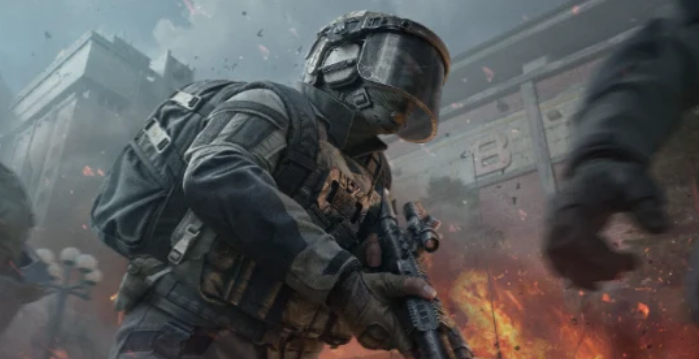
What Team Trial Officially Confirms
Team Trial is a new Season 13 mode built around two teams of eight. Players earn points by eliminating enemies, and the side with the most points wins. The official anniversary page also states that Team Trial event missions provide 20 Logistical Supply Voucher draws for free.
Those facts define the article’s safe foundation. The mode rewards controlled combat output rather than ordinary extraction profit. A player who survives with valuable loot but produces no eliminations may contribute less than in a standard raid. Conversely, reckless eliminations that immediately give the opposing team an easy return can reduce the net score advantage.
Open the mode information panel before selecting equipment. Confirm whether gear is supplied or owned, whether deaths consume equipment, whether players respawn, how long a match lasts, what maps are active, and what actions count toward event missions. These answers determine loadout cost and mission speed.
Why 8v8 Is Not Just a Larger Four-Player Squad
Eight players create more information, more crossfire, and more opportunities for duplication. If everyone takes the same route, the squad can block movement and expose itself to one concentrated counterattack. If everyone spreads independently, isolated players feed points and become difficult to support.
The useful structure is two connected groups rather than eight unrelated individuals. One group can hold the main pressure lane while the second controls a flank, protects a vulnerable approach, or responds to movement. The groups should remain close enough to trade eliminations and far enough apart to avoid losing the entire team to one angle.
Communication also needs compression. Eight players cannot narrate every sound. Calls should identify location, enemy count, movement direction, and immediate need. Personal inventory commentary and uncertain guesses can hide the information that actually changes a fight.
Build the Squad Around Four Functions
Team Trial does not need eight rigid character classes, because Arena Breakout is built around equipment and positioning rather than hero abilities. It does benefit from four functions: entry pressure, lane control, flank security, and recovery support. Two players can share each function, creating natural partners inside the eight-person team.
Function | Main job | Useful equipment quality |
|---|---|---|
Entry pressure | Break contested space and force enemies from cover | Familiar close-to-mid-range weapon, reliable armor, grenades the player can place accurately |
Lane control | Hold repeatable sightlines and punish exposed movement | Stable rifle or marksman option, enough ammunition, clear retreat position |
Flank security | Watch alternate routes and warn the main group | Mobile loadout, flexible optic, information discipline |
Recovery support | Trade eliminations, protect wounded allies, stabilize regrouping | Medical depth, smoke or utility when allowed, dependable mid-range weapon |
These are responsibilities, not permanent assignments. A flank pair can become the entry pair when the enemy abandons its route. The important part is knowing who covers the abandoned angle during the transition.
Net Eliminations Matter More Than Highlight Plays
Because eliminations generate points, a good fight should be measured by the score exchanged. A two-kill push followed by four isolated deaths is a negative team result even if the first player produced an impressive clip. The squad should protect players after successful entries, recover firing lines, and avoid chasing a retreat into unknown crossfire.
Trading is especially important. When one teammate is attacked, a second player should be positioned to answer quickly. The purpose is not to accept every death, but to prevent the enemy from collecting uncontested points. A player who enters too far ahead cannot be traded and turns individual aggression into team risk.
Watch the scoreboard rather than the personal elimination count alone. When ahead, the team can force the opponent to take risk. When behind, it may need a coordinated lane change or focused push rather than eight separate attempts to create a miracle.
Loadout Cost Depends on the Live Loss Rules
Do not carry an expensive operation kit into Team Trial until the mode explains what happens to owned equipment. If gear is protected or supplied, players can build around performance. If ordinary loss applies, the event reward route must be compared with the risk of repeated deaths in an elimination-focused mode.
A practical first loadout uses a familiar weapon, enough magazines for sustained team fighting, ammunition appropriate for the visible armor environment, medical supplies that match the match length, and only utility the player already understands. A new mode is a poor place to test an unfamiliar weapon and an unfamiliar tactical role simultaneously.
After one match, adjust the weakest documented category. Add ammunition if the match outlasts the supply, change optic if the sightline demands it, or reduce weight if rotation is too slow. Do not rebuild every item because the team lost once.
Map Control Without Overextending
The highest-value position is not automatically the deepest position. A useful lane provides cover, a retreat route, a view of enemy movement, and support from at least one teammate. Moving beyond that support can turn a strong angle into an easy enemy point.
Use pressure to make the opposing team reveal its shape. Repeated fire on one lane may pull defenders and open another route. The second four-player group can then advance while the first group maintains attention. This is more reliable than asking one player to perform a long solo flank without information.
When a push succeeds, pause long enough to rebuild spacing. Players need ammunition, medical recovery, and new coverage. Continuing at full speed after the original advantage has ended often converts a winning exchange into a chain of deaths.
Mission Progress and the 20 Free Draws
The official Season 13 page states that Team Trial event missions award 20 Logistical Supply Voucher draws. It does not mean the client automatically gives all twenty when the mode is opened. Players must inspect the mission page and identify how the draws are divided across participation, victories, eliminations, score, daily activity, or other live conditions.
Prioritize tasks that overlap team success. Completing matches, contributing eliminations, and winning through coordinated play are better than forcing a personal condition that harms the score. If a mission requires a specific weapon or action, assign it to a player who can perform it without abandoning the team plan.
Claim each completed mission before the page closes or refreshes. Logistical Supply Voucher draws may be delivered as vouchers, direct draw attempts, or another visible event item. Verify the exact destination rather than assuming a missing balance means failure.
How to Value the Logistical Supply Draws
Twenty free draws are valuable because they cost gameplay time rather than optional currency, but they do not guarantee a particular weapon appearance unless the live prize pool says so. Open the supply page and read pool contents, probabilities, duplicate treatment, guarantee progress, expiration, and whether event draws share progress with another pool.
Use the free draws before considering paid continuation. A free result can satisfy the cosmetic goal or change the remaining guarantee distance. Do not assume that twenty attempts make the headline reward likely, and do not purchase the remaining route only because the progress bar has moved.
Collection value depends on weapon use. An appearance for a frequently equipped rifle may matter more than a rarer item for an unused weapon. Profile items and universal cosmetics may have broader visibility. Evaluate the result after it arrives, not only by its color.
Solo Queue and Premade Squad Differences
A premade team can assign the four functions before queueing, choose paired routes, and agree on short callouts. Solo players must infer the team shape during the opening minute. Follow the largest coordinated group without stacking the exact same cover, and watch which lane lacks attention.
Do not become the unofficial flanker simply because nobody else moved. A solo flank without communication is often indistinguishable from isolation. First establish a position that can support or be supported, then use map information to move.
Solo players can improve team stability through predictable behavior: mark enemy locations, hold one useful angle, trade nearby teammates, and regroup after a lost fight. These actions require no leadership title and create more value than repeatedly asking strangers to follow a complex plan.
A Short Improvement Review After Each Match
Review only three questions: where did the team lose the largest group of points, which lane created the best positive exchange, and which mission condition advanced. Three precise answers are more useful than a long diary of every death.
If the largest loss came from one exposed route, change the opening spacing. If the best exchange came from paired fire, preserve that partnership. If mission progress failed, reread the exact eligible action before the next queue. This turns every match into one tactical improvement and one reward check.
Do not judge the entire mode from the first result. Eight-player coordination varies widely between matches. Look for repeatable patterns across several games before replacing a preferred weapon, abandoning a role, or spending resources on another setup.
Final Team Trial Route
Enter Team Trial after reading the mobile equipment and respawn rules. Use a replaceable familiar loadout for the first match, organize the squad as two connected four-player groups, and measure fights by net points rather than personal highlights. Then align event missions with team success and claim all twenty free draws before considering any optional continuation.
The mode rewards disciplined combat more directly than a standard extraction raid. Strong teams create trades, maintain support distance, change lanes together, and stop a successful push before it becomes overextension. Strong reward planning separates free voucher value from the random pool’s desired item.
Team Trial does not need a complicated operating manual. Clear roles, compressed communication, one adjustment per match, and careful mission claims are enough to turn the new 8v8 format into both a useful training environment and a practical anniversary reward route.
FAQ
Is Team Trial in Arena Breakout mobile or Arena Breakout: Infinite?
This guide covers Arena Breakout mobile on Android and iOS. Arena Breakout: Infinite is a separate PC game and its event rules do not apply here.
How many players are in Team Trial?
Team Trial is an 8v8 mode with two squads of eight. Eliminations generate points, and the team with the highest score wins.
How do I get the 20 free Logistical Supply Voucher draws?
Complete the missions listed on the live Team Trial event page. The official Season 13 page confirms the total, while the client defines how those draws are divided among specific tasks.
Should I bring expensive gear into Team Trial?
Only after reading the live equipment-loss and respawn rules. Use a familiar replaceable setup first if owned gear can be lost or the treatment remains unclear.
Where can I prepare an optional Arena Breakout purchase?
After claiming the free mission draws and checking the live pool, compare supported options through the Topuplist official website and the Arena Breakout recharge page. Verify player ID, region, and product before payment.