


Whiteout Survival State vs State (SvS) Guide 2026: Prep Days, Sunfire Castle & Winning Strategy
SvS 2026 guide — 5-day prep, Sunfire Castle battle, and a strategy to win state vs state.
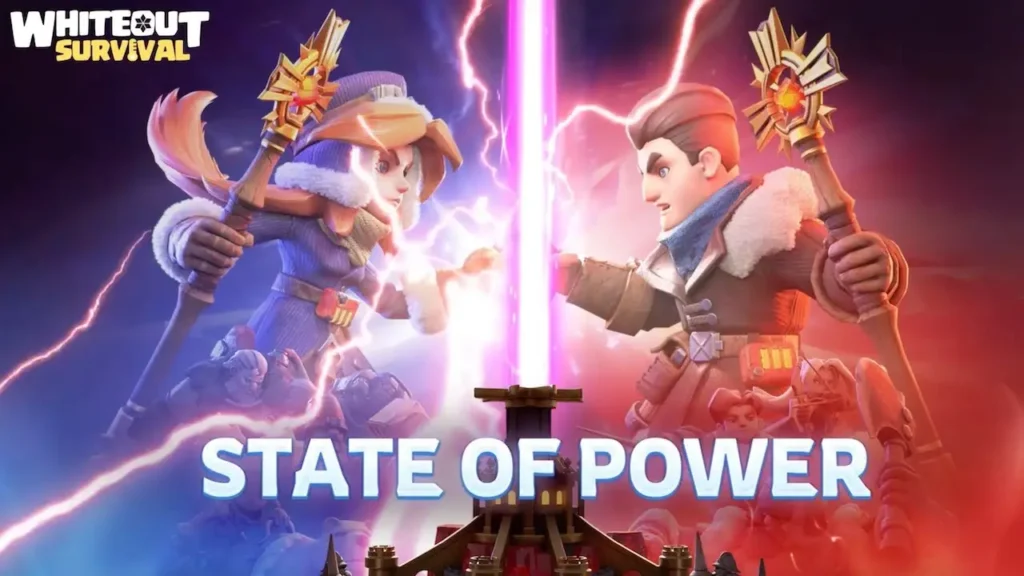
What Is State vs State (SvS) in Whiteout Survival?
State vs State (SvS) is the premier cross-state competition in Whiteout Survival. Two states are paired against each other; after a week of preparation scoring, they meet on the battlefield for a single decisive castle fight. The winner earns state-wide buffs and the right to appoint leadership, while the loser defends home turf.
If your state instead receives King of Icefield in a given cycle, the matchmaker failed to find a suitable opponent — treat that cycle as a normal individual event.
Want to fast-track your SvS prep? Top up Whiteout Survival safely at Topuplist, and check Topuplist for the latest bundle deals and event top-ups.
The SvS Schedule and Cadence
SvS runs in cycles of a few weeks. The flow is: a Preparation Phase (Monday through Saturday morning) followed by a Battle Phase (Saturday, 12 hours). The Preparation Phase splits into five themed daily stages. Days 1–4 each last 24 hours; Day 5 extends and ends at 10:00 UTC Saturday, when the Battle Phase begins.
Preparation Phase: The 5 Themed Days
Each day scores only activities that match its theme, so timing your spends is everything. A hero shard spent on a non-themed day contributes nothing to that stage's score.
Day 1 City Construction
Commit construction speedups, Fire Crystals, and Refined Fire Crystals toward building upgrades. Time-walling works in your favor: a 7-day Furnace upgrade started on Day 1 scores its full Refined Fire Crystal value immediately, even though the upgrade finishes later.
Day 2 Basic Skills Up
Use research speedups and Fire Crystal Shards. Line up your longest research projects to begin on Day 2 for free points.
Day 3 Beast Slay
Stamina-based activities shine here. Verify exact scoring in-game, but generally this is the day to burn beast-hunt stamina efficiently.
Day 4 Hero Development
Spend Mythic Hero Shards, Widgets, Hero Gear Essence Stones, Charm and Chief Gear improvements. This is where Gen 9 progress (Magnus/Fred/Xura materials) scores heavily.
Day 5 Power Boost
The extended day ends 10:00 UTC Saturday. Train troops — higher tiers yield disproportionately more points (roughly 60 at Lv. 10 versus 3 at Lv. 1). Weight your training speedups toward your highest-tier troops. Promotions score the difference between tiers, so a fresh Lv. 10 train often beats a 9→10 promotion per resource.
Short on Frost Stars for that extra build queue? Grab a quick Whiteout Survival top-up through Topuplist, or browse all offers on Topuplist.
The Battle Phase: Sunfire Castle
The Sunfire Castle Battle Explained
The Sunfire Castle Battle begins at 12:00 UTC and runs up to 5 hours within the broader 12-hour window. The goal is to occupy the castle for a consecutive hold (commonly a 3-hour clean hold decides it). The alliance that wins appoints the Supreme President (if attackers win) or state presidents (if defenders win).
The attacker's own Sunfire Castle is protected during the Battle Phase, so the attacker commits fully to offense. The defender hosts the cross-state castle battle in their territory and must split focus between defense and counter-attacks.
State-Level Stakes and Buffs
The state with the higher total Preparation Phase score becomes the attacker and receives a Healing Speed buff and an Enlistment Office Capacity buff during the Battle Phase. Both materially improve troop sustain and recall. The Preparation Phase winner therefore has a structural edge before a single rally is launched.
What to Stockpile Before SvS
A single state-wide message from leadership listing what to hold can swing the result more than any individual play. Hold these for the matching day:
Day 1: construction speedups, Fire Crystals, Refined Fire Crystals.
Day 2: research speedups, Fire Crystal Shards.
Day 4: Mythic Hero Shards, Hero Exclusive Gear Widgets, Hero Gear Essence Stones, Chief Charm/Chief Gear materials.
Day 5: training speedups, resources for planned troop training.
Planning your SvS push? Stock up resources with a Whiteout Survival top-up from Topuplist, and see current promos at Topuplist.
Personal and Alliance Milestone Rewards
Personal milestones are tiered by point thresholds within each stage; alliance milestones scale with alliance-wide points. Both scale with Furnace Level, maxing at Furnace 30. Top personal grades award a State Medal.
The Forfeit Rule
Alliance Ranking rewards distribute only to members present in the alliance at tally. Players who leave before tally forfeit their share. Leaders should freeze membership changes in the final hours before any phase tally.
Don't let a stalled Furnace hold back your heroes. Secure a Whiteout Survival top-up via Topuplist, and explore more at Topuplist.
Battle-Phase Hour-by-Hour Plan
10:00–12:00 UTC — Pre-castle. Cross state, position rallays, soften priority targets, rebase reinforcements.
12:00–14:30 UTC — Castle clean-win zone. Capture and begin a consecutive hold; defenders contest hard.
14:30–17:00 UTC — Castle tiebreaker zone. Clean wins are no longer reachable; focus on denying the enemy and farming points.
Use your three free cross-state teleporters wisely at the start.
Common SvS Mistakes
Spending themed items on the wrong day. A hero shard on Day 2 scores zero for Hero Development.
Not stockpiling. Day 1 without held speedups is wasted points.
Leaving the alliance before tally. Instant forfeit of ranking rewards.
No shield after the battle. A post-event ambush can wipe your army.
Ignoring the attacker/defender buffs when planning the castle fight.
Is SvS Worth the Effort?
For active players, absolutely. SvS rewards — personal gems, Sunfire Tokens, rare hero shards, exclusive city skins, plus state-wide training and healing buffs — are among the best in the game. The Supreme President buffs even benefit the whole state for two weeks. It demands coordination, but a well-run state turns SvS into the most rewarding week of the cycle.
For verified stage math and buff details, community strategy hubs such as Whiteout Survival Handbook publish regularly updated SvS guides.
SvS Prep: A State-Wide Checklist
Individual preparation matters, but SvS is won at the state level. The single highest-leverage action is a coordinated state-wide message from leadership listing exactly what to hold for each day. A state that stocks together outscores a state of individually optimized players who spend on the wrong day.
The 7-Day Hold Calendar
Days 1 to 7 before SvS: accumulate speedups, crystals, hero shards, widgets, charm materials, and training resources. Do not spend themed items.
Day 1, City Construction: dump construction speedups plus Refined Fire Crystals.
Day 2, Basic Skills Up: research speedups plus Fire Crystal Shards.
Day 3, Beast Slay: stamina activities.
Day 4, Hero Development: hero shards, widgets, essence stones, charm and chief gear.
Day 5, Power Boost: training speedups plus planned troop training, extended day.
Battle Phase: shield up after the castle fight, farm points until 22:00 UTC if safe.
The Psychology of the Castle Fight
The Sunfire Castle is as much about morale and communication as math. The alliance that stays organized on Discord through the 12:00 UTC start almost always wins the clean-hold window. Appoint clear roles: scouts, attackers, defenders, and a castle caller. A disorganized state with better stats loses to a coordinated state with worse stats more often than players expect.
Shield Discipline
The most common post-SvS tragedy is logging off unshielded after the main event and getting farmed. Shield up the moment your planned participation ends. Your army is worth more than the curiosity of one more look.
SvS for Different Account Types
For the Whale
You are the rally anchor. Max your Gen 9 march, front-load Refined Fire Crystals on Day 1, and lead the castle push. Your personal score alone can swing a stage.
For the Mid-Game Player
Focus on the stages you can contribute to cheaply: trucks in Alliance Showdown crossover, troop training on Day 5, and steady personal milestone grinding. You do not need to max to matter.
For the F2P Grinder
Time-walling long upgrades during scoring stages is your superpower: it scores points you were going to spend anyway. Hit every personal milestone you can and never leave the alliance before tally.
Reading Your Opponent State
Before the Battle Phase, scout the opposing state's power distribution and alliance rankings. If they are top-heavy with one dominant alliance, target their weaker alliances' nodes. If they are flat, contest the castle directly. Adaptation beats a fixed plan.
For verified stage math, buff durations, and sample hold calendars, community strategy hubs such as Whiteout Survival Handbook publish regularly updated SvS references.
SvS Prep Phase: The Five Days That Win the War
The five-day prep phase is where SvS is actually decided. During prep, you cannot attack the enemy state directly, but you can hoard resources, pre-build rallies, coordinate march targets, and scout the opposing state's layout. Treat prep as a production sprint: bank speedups, refill alliance stores, and stage your strongest heroes on the marches you intend to use. Alliances that waste prep arrive at the battle phase disorganized and under-stocked, and they lose regardless of individual power. The battle is the performance; prep is the rehearsal.
Reading the Enemy State Before Battle
Use prep to study the opposing state's furnace levels, alliance clusters, and Sunfire Castle approach. Identify their weakest alliances and their strongest, because your targets during battle should concentrate on the weak while avoiding the strong's garrisons. Map the roads to the Sunfire Castle so your rallies do not get stuck in terrain. The teams that scout hardest in prep take the fewest wrong turns in battle.
Sunfire Castle: The Battle Phase Objective
The Sunfire Castle is the central prize of the battle phase. Controlling it grants the state-wide buffs that tip the entire matchup, so most of your coordinated force should flow toward it while a screen of secondary rallies holds the flanks. Do not fragment your army across meaningless nodes; the castle is the win condition. A state that owns the castle with a held garrison at the scoring cutoff wins more than a state that captured twenty outskirts and lost the center.
Buffs and Why They Matter
Sunfire Castle control buffs apply to your whole state, raising troop lethality and survivability for the duration. These buffs compound with your existing Chief Gear and hero bonuses, which is why the castle is worth more than its point total suggests. Losing the castle late in the battle can erase an early lead, so defending the held garrison matters as much as taking it. Buffs are the quiet multiplier that decides lopsided states.
Battle Phase Execution and Communication
Execution during the battle phase lives or dies on communication. A single caller should direct rallies to the castle while squad leaders manage flanks. Pre-assign who brings the garrison heroes and who brings the rally heroes, so you are not deciding mid-fight. Alliances that practiced their call structure in prep execute cleanly; alliances that improvise get picked apart. SvS rewards the state that behaves like one army, not thirty solo players.
Common SvS Mistakes to Avoid
The classic errors are over-committing to outskirts, failing to defend a taken castle, and letting individual players burn speedups on uncoordinated solo rallies. Another is neglecting intel during prep, which leaves the army marching blind. Avoid all four by agreeing on a single plan before the battle phase opens and holding to it unless the enemy forces a change. Discipline, not hero count, is what wins cross-state war.
SvS Rewards and What You Earn
Winning SvS grants state-wide rewards that scale with performance, plus personal rewards for contribution. The participation alone is worth the effort because the resources feed directly into the next generation of heroes and troops. Even losing states earn meaningful consolation loot, so showing up matters more than winning. Treat each SvS as both a test and a harvest: you learn your state's coordination level and you collect the materials that fund the next push.
SvS Prep Checklist
A practical prep checklist keeps your state honest during the five-day window. First, bank speedups and resources so the battle phase never stalls for lack of materials. Second, assign march roles so every rally has a known lead and every garrison has a known holder. Third, scout the enemy state's furnace levels and alliance layout to pick real targets. Fourth, confirm your Sunfire Castle approach route with the caller. Fifth, agree on the single plan and the fallback if the enemy surprises you. States that run this checklist treat SvS as a prepared operation, and prepared operations win far more often than improvised ones.
SvS and the Wider Season
SvS does not happen in isolation; it sits inside a rotation of cross-state contests that includes Alliance Showdown, the furnace race, and the periodic State Transfer windows. A state that treats SvS as the only event to care about tends to burn out its core players, while a state that paces its competitive calendar keeps its roster fresh. Use the gaps between SvS seasons to rebuild stores, train the next troop tier, and recruit steady members. The states that win SvS year after year are the ones that prepare during the quiet weeks, not the ones that panic when the banner appears. Long-term rhythm beats short-term intensity.
SvS Communication Tools
Reliable communication is the cheapest force multiplier in SvS. Use a dedicated alliance voice or text channel for the battle phase, pin the rally assignments, and keep the caller's instructions above the noise. States that can relay a target change in ten seconds adapt; states that argue in chat lose the castle while debating. The tool does not need to be fancy, but the discipline of using it does.
FAQ:
Q: What is SvS in Whiteout Survival?
A: State vs State is a cross-state competition: a 5-day prep phase of themed scoring followed by a Saturday Sunfire Castle battle that decides the winner.
Q: How does the Preparation Phase work?
A: Five themed days — City Construction, Basic Skills Up, Beast Slay, Hero Development, Power Boost. Only matching activities score each day, so time your spends.
Q: What do you get for winning SvS?
A: State-wide Healing and Enlistment buffs, personal gems/Sunfire Tokens/hero shards/skins, and leadership appointment rights.
Q: What is King of Icefield?
A: It appears in a cycle when the matchmaker can't find a suitable opponent state. Treat it as a normal individual event instead of SvS.
Q: Can I lose my rewards by switching alliances?
A: Yes. Alliance Ranking rewards go only to members present at tally. Leaving before tally forfeits your share.
Q: When does the Sunfire Castle battle start?
A: At 12:00 UTC on Saturday, running up to 5 hours within the 12-hour Battle Phase.