


Where Winds Meet Turns Extraction Into Wuxia: Your First Transdust Ruins Run
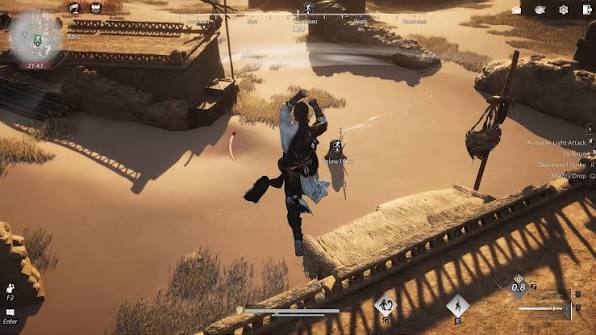
Where Winds Meet opens Transdust Ruins on September 23, 2026 at 06:00 UTC+8, bringing an official Escape from Tarkov collaboration into its wuxia combat system. The objective is not to defeat every Wanderer: it is to enter with a controlled investment, find loot, adapt to danger, and reach an extraction point before the timer ends. Players preparing for optional in-game purchases around Version 2.2 can compare current options through the game recharge platform Topuplist and its Where Winds Meet top-up page, while the first priority inside Transdust Ruins should be protecting the value already carried.
 Where Winds Meet



Officially confirmed: Transdust Ruins supports solo entry or teams of three and follows four phases: preparation, search, contest and extraction. Loadouts can include weapons, armor, bows and arrows, Mystic Skills, medicine and utility items. Random sandstorms alter routes, extraction points can impose different conditions, and loot only becomes secure after a successful exit unless it was placed in the limited-capacity Safety Case.
The first rule is to plan for extraction, not maximum combat power
Every item taken into an extraction mode has an opportunity cost. Better weapons, armor and medicine can increase survival, but an expensive loadout also raises what is at risk before any treasure has been found. The correct first-run target is therefore not the strongest possible kit. It is the cheapest kit that can complete the intended route, survive one realistic encounter and still leave room for loot.
For a learning run, take a familiar weapon, enough recovery to survive a short engagement, and one utility choice with a clear purpose. Do not fill every slot merely because the Warehouse and Shop offer it. An overloaded plan makes it harder to learn which item actually solved a problem. Once the player understands search density, travel time and extraction pressure, the loadout can be expanded for higher-value zones.
The mode itself supports two broad opening plans. A low-cost search plan travels light, avoids obvious conflict and values a successful exit over maximum yield. A contest plan brings stronger gear and more supplies to fight over map bosses, special chests or other high-value targets. Both are valid, but mixing them carelessly is expensive: light gear should not take every contested fight, while a costly battle kit should not wander without a target until the timer becomes the main threat.
Run phase | Main decision | Successful first-run behavior | Failure to avoid |
|---|---|---|---|
Preparation | How much value to risk | Choose one clear route purpose and equip only what supports it. | Buying a premium kit without knowing the map or extraction conditions. |
Search | Where to spend time | Check ordinary containers while moving toward a planned value zone. | Ignoring the timer while searching every object in one area. |
Contest | Fight, ambush, steal or bypass | Compare the likely gain with the loot already held. | Treating every nearby player as a mandatory duel. |
Extraction | Which exit is achievable | Read its weight, toll and slot conditions before committing. | Arriving late with an overweight pack and no alternative route. |
Build a loadout around one question: how do you intend to make value?
For a low-cost search run
Prioritize movement, concealment and enough medicine to recover from one mistake. The Breath-Holding Talisman reduces the range at which other players can detect the user, making it a natural fit for avoiding contact rather than winning prolonged fights. A lightweight setup also preserves more room to react if an extraction point imposes a weight cap. The run succeeds when modest loot reaches safety consistently, not when it briefly enters the backpack.
For a high-value contest run
Bring stronger protection, additional medicine and tools that help find worthwhile targets. The Dragonfinder points toward high-value treasure, but that information does not make the route safe. Other players seeking the same value can converge on the area, and random sandstorms may alter the cleanest approach. A contest loadout should include an exit plan before the first fight: which direction creates cover, which ability interrupts pursuit, and what loot threshold ends the run?
For a first team run
A team of three should avoid three identical jobs. One player can carry the Dragonfinder and lead the search, one can preserve medicine and defensive resources for recovery, and one can watch flanks or likely approach lines. These are responsibilities rather than fixed classes; the official preview does not impose a required composition. The practical purpose is to stop all three players from opening containers while nobody watches for movement.
Agree on the risk level before deployment. If one player expects a low-cost collection route and another immediately pushes the richest zone, the group gains the cost of a contest build without the coordination that makes it work. A simple rule helps: the player carrying the most irreplaceable loot can call the extraction, while the other two decide whether they can safely cover that route.
Search wide enough to learn the map, but move with a destination
Treasure can appear in bookshelves, wine jars, carts, ruins and less obvious corners, so the search phase is not limited to a few marked chests. Special chests, treasure maps, mechanism puzzles, roaming rogues and map bosses create higher-value options. This distribution rewards observation, but it can also trap new players in one small area while the match clock keeps running.
Use a layered search route. First, check low-risk containers along the direction of travel. Second, choose one higher-value objective rather than attempting every boss, puzzle and chest. Third, reassess after the backpack contains something worth protecting. This approach teaches ordinary loot locations without surrendering the whole run to low-value searching, and it prevents a successful high-value find from becoming an excuse to visit every remaining hotspot.
Random sandstorm zones force route changes. Do not memorize a single path as if it will always remain open. Instead, identify route types: exposed ground that favors scouting, ruins that offer cover, caverns that compress encounters, and waystations or passes where other players may predict movement. When a sandstorm disrupts the shortest route, choose the safest available route for the current backpack value, not automatically the next-shortest line.
Wind Sense gives information; it does not make the fight compulsory
Wind Sense reveals the direction of nearby enemies. That direction is a decision prompt, not a command to engage. Before moving toward it, compare three things: the current backpack value, the supplies remaining, and the quality of the position. A player carrying little may accept more risk to gain equipment or access a contested area. A player carrying a Season Relic or several valuable items should require a much stronger reason.
The wuxia toolkit creates several encounter solutions. A direct Martial Arts fight is appropriate when gear, health and position are favorable. An assassination can punish an unaware target. Disguise allows a player to take the form of a nearby creature or object, creating opportunities to hide or misdirect. Celestial Seize can remove an item directly from another player with the right timing. Lightness and Mystic Skills can help create distance or alter the geometry of an engagement.
Each solution should serve extraction. Stealing an item is not valuable if the attempt leaves the player trapped between a pursuer and a closing route. Winning a duel is not automatically profitable if medicine is exhausted and a third party arrives. Bypassing an enemy can be the strongest play when the backpack is already good enough. Extraction modes reward retained value, so a fight should be measured by what it improves after the exit, not by whether it can be won in isolation.
Use the Safety Case for importance, not just apparent price
The Safety Case protects selected items even if the player fails to extract, but its capacity is limited. That makes prioritization more important than simply placing the first item found inside. A rare Season Relic needed for collection progress may deserve protection over a more ordinary item that can be sold. A utility resource needed for the next planned run may matter more than a replaceable piece of equipment.
Recheck the case when the contents of the backpack change. The item protected five minutes earlier may no longer be the run's most important find. If the interface allows items to be rearranged during the match, update the case before entering a high-risk zone or committing to extraction. Do this from cover rather than while the team is moving through a predictable choke point.
Decision rule: Put the item with the highest recovery cost in the Safety Case. Recovery cost can mean rarity, collection progress or the time required to find it again; it is not always identical to the highest sale value.
Extraction conditions can invalidate a perfect route at the final minute
Every match has a timer, and loot only comes home when the player reaches an extraction point and satisfies its conditions. The number of available extraction slots changes with difficulty. Some exits impose a weight limit; others charge a toll. This means an exit icon is not enough information. Before traveling across the map, check whether the backpack is light enough, whether the toll can be paid and whether a slot is realistically available.
Weight-limited exits create a late decision that should be anticipated early. If the pack is above the threshold, rank items before arriving: protected or collectible items first, high-value ordinary loot second, easily replaced supplies last. Dropping items under attack is far worse than making the same choice behind cover with time remaining. If a different exit accepts the current load, compare the longer route against the value that would need to be abandoned.
Toll exits require the same discipline. Do not assume the payment resource will appear on the way. Preserve the toll once the team chooses that extraction plan, and avoid spending it on a marginal upgrade unless another exit is reachable. Because extraction slots vary by difficulty, teams should also avoid arriving at the final seconds with only one plan. Identify a primary exit and a fallback during the search phase.
Solo and three-player runs need different risk controls
A solo player controls every decision but has no teammate to watch during searches, cover a retreat or recover momentum after an ambush. The safest solo plan is information-heavy: use Wind Sense, concealment and terrain to avoid uncertain fights, and leave once a meaningful objective is complete. Disguise and Celestial Seize can create high-value opportunities, but they should not turn into extended contact without support.
A three-player team has more combat coverage but creates noise, movement and coordination risks. Keep spacing wide enough that one area attack or ambush does not catch everyone, yet close enough for a teammate to help quickly. Assign a regroup point before splitting around ruins or caverns. When a valuable item is found, communicate who carries it and whether it changes the extraction timing. The team should not discover at the exit that the only player with the toll or protected item took a different route.
When a teammate wants to continue and another wants to leave, compare secured progress with the next objective. One more chest is a weak reason to risk a Season Relic, depleted medicine and a favorable extraction window. A known map boss or high-value target can justify continuation only when the team still has supplies, time and an exit route after the contest.
Know what successful loot becomes after the match
Ordinary extracted items can be sold for Golden Treasure Tokens. Those tokens support the next cycle by buying gear and items, and they can also be exchanged for cosmetics and other rewards. This creates a useful progression rule: early runs should build a stable reserve before every token is spent on appearance rewards. A player who repeatedly empties the reserve may be forced into under-equipped runs after one failed extraction.
Certain activities award Floral Weave, exchangeable for Lingering Melody, Resonating Melody, accessories and hair ornaments. The collaboration also includes two limited-time rewards: the Escape from Tarkov-inspired Deathknell Knight mask and the Wind-kov avatar. The official preview does not provide every requirement or exchange price, so players should check the live event interface before planning an exact completion total.
Season Relics follow a collection path rather than an ordinary sale path. Finding, identifying and collecting these artifact-inspired items unlocks matching Decorations and Poses, and some can be displayed at the Homestead. Additional rewards arrive as collection and rank increase. For collection-focused players, protecting a missing relic and extracting immediately may be worth more than converting another backpack of normal loot into tokens.
A first-session plan that produces useful information
Enter the first run cheaply: use familiar equipment, basic recovery and one utility item so failure remains affordable.
Learn one search lane: inspect ordinary objects while moving toward one special chest, puzzle, rogue area or other value target.
Check Wind Sense before stopping: reduce the chance of being caught while searching a container or rearranging the Safety Case.
Protect the best recovery-cost item: update the Safety Case when a rarer or collection-relevant find appears.
Inspect exits early: identify weight, toll and slot constraints before the backpack is full.
Leave after one successful objective: the first session should learn the full loop from preparation to extraction, not chase the theoretical maximum haul.
Review the result: spend Golden Treasure Tokens first on what improves the next planned run, then consider cosmetic exchanges.
After one successful low-cost cycle, increase only one variable. Bring better armor for a boss attempt, add the Dragonfinder for a treasure route, or enter as a coordinated trio. Changing everything at once makes it impossible to know why the next run improved or failed. The most reliable progression is repeatable extraction first, higher yield second.
The best first run ends earlier than greed suggests
Transdust Ruins uses familiar extraction pressure but gives it a Where Winds Meet identity through Lightness skills, Mystic Skills, Martial Arts, disguise, pressure-point options and Celestial Seize. Those tools create more answers than a direct fight, but they do not change the win condition. A full backpack outside the exit is still an unsuccessful run.
Start light, learn where ordinary and special searches intersect, and let the value already held decide the next risk. Use the Safety Case for the hardest item to replace, read the actual extraction requirement, and preserve enough time for a fallback. Players who master when to leave will finance stronger future attempts faster than players who win several fights but repeatedly lose everything to one final gamble.
FAQ
When does Transdust Ruins open in Where Winds Meet?
The Escape from Tarkov collaboration mode opens on September 23, 2026 at 06:00 UTC+8.
Can Transdust Ruins be played solo?
Yes. Players can enter solo or form a team with two other players, creating a three-person group.
What happens to loot after a failed extraction?
Loot must be successfully extracted to come home, except for items placed in the limited-capacity Safety Case. The safest approach is to protect the hardest item to replace before taking another major risk.
What are Golden Treasure Tokens used for?
Ordinary extracted items can be sold for Golden Treasure Tokens. The tokens can purchase gear and supplies for later runs or be exchanged for cosmetics and other rewards.
Do all extraction points work the same way?
No. The official preview says extraction slots vary by difficulty, while individual exits may impose a weight cap or require a toll. Check the live conditions before committing to a route.
Where can players prepare Where Winds Meet in-game currency?
After checking the live event rewards and deciding which optional purchases fit their account, players can compare current recharge options through Topuplist and its Where Winds Meet top-up page.