


Once Human Isles of Abyss Makes Your Ship a Moving Base: How Ocean Survival Changes on October 21
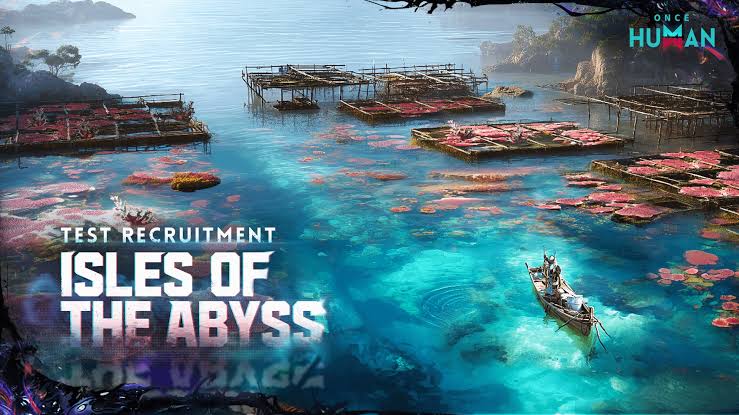
Once Human is leaving Nalcott's familiar land routes behind with Isles of Abyss, a free ocean expansion announced for October 21, 2026 PT. The update is scheduled to arrive across PC, mobile, PlayStation 5 and Xbox Series X|S with cross-play and cross-progression support. Its central idea is larger than adding a boat: players will build and customize vessels ranging from small skiffs to Mobile Sea Fortresses that can operate as a base, workshop and artillery platform. Players preparing optional in-game purchases can compare current choices through the game recharge platform Topuplist and its Once Human top-up page, but the expansion itself is free and its main survival content does not need to be purchased.
 Once Human


The ship is infrastructure, not just transportation
A conventional vehicle shortens the trip between two useful locations. Isles of Abyss gives the ship three announced jobs beyond movement: base, workshop and artillery platform. That combination can change the survival loop because storage, crafting and combat power may travel with the player instead of remaining at a fixed inland territory. The practical question becomes not only where to sail, but what functions the vessel must preserve while doing so.
The range from skiffs to Mobile Sea Fortresses also implies different purposes rather than one linear cosmetic upgrade. A small craft should be easier to deploy for scouting and short resource runs. A fortress has room to support longer expeditions, production and heavier combat, but a larger platform may demand more construction effort and coordination. The exact costs, limits and handling differences have not been published, so players should think in roles without assuming a specific recipe or mandatory vessel tier.
Announced ship function | What it changes | Question to answer after launch |
|---|---|---|
Transportation | Routes extend across five ocean regions instead of fixed roads and teleport points alone. | How range, speed, repair and weather affect route efficiency. |
Base | Rest, storage and expedition staging may move closer to remote objectives. | Which territory functions can actually be installed on a vessel. |
Workshop | Gathered resources may be processed before returning to land. | Which crafting stations work at sea and what power or space they require. |
Artillery platform | The ship becomes part of combat rather than a passive container. | Who aims, reloads, repairs and pilots during a fight. |
Custom construction | Layout choices can trade utility, defense and firepower against available room. | Whether parts have weight, placement, tier or ownership restrictions. |
Three connected layers replace the old out-and-back resource run
The expansion describes a survival loop across the sea surface, mysterious islands and underwater environments. Those are not merely three visual themes. Each layer can create a different stage in one expedition: the ship moves and fights on the surface, an island becomes a temporary landing objective, and diving opens access to submerged resources or treasure. The value of a successful trip is then measured by what returns to the vessel and eventually enters wider character progression.
On land, an efficient route often begins at a territory, visits several known nodes and returns when inventory or durability becomes a constraint. A mobile workshop can interrupt that pattern. If processing is available aboard the ship, raw materials may be converted or organized before the expedition ends. If storage is limited, the group may instead need to decide which underwater finds justify cargo space. The announced systems support these questions, but exact inventory rules and station access should be confirmed in the live expansion.
Surface travel becomes the decision layer
The sea surface connects the other two layers and therefore controls risk. An island that appears close may still require ammunition, repair capacity or a safe route around a hostile area. Five distinct ocean regions are planned, each with its own challenges. That makes one universal ship layout unlikely to remain optimal everywhere: exploration space may reward range and storage, while a dangerous region may justify defensive parts and artillery.
Islands turn docking into a commitment
An island expedition separates the crew from part of its mobile infrastructure. Before leaving the ship, players will need to decide what stays aboard, what enters the landing loadout and how the vessel will be protected. Solo players feel this choice more sharply because the pilot, explorer, fighter and repair role belong to one person. Groups can divide those jobs, but only if the game's ownership and interaction rules let several players operate the same build.
Underwater exploration adds a second return limit
Diving puts another journey inside the voyage. Players travel from ship to dive point, descend for resources or treasure, return to the surface and then still need to protect the cargo. Oxygen, pressure, movement, underwater combat and equipment requirements have not yet been detailed. The useful preparation is therefore broad survival capacity, not buying or crafting imaginary diving gear based on assumptions.
The five ocean regions should be treated as different problems
Five regions give the expansion enough scale for route knowledge to matter. The first successful crossing will not necessarily be the fastest or safest repeat route. Players should distinguish discovery from farming. Discovery prioritizes uncovering islands, hazards and points of interest. Farming prioritizes predictable travel time, resource density and a reliable return. A region can be excellent for one purpose and poor for the other.
Mobile Sea Fortresses may become regional hubs rather than vehicles that cross the whole map every session. If a large ship is expensive or slow to reposition, parking it near several useful objectives and using smaller vessels for local trips could be more efficient. That is an analysis supported by the announced vessel range, not a confirmed feature: launch rules must show whether multiple ships can be owned, deployed or nested in that way.
Expedition goal | Likely ship priority | Success measure |
|---|---|---|
First-time mapping | Mobility, visibility and enough storage for unknown finds. | New routes and safe return points discovered per trip. |
Resource collection | Cargo and workshop access with a repeatable route. | Useful processed value returned per unit of time. |
Hostile-water combat | Artillery, repair access and survivability. | Objectives completed without losing the expedition's cargo. |
Island operation | A secure staging point and suitable landing equipment. | Time spent exploring rather than commuting back to land. |
Group voyage | Distinct stations and enough utility for several players. | Whether every member has a useful job during travel and combat. |
Ship construction will force real layout tradeoffs
Calling the vessel a base, workshop and artillery platform does not mean every build should maximize all three. Space used for production may compete with weapons or storage. An artillery-heavy layout may win an encounter but return less material because cargo capacity was sacrificed. A giant mobile base may offer every facility yet become excessive for a short solo scouting run.
The best launch-day build will be the smallest configuration that completes its intended job reliably. Start with the functions that prevent an expedition from failing: movement, a way to recover from damage, storage for the actual target and enough combat capability for the selected region. Add comfort and specialization after one complete trip exposes the bottleneck. This method remains useful regardless of the final part names because it responds to observed failure rather than promotional size.
Players should also avoid copying a fortress screenshot without understanding its crew assumptions. A design that looks powerful may rely on one player piloting, another managing artillery and a third handling repair. If solo operation requires leaving the controls to use another station, the same layout can perform very differently. Control access and station placement may matter as much as raw module quality.
Multiplayer roles become clearer at sea
Once Human already rewards cooperation, but a shared vessel creates immediate operational roles. The pilot reads the route and positions the ship. A gunner tracks threats and preserves ammunition. A repair or logistics player monitors damage, production and cargo. Landing members clear islands or dive while someone maintains the return platform. These are practical responsibilities, not formal classes, and the final interaction system will determine how strictly they need to be divided.
Before a group invests in one enormous structure, it should test access rules. Confirm who owns the ship, who can modify it, whether offline ownership affects use, and how cargo permissions work. The announcement confirms cross-play and cross-progression, which makes mixed-platform crews possible, but it does not automatically answer shared-building permissions. A fleet that depends on one absent owner may be less useful than several smaller independent vessels.
Communication should focus on conditions rather than constant narration. The pilot needs warnings about hazards and route changes; the gunner needs target priority; the landing team needs a clear departure condition. The return rule matters most: an island reward is not secured merely because it was picked up. The team must bring it back through the underwater, shoreline and surface risks that remain.
Cross-play and cross-progression widen the useful crew pool
Isles of Abyss is announced for the same October 21 release across PC, mobile, PS5 and Xbox Series X|S, with full cross-play and cross-progression between those platforms. Cross-play allows friends on different devices to join the same content. Cross-progression means a player's progress follows the supported account across devices. They solve different problems and should not be treated as the same feature.
The combination is particularly useful for a persistent ship project. A player can maintain progression without restarting on another supported device, while the group can recruit from more than one platform. However, platform release parity does not confirm identical controls, store prices or account-linking steps. Existing players should verify that the correct account is linked before making a purchase or beginning a large collaborative build.
Release timing: The official announcement states October 21 PT. That time-zone label can place the local calendar date later in some regions. Use the in-game update notice for the exact maintenance and opening time rather than assuming midnight in local time.
The Sunken Lord gives exploration a threat structure
The expansion's story centers on the awakening Sunken Lord, an ancient entity beneath the ocean. Malla, an enigmatic navigator said to have drowned a thousand times, leaves a logbook containing six rules for surviving the sea. The reveal warns about predatory lighthouses and islands that may not be what they appear to be. This framing suggests that observation and distrust are part of the exploration fantasy, not only decorative lore.
The six rules should not be converted into invented mechanics before they are fully explained. Their practical purpose at launch will be to teach the player which environmental signs matter. A lighthouse may be a navigation aid, a threat or both. An island may be an objective, a trap or a creature-like anomaly. The safest first reading of a new location is therefore behavioral: watch what reacts, identify a retreat route and avoid committing the entire cargo to an unknown landing.
Preparation should focus on transferable value
The expansion is still weeks away, and detailed ship recipes, part limits, underwater equipment and region unlock requirements have not been announced. Hoarding one guessed material can waste storage if the final blueprints use another progression route. Transferable preparation is more reliable: finish account progression that unlocks ordinary crafting, keep a balanced reserve of commonly used resources, organize inventory and avoid committing every premium or rare material immediately before the expansion.
Preserve flexibility: keep general resources available instead of converting everything into one current build.
Review portable loadouts: maintain weapons and survival tools that can handle exploration as well as fixed encounters.
Reduce storage friction: clear obsolete items so new ocean resources can be compared before they are discarded.
Coordinate the crew: decide who wants to build, pilot, fight or explore without assigning unconfirmed station requirements.
Wait for recipes: spend rare stock only after the live ship interface shows actual costs and upgrade paths.
The first live session should establish the ship system's ownership, construction and repair rules. The first complete voyage should then reveal whether mobility, cargo, production or combat is the real bottleneck. Only after that evidence exists is a larger fortress an informed investment.
What the announcement still does not settle
Several important decisions remain open: whether Isles of Abyss is a permanent scenario or uses a separate seasonal structure, how players unlock the first vessel, how ship damage and loss work, whether multiple ships can be stored, what diving requires, and how large crews share construction. Reward tables, progression resets and exact regional hazards also remain unannounced.
Those gaps do not weaken the core announcement. The free expansion, October 21 PT date, supported platforms, cross-play, cross-progression, ship range, five regions and three-layer exploration loop already define its direction. They do limit how specific a responsible build recommendation can be before release. Any claim about the best cannon, exact material quantity or mandatory underwater loadout is premature until the live rules or a detailed official preview supplies it.
Why Isles of Abyss could reshape Once Human's strongest loop
The expansion matters because it combines construction, travel, combat and resource recovery in one player-made object. If the ship truly supports those four jobs, building is no longer something that only prepares the player to leave home. The build itself enters the expedition, takes risks and determines what can be brought back.
That makes the October update more than a new map. Small vessels can serve focused trips, Mobile Sea Fortresses can become group projects, and five ocean regions can reward different designs. The strongest strategy will not be the biggest ship by default. It will be the ship whose mobility, workshop, cargo and artillery match the objective without consuming resources that never contribute.
FAQ
When does Once Human Isles of Abyss release?
The free ocean expansion is announced for October 21, 2026 PT. Check the in-game notice closer to launch for maintenance and the exact local opening time.
Which platforms receive Isles of Abyss?
The announced platforms are PC, mobile, PlayStation 5 and Xbox Series X|S, with the expansion scheduled to arrive across them on the same release.
Is Isles of Abyss free?
Yes. It has been announced as a free expansion. Optional store purchases are separate from access to the expansion's main survival content.
What can ships do in Isles of Abyss?
Players can build and customize vessels ranging from skiffs to Mobile Sea Fortresses. Ships are described as transportation, bases, workshops and artillery platforms.
Does the expansion support cross-play and cross-progression?
Yes. Cross-play and cross-progression are announced across PC, mobile, PS5 and Xbox Series X|S.
Where can players prepare optional Once Human in-game currency?
After confirming the correct account and platform, players can compare current options through Topuplist and its Once Human recharge page. The Isles of Abyss expansion itself is free.