

NIKKE Persona Collab Costumes: What Is Free and What Is Paid?
The GODDESS OF VICTORY: NIKKE Persona collaboration begins on August 13, 2026, and new promotional material has increased interest in the crossover costume lineup. Because collaboration art can mix recruitable characters, free units, mission outfits, costume pass rewards, and paid skins, this guide explains how to identify each route and prepare a budget without assuming that every displayed outfit is included for free.
GODDESS OF VICTORY: NIKKE begins its Persona collaboration on August 13, 2026, and the newest promotional material puts as much attention on costumes as it does on recruitable characters. Commanders preparing paid currency can use Topuplist and the dedicated NIKKE top-up page, but the correct first step is to read the live costume notices because a character, an alternate outfit, and a Costume Gacha reward are three separate products.
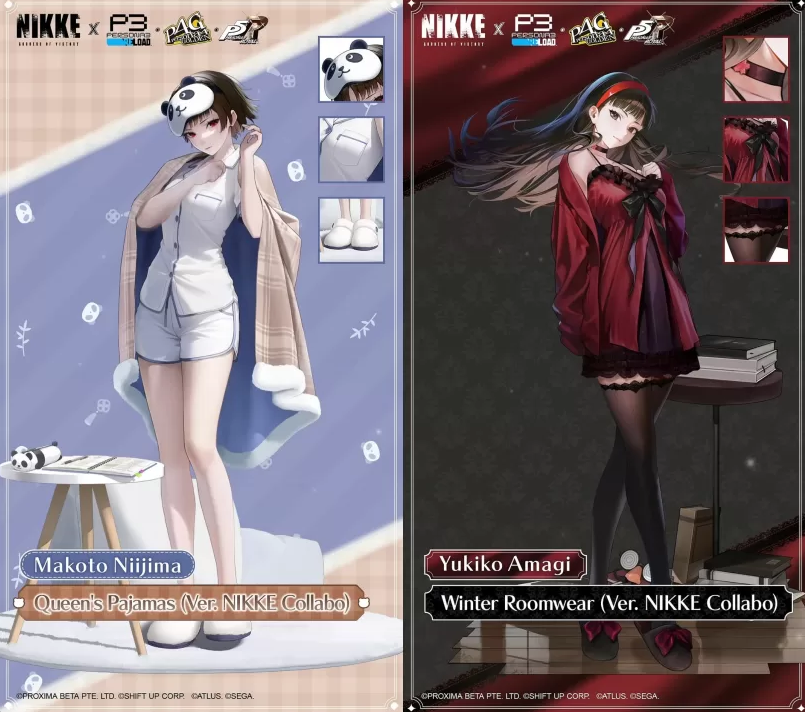
The collaboration spans Persona 3 Reload, Persona 4 Golden, and Persona 5 Royal. That creates a larger visual pool than a crossover built around one title. Promotional art may feature Makoto Yuki, Yukiko Amagi, Aigis, and other recognizable Persona figures, but presence in art does not automatically establish whether each appearance is a recruitable unit, costume, lobby illustration, story guest, or background reference.
This guide focuses on costume acquisition. It explains the labels that matter, how free and paid routes normally differ, and how to avoid buying a pass or currency pack before confirming the exact reward attached to it.
Why the Costume Question Is Confusing
NIKKE uses several cosmetic distribution systems. Some costumes are awarded through missions, some appear in a Costume Pass, some are sold directly, and premium releases can use Costume Gacha. Collaboration events may also include free units whose default appearance resembles a special costume even though it is simply the base model.
Persona makes the distinction harder because familiar school uniforms, Phantom Thief attire, combat suits, and casual clothes can all look like separate skins. A promotional image may show two appearances for one character without explaining whether both are playable or whether one only appears in story art.
The reliable solution is to follow the product label rather than the image. “Recruit,” “Costume,” “Mission Pass,” “Costume Gacha,” “event reward,” and “login reward” describe different acquisition routes.
Character Ownership and Costume Ownership Are Separate
Recruiting a collaboration character normally grants the unit's default appearance. It does not automatically grant every alternate costume shown during the event.
Likewise, obtaining a costume may not grant the character. NIKKE generally requires the corresponding unit before the outfit can be equipped in combat, although the wardrobe can record ownership under the rules displayed by the specific product.
Before spending, check whether the page says “obtain NIKKE” or “obtain costume.” The first concerns the playable unit; the second concerns an appearance. This one line prevents the most expensive misunderstanding in crossover events.
If a costume can be purchased before the character is recruited, decide whether you are willing to own an unusable cosmetic if the banner result goes badly. Do not assume that buying the skin improves recruitment odds.
What Can Count as a Free Costume
A genuinely free costume should have an acquisition route that requires no paid pass, premium currency, or mandatory purchase. Possible routes include event missions, login rewards, story completion, an event shop using freely earned currency, or an official distribution message.
“Free after purchase” is not fully free. A costume placed on the free track of a pass can be free only if every player can reach it without buying the premium track. A bonus costume attached to a paid package is part of that package's cost even when the interface labels it as a bonus.
The live notice should identify four details:
The exact costume name.
The NIKKE who can equip it.
The mission, login, shop, or pass source.
The final claim deadline.
Without those details, describe a design as previewed rather than free.
Paid Costume Routes to Check
Route | Payment Structure | Main Question |
|---|---|---|
Direct costume sale | Fixed listed price | Does it include anything besides the outfit? |
Costume Pass | Paid track plus progression | Can the pass be completed before it ends? |
Mission Pass | Paid rewards tied to missions | Which rewards require the premium track? |
Costume Gacha | Multi-step randomized or milestone system | What is the published maximum cost? |
Currency bundle bonus | Outfit tied to a purchase package | Is the package useful without the costume? |
A fixed-price sale is easiest to evaluate because the final cost is visible. A pass can provide good value when the player will finish its missions and wants most of the included resources. Costume Gacha requires the most caution because the attractive first step may be far cheaper than completing the entire route.
Never use the first draw price as the costume price. Read the step table and identify whether the featured costume can drop early, appears only after a minimum number of attempts, or is effectively tied to the final stages.
How to Read the August 13 Update Notice
Begin with the Special Recruit section and record which characters are SSR, SR, free event units, or story-only guests. Then open the costume section separately.
For every outfit, write down the wearer, route, opening time, closing time, and whether the costume is limited. Check whether a pass ends at the same time as the story event; some paid tracks can use a separate schedule.
Next, inspect the event shop. Free costumes are sometimes connected to mission currency rather than a direct claim. Calculate whether normal daily participation provides enough currency before spending event items on repeatable materials.
Finally, check mailbox and login campaigns. An outfit icon in a login calendar should be matched to its exact day. Missing one required login near the end can be more important than missing early credits or upgrade materials.
Makoto, Yukiko, and Aigis: What to Verify
The Persona collaboration has placed Makoto Yuki, Yukiko Amagi, and Aigis at the center of player discussion. Each name should be checked independently because the event can give them different rarity, recruitment, and cosmetic treatment.
For Makoto, confirm whether every shown appearance belongs to the base unit, an alternate costume, or story presentation. His Persona 3 identity can support several visual forms, but the advertisement alone does not define how many are equipable.
For Yukiko, verify the exact costume name and whether the design is attached to recruitment, a pass, or a separate sale. A character trailer may switch between story clothing and battle presentation without representing two owned skins.
For Aigis, distinguish the free-unit route from any alternate appearance. Receiving a free SR unit does not automatically mean all costumes for that unit are also free. Confirm whether additional copies and the cosmetic follow the same mission path.
Costume Value Versus Recruit Value
A costume changes presentation, not combat strength. A limited recruit can add a Burst role, element, weapon, and team function. These purchases should therefore use separate priorities.
If the account lacks enough resources to secure a desired collaboration character, buying that character's costume first creates a risk. The skin may remain unused. Players who value gameplay should confirm the recruit plan before the cosmetic plan.
Collectors can reasonably prioritize a limited costume, especially when collaborations may not rerun. However, “may not rerun” is different from “will never return.” Unless the official notice states that an item is permanently unavailable, do not let absolute scarcity claims control the purchase.
A Practical Collaboration Budget
Divide resources into four columns: Advanced Recruit Vouchers, Gems, Gold Mileage Tickets, and paid costume budget. Do not combine them into one vague total.
Recruit vouchers and Gems affect banner attempts. Gold Mileage can provide a predictable exchange if the featured unit is eligible. Paid costume funds apply only to direct purchases, passes, or Costume Gacha. Keeping them separate shows whether the account can afford the unit, the cosmetic, both, or neither.
Choose one primary objective. It may be recruiting a favorite, collecting all free event rewards, buying one costume, or completing the story. A secondary objective should only use resources left after the first is protected.
Wait until all collaboration notices are visible before topping up. Persona 3 Reload, Persona 4 Golden, and Persona 5 Royal content may not share identical schedules, so an early purchase based on the first page could miss a later preferred item.
Event Shop and Mission Priorities
Complete story stages and repeatable resource stages early enough to understand stamina requirements. If an event shop contains a free cosmetic or costume-related item, reserve the required currency before buying ordinary credits and upgrade boxes.
Claim Advanced Recruit Vouchers, limited collectibles, and exclusive items before repeatable materials unless the live shop creates a different restriction. Check whether unused currency converts after the event and at what rate.
For mission passes, calculate remaining days and required points. Buying a pass near the end is only sensible if completed progress is credited retroactively or enough missions remain. Confirm this in the interface rather than assuming it.
Mistakes That Waste Money
The first mistake is assuming a costume includes its character. Read the product description.
The second is assuming a free character includes every displayed appearance. Base models and alternate skins are separate.
The third is counting a Costume Gacha's first attempt as the complete cost. Review every stage.
The fourth is buying a pass without enough time to finish it. Check the end date and current level.
The fifth is treating promotional group art as an item list. Art can include story guests and non-playable references.
The sixth is recharging before checking account region and platform restrictions. Confirm the correct server, player ID, and supported product.
Check Costume Features, Not Only the Illustration
NIKKE costumes can differ in more than clothing. Before buying, inspect whether the product includes a unique burst animation, standing pose, lobby interaction, voice treatment, shooting model, or special background. The notice should identify premium features instead of leaving players to infer them from a trailer.
Compare the costume in combat and lobby views. A detailed accessory may be prominent in a standing illustration but hidden during shooting. Conversely, a burst animation can provide most of the product's value even when the battle model changes only slightly.
Use the in-game preview whenever available. Promotional editing can combine story animation with costume footage, and not every scene in a trailer is part of the owned cosmetic. The product page should show exactly what remains accessible after the event story ends.
If two costumes compete for the same budget, rank them by character usage, feature count, and acquisition certainty. A fixed-price outfit for a frequently used NIKKE may provide better value than a more dramatic Costume Gacha for a unit rarely deployed. Collaboration branding can justify a collector purchase, but it should not erase the difference between a known price and an open-ended route.
Final Verdict
The Persona collaboration's costume lineup is exciting because three Persona titles give NIKKE a broad range of recognizable designs. That same breadth makes careless assumptions more likely. Every appearance should be matched to a named character, a product type, and an acquisition route.
On August 13, open the recruit notice, costume notice, pass page, event missions, and shop before spending. Claim free rewards first, protect the resources needed for the most important character, and calculate the full cost of any premium costume route. The best guide is not the one that calls everything free or expensive; it is the one that shows exactly which screen proves each claim.
FAQ
When does the NIKKE Persona collaboration start?
The collaboration begins on August 13, 2026. Check the maintenance notice for the precise server opening time.
Does recruiting a Persona character include every costume?
No. Recruitment normally grants the unit and its default appearance. Alternate costumes can use separate mission, pass, shop, or Costume Gacha routes.
Is Aigis completely free?
A free-unit route and a free-costume route are separate questions. Read the event mission notice for the unit and the costume notice for any alternate appearance.
Are collaboration costumes guaranteed to never return?
A rerun should not be assumed, but permanent exclusivity should only be claimed when the official notice explicitly states it.
Where can I top up after confirming the costume route?
After verifying the server, player ID, product, and full cost, commanders can use Topuplist or the dedicated NIKKE top-up page. Topuplist provides recharge services for supported game products.
Should I buy the costume before recruiting the character?
Only if the product allows it and you accept the possibility of owning a cosmetic you cannot immediately use. Gameplay-focused players should usually protect the recruitment plan first.