


Marvel Rivals Path to Doomsday Guide: Team Roles, Ultron Threats, and First-Clear Tactics
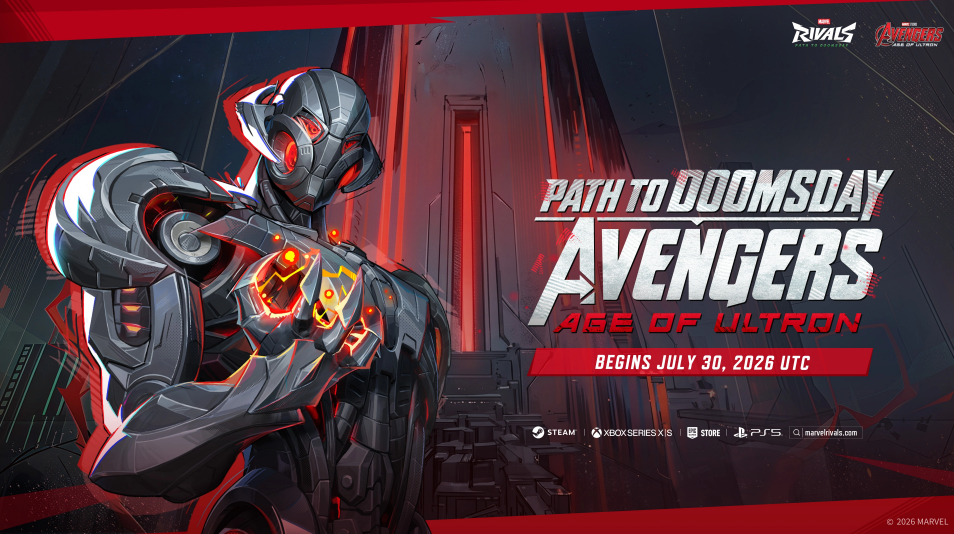
Path to Doomsday: Age of Ultron arrived with the July 31, 2026 Marvel Rivals update as a new limited-time PvE experience. This field manual explains how to assemble a stable squad, read encounter pressure, protect revives, manage ultimate abilities, and convert failed attempts into a clean first clear without inventing reward details that belong to other modes.
Path to Doomsday: Age of Ultron changes the usual Marvel Rivals question. In a competitive match, players ask how to outplay another team. In this limited-time PvE mode, the better question is how four people can keep a run stable while the encounter keeps adding pressure. Mechanical skill still matters, but a group that controls space, protects recovery windows, and saves its strongest tools for the correct wave will usually progress farther than four individually talented players chasing separate targets.
The mode arrived with the July 31, 2026 update. Because it is new, early community discussion can mix its rules with details from other Marvel Rivals activities. Treat the live mode page as the authority for its timer, difficulty labels, stage rewards, and matchmaking conditions. This guide focuses on tactics that can be verified through play: team shape, threat reading, positioning, revival discipline, ultimate timing, and post-run review.
Read the Battlefield as a Pressure System
A PvE encounter is not simply a pile of enemies. It is a pressure system with several moving parts: incoming damage, crowd control, objective progress, safe ground, team health, and the time available to recover. A squad fails when too many parts become unstable at once. The first useful habit is therefore not faster shooting. It is identifying which part of the battlefield is about to collapse.
Before attacking, locate three things: the current objective, the nearest defensible space, and the route a defeated ally would have to use after returning. If the squad fights beyond all three, even a strong damage burst can create a bad position. Stay close enough to the objective to influence it, but far enough from obvious spawn lanes that the team can see threats before they arrive.
Watch enemy behavior rather than only health bars. A durable front-line unit may be less urgent than a smaller attacker applying control or continuous area damage. A flying or elevated threat can force the entire group out of cover. A unit attacking the objective can matter more than one attacking a tank. Target priority is situational, but the rule is consistent: remove the enemy that reduces the squad's available choices.
Build a Squad That Can Survive a Mistake
The safest first-clear composition is not necessarily the composition with the highest theoretical damage. A new mode contains unknown timings, unfamiliar enemy combinations, and moments when players will stand in the wrong place. Build for recovery.
A stable four-player group normally wants a durable space holder, reliable healing or shielding, sustained damage, and a flexible fourth slot. The flexible player can bring burst damage, control, mobility, or a second source of protection depending on what ended the previous run. This is a role structure, not a demand for four specific heroes. Marvel Rivals characters often overlap functions, so evaluate what the selected kit actually contributes.
The front-line player should create a location the team can use, not travel so far forward that support lines break. The support player should preserve sightlines and keep one escape route. Damage players should cover different ranges or angles instead of competing for the same narrow lane. The flexible slot should be ready to solve the encounter's most expensive problem, whether that is an armored target, scattered enemies, an exposed objective, or repeated knockdowns.
When matchmaking with strangers, choose self-sufficient heroes if possible. A character with mobility, personal mitigation, or a safe disengage gives the group more time to understand one another. Do not assume another player will switch because their role icon looks inconvenient. Start with a playable structure, communicate one concrete need, and adjust after evidence appears.
Establish Target Calls Without Turning the Run Into a Meeting
Long explanations are useless while the screen is full of enemies. Good PvE communication is short, observable, and attached to an action. “Left elite,” “back to point,” “save ult,” and “revive after wave” tell teammates what matters now. They are more valuable than blaming damage totals or discussing a build in the middle of combat.
Use pings whenever the mode supports them. A target ping concentrates fire without requiring everyone to identify the same model name. A retreat ping can prevent the front line from crossing a dangerous corner. Marking a safe location before a heavy wave gives mobile heroes a place to return rather than forcing the support player to chase them.
If two dangerous enemies appear together, call the one that is easiest to remove quickly unless the other is immediately ending the objective. Reducing the number of active threats is often better than splitting damage across both. Once a target is nearly defeated, finish it. Leaving several enemies at low health preserves all of their attacks and creates the illusion that the squad is winning while pressure keeps rising.
Treat Positioning as a Shared Resource
In competitive play, an off-angle can create a decisive elimination. In PvE, an off-angle can also strand a player outside healing range. The difference is not whether the angle is aggressive; it is whether the player can return before the encounter punishes the separation.
Use corners, elevation, and solid cover to reduce the number of enemies that can attack simultaneously. Avoid standing directly behind the front-line hero when linear attacks can pass through multiple teammates. Spread enough to prevent one area effect from hitting everyone, but remain close enough that defensive abilities and revives are realistic.
Do not give up cleared space without a reason. When the squad retreats through several rooms, returning enemies can occupy every route and turn one problem into three. A controlled fallback moves from one defensible position to another. The front line leaves last, the support moves before sightlines are broken, and damage players clear fast pursuers instead of shooting distant targets.
Environmental awareness becomes especially important in an Ultron-themed battle because visual effects can fill the screen. Lower cosmetic clutter where the client allows it, keep the camera moving, and learn the sound or animation that precedes the most dangerous attacks. The objective is not perfect memorization on the first attempt. It is noticing one reliable warning earlier each run.
Spend Ultimates to Prevent Collapse
Many failed runs end with four unused ultimates because every player was waiting for a dramatic final phase. An ultimate has value when it changes the encounter, not when it looks impressive. Use it to stop an objective from being overwhelmed, secure a dangerous elite before another wave arrives, create a revival window, or stabilize the team after a positioning error.
Avoid using every ultimate on the same minor wave. A simple rotation works better: one player announces the first major commitment, another holds for the next spike, and defensive tools remain available if the first plan fails. When an ability creates a powerful zone, pull enemies into it or fight around it. Do not place it in an area the objective immediately forces the squad to abandon.
Track ultimates by function. A damage ultimate removes pressure. A control ultimate creates time. A defensive ultimate preserves formation. A mobility ultimate may rescue an objective or reach a priority target. Two abilities with different animations can still solve the same problem, so coordinate around purpose rather than hero category.
Make Revives a Team Decision
A revive is valuable only if the reviving player, the defeated player, and the objective survive the attempt. Running into open ground immediately after an ally falls can convert one defeat into two. First identify why the player went down. If the damaging field, elite attack, or enemy wave is still active, remove or redirect that threat before beginning the revive.
The healthiest player is not automatically the correct rescuer. A mobile damage hero may be able to reach the marker and escape, while the front-line hero holds attention and the support protects both. Call the plan. Even a two-word instruction such as “cover revive” prevents three players from making conflicting moves.
If the objective is seconds from failure, completing it may be more important than reviving immediately. If the next wave has not started, the revive can be the highest priority. Learn to distinguish these states. PvE rewards teams that can delay gratification for a few seconds and finish the action that keeps the run alive.
After a revive, give the returning player space to reorient. Do not instantly pull the fight across their spawn path. Healing, regrouping, and re-establishing formation are part of the revive; the interaction prompt is only the beginning.
Use Failed Attempts as Fast Scouting Runs
A failed first attempt is useful if the squad can name the failure accurately. “Not enough damage” is often too vague. Did an elite remain alive through a second wave? Did the objective lose health while everyone chased enemies? Did a support lose line of sight? Did two ultimates overlap? Did the group attempt a revive during an active area attack?
Change one major variable at a time. If the team replaces two heroes, changes the route, and alters ultimate timing simultaneously, it will not know which change helped. Start with the bottleneck that ended the run. Add control if enemies reached the objective. Add sustained damage if a durable target survived too long. Add protection if the formation repeatedly broke under burst pressure.
Record useful checkpoints mentally or in a short note: the first wave that required an ultimate, the location of a difficult spawn, and the point where revives became unsafe. The next attempt should have a planned answer for each. This turns repetition into learning instead of merely repeating the same hopeful opening.
Choose Upgrades Around the Encounter, Not a Generic Tier List
If Path to Doomsday offers run-specific choices, temporary upgrades, or difficulty modifiers in the live client, read their exact text before selecting. A bonus that is excellent in competitive play may be weak against waves, while an effect that improves uptime, area control, or survivability may become much more valuable in PvE.
Prefer upgrades that reinforce what the squad already does consistently. A team holding a compact zone benefits from effects that reward proximity or area coverage. A mobile team benefits from cooldown reliability and tools that work while rotating. Avoid building around a condition the group has not been able to maintain.
Also distinguish personal value from team value. A modest bonus that keeps the support alive can produce more total damage than a selfish offensive effect because it prevents a wipe. A control extension can allow every teammate to attack safely. The correct choice is the one that improves the run's weakest link at that moment.
A Practical First-Clear Sequence
Enter the mode with a role-balanced squad and spend the opening minute observing spawn directions. Hold a central position until the team understands which routes are active. Focus one priority enemy at a time, preserve at least one stabilizing ultimate, and move only when the objective or enemy pattern demands it.
At the first serious pressure spike, use one planned ultimate rather than waiting for health bars to collapse. If a teammate falls, identify the active threat before reviving. Between waves, regroup, restore resources, and face the next likely entry point. Do not use quiet time to scatter across the map for low-value targets.
After the run, review the exact point of failure or the most dangerous near-failure. Make one composition or timing adjustment, then queue again while the encounter pattern is fresh. A clean first clear usually comes from several small corrections, not from finding a single secret hero.
Players who have already decided to purchase Marvel Rivals currency can review supported options through Topuplist and the dedicated Marvel Rivals top-up page. Confirm the account, platform, region, currency amount, and final price before payment; spending does not replace learning the mode and never guarantees a random cosmetic result.
Frequently Asked Questions
Is Path to Doomsday a competitive mode?
It is presented as a limited-time PvE experience tied to Age of Ultron. The practical focus is coordinated survival and objective control against computer-controlled threats rather than defeating another player team.
Which role is most important for a first clear?
No single role carries every encounter. A first-clear squad needs someone to hold space, someone to sustain the team, dependable damage, and a flexible answer to the specific pressure that ended the previous attempt.
Should all four players save their ultimates for the final phase?
Usually not. Holding every ultimate can allow an earlier wave to break the formation. Rotate major abilities so the group has an answer for each dangerous spike while preserving at least one recovery tool.
When should the team attempt a revive?
Revive after the attack or enemy that caused the defeat is controlled, or when teammates can deliberately cover the interaction. Do not trade two active players for one unsafe rescue.
Are the 55-floor and 600-Unit details part of Path to Doomsday?
Do not assume so. Those details have circulated alongside discussion of other content. Check the live Path to Doomsday page and its own reward interface before assigning any floor count or currency total to this mode.
Where can I prepare a planned Marvel Rivals purchase?
After confirming exactly what the live client offers, players can compare supported services at Topuplist and open the Marvel Rivals recharge page. Verify the receiving account and final order details before paying.