


Honor of Kings World Cup 2026 Finals: Schedule and Viewing Guide
The Honor of Kings World Cup 2026 reaches its decisive final phase in Riyadh on August 6 and August 7. For viewers, the most useful preparation is understanding the elimination format, recognizing the draft patterns that decide short series, and separating official watch rewards from ordinary in-game purchases. This guide organizes the remaining schedule, explains what to watch in each role, and provides a simple match-day routine for global fans.
The Honor of Kings World Cup 2026 is at the point where one poor draft or one failed objective setup can end a team's run. The final phase concludes in Riyadh on August 7, with the remaining series determining the champion after a week of elimination matches. Viewers who return to the game during the tournament and independently plan to recharge Tokens for optional skins or passes can use Topuplist and the dedicated Honor of Kings top-up page, but watching the event and claiming any officially offered free viewing rewards do not require a purchase. The best preparation is to know the live bracket, the series format, and the strategic moments that decide professional games.
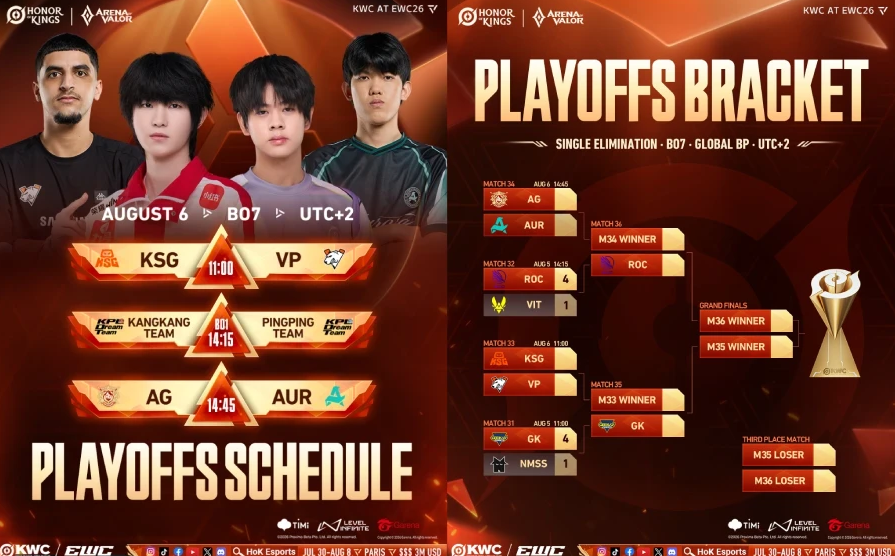
The Remaining World Cup Window
The 2026 World Cup final phase runs through August 7. Because the bracket advances after every match, exact team pairings can change by the time viewers open a guide. The official tournament page and the game's esports channels should be treated as the live source for the final bracket, match order, and regional broadcast times.
For planning purposes, viewers should separate August 6 from August 7. August 6 is the last major elimination day before the championship is decided. August 7 is the final destination of the bracket and the most important day for pre-show announcements, possible reward reminders, and the title match.
Do not rely on a screenshot saved several days earlier. Tournament schedules can shift because a previous series runs long, technical pauses occur, or organizers adjust broadcast flow. Use the listed start time as the beginning of the broadcast window rather than a promise that a specific map begins at that exact minute.
How the Final Phase Changes Team Strategy
Early tournament stages can reward experimentation because teams have more matches and more opportunities to recover. The final phase reduces that freedom. Elimination pressure changes drafting in three ways.
First, teams protect reliable comfort picks more aggressively. A player with a signature hero can force opponents to spend bans, creating space elsewhere in the draft. Second, teams reveal prepared counters only when the bracket requires them. A specialized answer may appear late in a series after both sides establish their normal priorities. Third, flexible heroes become more valuable because they hide lane and role assignments until later picks.
Viewers should not judge a draft only by counting individually strong heroes. Ask whether the lineup has a clear way to begin fights, protect damage dealers, control major objectives, and close the game after gaining a lead.
Four Draft Questions to Ask Before Every Game
Who Controls the First Important Objective?
A lineup may have excellent late-game damage but no reliable way to contest the first Tyrant or Overlord setup. Look at early lane pressure, jungle tempo, and the support's ability to move first. The team that enters the river earlier often forces the opponent to spend skills simply to check vision and positioning.
Which Backline Is Easier to Reach?
Professional teams punish exposed damage dealers. Compare the mobility and protection available to each marksman or mage. A composition with powerful output can still fail if it has no answer to a coordinated flank.
Where Does the Frontline Receive Support?
A tank that enters alone is not creating space; it is donating health. Watch whether the team's damage and control can reach the same target when the frontline commits. Good lineups connect initiation with immediate follow-up.
What Happens If the First Plan Fails?
The strongest drafts have a second way to win. A dive composition may also control side lanes. A ranged composition may retain a defensive counter-engage. A lineup with only one narrow combo becomes predictable in a long series.
Role-by-Role Viewing Guide
Watching only eliminations hides much of professional Honor of Kings. Each role creates advantages before the scoreboard changes.
The Clash Lane player manages side pressure and often controls the timing of a late flank. Watch when this player leaves the lane, whether a minion wave is prepared first, and whether the teleport or rotation creates a real numbers advantage.
The Jungler converts information into objective control. Professional jungle play is not constant fighting. Track where the Jungler appears, which camp timing is sacrificed, and whether a failed gank creates an opening for the opponent on the other side of the map.
The Mid Lane player frequently connects both sides of the map. Fast wave clear creates the first move, while crowd control or burst determines whether that move becomes an elimination. A mid player who disappears from vision can create pressure without casting a skill.
The Farm Lane carry needs gold and safe positioning. Watch how the team transfers resources and who protects the carry when objectives become crowded. A small positioning advantage can decide the entire late fight.
The Roamer is the information and engagement engine. Good Roamers enter dangerous areas without giving away a free elimination, identify enemy positions, and create a clear signal for teammates. Their best work often happens before the camera follows the fight.
Objective Setups Decide More Than Kill Counts
A team can lead in eliminations and still lose the map. Major objectives create permanent pressure, forcing defensive responses and opening structures. The decisive sequence usually begins before the objective takes damage.
Watch the side lanes. A team that pushes waves first can move toward the objective without losing structures. Watch the entrances. The team controlling narrow routes can force the opponent to approach through predictable angles. Watch key ultimates. If the defending team lacks its strongest area control, contesting may be impossible even when all five players are alive.
Professional teams also use objectives as bait. Starting the objective does not always mean they intend to finish it. They may want the opponent to enter a prepared area. Viewers should watch health bars and positioning before assuming a full commitment.
How to Follow a Long Series
A championship series is a developing conversation between two coaching staffs. Game 1 establishes comfort. Game 2 reveals the first answer. Later games show whether the answer can be countered.
Keep a simple note of three elements: priority bans, the hero repeatedly receiving first pick, and the lane producing the largest advantage. Those patterns explain most later draft changes.
If a team loses with a strong early lead, identify whether the failure came from side-lane management, objective positioning, or an unsuccessful engagement. The next draft may directly address that weakness.
Do not assume a hero is weak after one loss. Professional performance depends on composition and execution. A hero that failed without protection may become decisive when paired with a different Roamer or frontline.
Broadcast and Reward Checklist
Use the official Honor of Kings esports broadcast or a listed co-stream partner. Regional channels may offer different commentary languages and local schedules. Sign in before the match if an official viewing mission requires account connection.
Check whether a reward campaign is active on the specific platform. Not every World Cup broadcast automatically provides drops, and reward availability can differ by region. Read the event rules for watch duration, claim deadlines, and account-linking requirements.
Claim rewards soon after eligibility appears. Some platforms require a manual claim, and unclaimed items can expire even when the viewing requirement was completed.
Check | Why it matters |
|---|---|
Official match time | Prevents missing a series after bracket changes |
Broadcast language | Helps viewers follow draft and objective analysis |
Account connection | Required only when the official reward rules say so |
Reward claim deadline | Completed watch time may not equal an automatic claim |
In-game mailbox | Confirms whether the reward reached the correct account |
What Makes the Final Worth Watching
The World Cup final tests more than mechanical skill. Teams must manage limited preparation time, adapt between games, and decide when to reveal a specialized strategy. A player can dominate one map and become the focus of several bans in the next.
The most interesting moment is often the first major draft departure. When a team abandons the hero or composition used throughout the event, it signals either a prepared surprise or a response to a weakness discovered in the previous game.
Late-game decision-making is equally important. At championship level, one player showing on the wrong side of the map can create a major objective loss. The team that communicates the next thirty seconds more clearly often defeats the team with the better individual highlight plays.
A Match-Day Plan for Global Viewers
Before the broadcast, confirm the current date and convert the official time to your local zone. Open the live bracket rather than an old article. Choose the broadcast language and sign in only if an official reward event requires it.
During the first game, focus on draft roles rather than trying to predict the winner. Identify each team's main initiation, protected damage source, and objective control. In later games, watch how bans and first picks respond to what happened earlier.
Between series, check the official channel for schedule updates. Avoid unofficial reward codes posted without an expiration status. Tournament excitement attracts copied or fabricated codes that may never have been valid for the global server.
After the final, claim any verified rewards and review official announcements. Large events sometimes include future content reveals, but viewers should separate confirmed announcements from caster speculation or community predictions.
Final Viewing Priority
If time is limited, watch the drafts, first major neutral objective, and the final objective sequence of each game. Those three moments explain the teams' plan, their early execution, and their ability to close.
The Honor of Kings World Cup 2026 final phase is valuable because it shows how elite teams build a complete win condition under elimination pressure. Follow the live bracket, judge compositions by function, and treat rewards as an optional official bonus rather than the reason to watch.
FAQ
When does the Honor of Kings World Cup 2026 final phase end?
The tournament's decisive phase concludes on August 7, 2026, in Riyadh. Check the official live bracket for the latest match order and local broadcast time.
Do I need to pay to watch the World Cup or receive free viewing rewards?
No purchase is required to watch official broadcasts. If a viewing reward campaign exists, follow its platform, account-linking, watch-time, and claim rules.
Why can the published match time change?
Earlier series can run longer than expected, and tournament operations may adjust the broadcast flow. Treat the listed time as a broadcast window and recheck the live schedule.
Can I recharge Tokens while following the event?
Yes, but it is separate from tournament access. Players who independently plan optional in-game purchases can use Topuplist and the Honor of Kings top-up page; watching the competition itself does not require a top-up.