


Honkai: Star Rail 4.4 Anomaly Arbitration Unlock Guide
Honkai: Star Rail Version 4.4's Anomaly Arbitration rotation is available until August 25, 2026. Access requires Equilibrium Level 6 and at least one historical full-star clear of each major rotating endgame mode: Memory of Chaos, Pure Fiction, and Apocalyptic Shadow. Rewards include Lone Stardust, Interference Keys, Self-Modeling Resin, and limited avatar frames. This guide explains why the mode may remain locked, how its Knight and King stages affect roster planning, which rewards deserve priority, and when to stop chasing perfect results.
Anomaly Arbitration is one of Honkai: Star Rail's strictest account checks, and many Trailblazers discover the real challenge before entering the first battle. Players preparing Oneiric Shards for separate banners can compare options through Topuplist and the dedicated Honkai: Star Rail top-up page, but paid currency does not unlock this mode: the account must reach Equilibrium Level 6 and record full-star clears in Memory of Chaos, Pure Fiction, and Apocalyptic Shadow.
The current Version 4.4 rotation remains available through August 25, 2026. Its rewards include Lone Stardust for the Gift of Stardust shop, Interference Keys for Relic substat adjustment systems, Self-Modeling Resin, and limited avatar frames.
The mode is designed for mature rosters. A player can still earn meaningful rewards without turning every stage into a zero-cycle showcase.
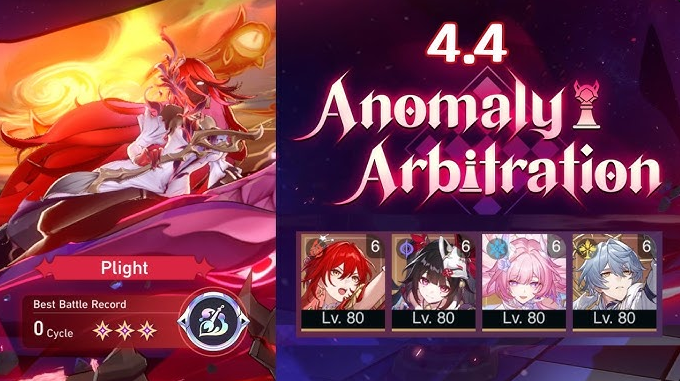
The Exact Unlock Requirements
Anomaly Arbitration appears in the Treasures Lightward section after the account meets two categories of conditions.
Requirement | What It Means |
|---|---|
Equilibrium Level 6 | Reach Trailblaze Level 65 and complete the corresponding Trial of Equilibrium |
Memory of Chaos record | Fully clear its highest relevant difficulty with all stars at least once |
Pure Fiction record | Fully clear its highest relevant difficulty with all stars at least once |
Apocalyptic Shadow record | Fully clear its highest relevant difficulty with all stars at least once |
Simultaneous timing | The three records do not need to come from the same week or phase |
The historical-record rule is important. A current rotation does not need all three endgame modes to be active and full-starred at the same time. The account needs a qualifying record in each category.
If the mode remains locked, inspect which record is missing rather than repeatedly restarting the client.
Why Equilibrium Level 6 Is Not Enough
Reaching Trailblaze Level 65 and completing the sixth Equilibrium trial only satisfies the account-level gate. It does not prove the roster has completed all three endgame tests.
Memory of Chaos emphasizes cycle-limited combat against two teams of enemies. Pure Fiction rewards wave clearing and repeated enemy elimination. Apocalyptic Shadow focuses on powerful bosses and mechanics. Anomaly Arbitration uses the full-star records as evidence that the account has already learned several roster demands.
A player may have perfect Memory of Chaos clears but struggle in Pure Fiction because the account lacks area damage. Another may dominate wave content but lack boss-focused damage for Apocalyptic Shadow.
Open each mode's record and confirm the highest completed stage and star total. Do not rely on memory of “clearing” when the requirement is a full-star clear.
Once the missing record is identified, build for that mode before returning to Anomaly Arbitration.
Fixing the Missing Memory of Chaos Record
Memory of Chaos usually asks for two functional teams and rewards efficient cycles. The account should have a main damage source, sustain, and support structure on both sides.
Start by matching weaknesses and enemy mechanics rather than forcing the same favorite team into every phase. A slightly weaker damage dealer with correct toughness damage can save more cycles.
Upgrade important Traces, Light Cones, and Relics to stable thresholds. Do not chase perfect substats before main stats, character levels, and core abilities are complete.
Keep high-use supports flexible. If one support is essential to both teams, identify the side where they produce the larger cycle reduction and build an alternative for the other side.
The goal is one historical full-star record. Once it exists, later Memory of Chaos difficulty does not remove the unlock achievement.
Fixing the Missing Pure Fiction Record
Pure Fiction values frequent actions, area damage, follow-up attacks, damage over time, or mechanics that eliminate many enemies efficiently. A boss-only team can have excellent damage yet perform poorly against repeated waves.
Use the phase's current Cacophony or blessing. Build the team around how it scores, not around a general tier list.
Avoid overinvesting in single-target burst when smaller enemies remain. Characters who attack multiple targets or trigger additional actions can create more total score.
Sustain needs can be lower in some Pure Fiction phases. Replacing excessive defense with another support or damage source may improve the score, but only when the team survives reliably.
Check both halves independently. A strong first side cannot fully compensate for a second side that never reaches its target score.
Fixing the Missing Apocalyptic Shadow Record
Apocalyptic Shadow uses powerful bosses, break mechanics, and phase-specific rules. Damage windows often depend on reducing Toughness, handling summons, or interacting with a boss state.
Read the boss mechanic before changing characters. A team can fail because it bursts during damage reduction or ignores the action that opens vulnerability.
Choose damage types that can break efficiently, then align support ultimates and main damage with the exposed window.
Preserve resources across phases. Using every Ultimate just before a boss transforms can leave the team empty when the important window begins.
Full-star requirements can be demanding, but the account needs only one successful historical phase for the Anomaly Arbitration gate. Use the most favorable rotation rather than assuming it must happen immediately.
Knight Stages and Roster Breadth
Anomaly Arbitration uses several Knight challenges that require separate team planning. Characters committed to one completed stage can affect how the remaining lineups are built under the current record rules.
Do not place every premium support in the first team. Review all enemy weaknesses, traits, and buff options before locking any formation.
Assign the most specialized team to the stage where it has a unique advantage. Save flexible supports and sustains for stages with several possible solutions.
A lower score or slower clear can still be useful when it secures a star or unlocks a reward threshold. Perfection in one Knight stage should not make the other stages impossible.
If changing a completed lineup resets its battle record, read the warning carefully. Star rewards already retained may behave differently from the saved formation record.
The King Stage
The King challenge acts as the central boss test. Enemy traits are stronger, the cycle allowance is strict, and an Arbitral Quadrant buff can shape the team plan.
Select the Quadrant that strengthens the team's actual damage pattern. A buff built for follow-up attacks has little value for a team that rarely triggers them.
Learn the boss sequence before chasing a faster result. Identify vulnerability windows, add phases, crowd control resistance, toughness recovery, and attacks that threaten the sustain.
A one-star clear can be more valuable than repeated failed perfect attempts if it unlocks a key reward. Check the milestone table before deciding the required score.
Players who want a limited avatar frame may need higher achievement than players seeking only account-development items. Separate cosmetic prestige from progression value.
Reward Priority
Self-Modeling Resin has broad value because it allows selection of a Relic main stat during synthesis. It does not guarantee good substats, but it reduces one layer of randomness.
Interference Keys interact with Relic substat adjustment. Read the current item description before using one; the system has conditions and does not turn every Relic into a perfect piece.
Lone Stardust is spent in the Gift of Stardust shop. Inspect the shop inventory and expiration or refresh behavior before exchanging. Saving toward a meaningful item can be better than several small purchases.
Limited avatar frames are collection rewards. Their value is personal and should not force expensive roster upgrades when the account already obtained the development items.
Claim every completed milestone from the mode page. Do not assume all rewards arrive automatically.
A Practical Clear Order
First, enter every Knight stage and inspect traits, weaknesses, and recommended buffs. Do not lock a final team after reading only the first stage.
Second, allocate three teams on paper. Place irreplaceable units where they create the largest advantage, then fill remaining sustain and support roles.
Third, secure basic clears and first reward thresholds. This reveals how the King stage changes and which resources are already protected.
Fourth, attempt the King stage with the strongest compatible team and the correct Arbitral Quadrant. Aim for the minimum result that grants the next desired reward.
Finally, return for higher stars only when the reward justifies the time, Relic changes, or Trace investment.
Building Three Teams Without Perfect Relics
Start with correct main stats and leveled Relics. A character with five-star pieces, correct main stats, and usable substats can contribute even without a perfect set.
Level the main damage dealer, Light Cone, and important Traces first. Supports often gain more from Speed, Energy Regeneration, defensive stability, and key Trace levels than from maximizing personal damage.
Use rainbow or mixed Relic sets when their substats and main stats are stronger. Set bonuses should not force weak pieces that break Speed tuning or survival.
Share planning knowledge, not equipped items after formations are locked. The mode's team restrictions mean a single Light Cone or Relic set cannot solve simultaneous lineup needs if the game prevents reassignment.
Test full rotations. A theoretical build can fail when Skill Points, Ultimate timing, or action order collapses in actual combat.
When to Use Interference Keys
Do not spend an Interference Key on the first almost-good Relic. Choose a piece with the correct set, slot, main stat, and enough useful potential to justify adjustment.
Understand which substats can be reassigned and what randomness remains. The item improves control but does not guarantee maximum rolls.
Prioritize Relics for high-use carries or supports who appear across several endgame modes. A narrow piece for one temporary strategy has less account value.
Compare the Key with continued farming. If the Relic is already close to functional and farming the domain supports several characters, saving the Key may be better.
Keep at least one Key until the system's value is fully understood. Scarce adjustment items should solve specific bottlenecks, not curiosity.
Should You Chase the Limited Frame?
A limited avatar frame can demonstrate a strong clear and provide a visible profile reward. For competitive endgame players, that can be a satisfying objective.
It provides no Stellar Jade, damage, account level, or combat advantage beyond the milestone's listed rewards. Players should not feel that the mode is incomplete without it.
Estimate the improvement needed. If the frame requires only better rotation or one moderate Trace upgrade, the challenge can be worthwhile. If it requires several new characters or major spending, stopping is reasonable.
The frame's deadline creates urgency, but urgency does not change account economics. Development resources with long-term value should come first.
Time Planning Before August 25
Use the first remaining week to verify unlock records and open the mode. If one full-star endgame record is missing, focus on the active favorable rotation.
Use the next sessions to map Knight teams and obtain basic rewards. Avoid spending hours on one stage before seeing the others.
Use the final week for targeted upgrades and King-stage attempts. Finish at least a day before the server deadline.
The Version 4.4 cycle ends with the update period around August 25 or the displayed regional time. Use the in-game countdown because official notices can express the end as August 26 at 06:00 UTC+8.
Claim rewards immediately after the final successful run.
Paid Currency Does Not Replace the Gate
A new limited character can strengthen a roster, but the unlock requirement is based on historical full-star records. Purchasing Oneiric Shards does not directly open Anomaly Arbitration.
For a planned banner, verify UID, server, pity, character kit, team need, and budget. Once the plan is fixed, complete only the selected amount through a trusted channel. Do not pull only because one Anomaly Arbitration stage is difficult.
Final Recommendation
If Anomaly Arbitration is locked, verify Equilibrium Level 6 and the three historical full-star records before checking anything else. Memory of Chaos, Pure Fiction, and Apocalyptic Shadow each need a qualifying clear, but not in the same phase.
After unlocking, plan all Knight teams before committing premium supports. Secure Self-Modeling Resin, Interference Keys, Lone Stardust, and other progression rewards before chasing limited avatar-frame prestige.
The Version 4.4 rotation remains until August 25. Use its deadline to organize attempts, not to force spending. A controlled one-star King clear with valuable rewards is better than an expensive pursuit of a perfect profile result.
FAQ
When does the Version 4.4 Anomaly Arbitration end?
The current rotation runs through August 25, 2026, with regional notices also expressing the version end as August 26 at 06:00 UTC+8. Use the in-game countdown.
What Equilibrium Level is required?
Equilibrium Level 6 is required, which is reached after Trailblaze Level 65 and the corresponding Trial of Equilibrium.
Which endgame modes must be full-starred?
The account needs at least one historical full-star clear in Memory of Chaos, Pure Fiction, and Apocalyptic Shadow.
Must all three full-star clears happen at the same time?
No. Historical records from different phases count once each mode has a qualifying full-star clear.
What rewards are available?
The rotation offers rewards including Lone Stardust, Interference Keys, Self-Modeling Resin, and limited avatar frames.
Where can players prepare Oneiric Shards for a separate banner?
After checking UID, server, pity, final kit, team need, and budget, players can compare options through Topuplist or use the dedicated Honkai: Star Rail top-up page. A purchase does not directly unlock the mode.
Is the limited avatar frame necessary?
No. It is a cosmetic achievement reward. Prioritize permanent account-development items and stop when the extra investment is not justified.