


Blood Strike Titan Strike Guide: How to Win the Attack on Titan Mode
Titan Strike is the centerpiece of Blood Strike's second Attack on Titan collaboration series. The limited mode changes the normal battle rhythm by adding Titan transformations, asymmetric objectives, and event progression that rewards efficient play rather than random fighting. This guide explains both sides of the mode, the safest team roles, common mistakes, and a practical route for collecting collaboration rewards before the event ends.
Titan Strike is not a normal Blood Strike match with a collaboration skin placed on top. The Attack on Titan event changes movement priorities, target selection, and the value of coordinated fire, so players who enter with ordinary battle royale habits can lose even when their aim is strong. Anyone preparing Gold for optional collaboration draws or cosmetics can recharge through Topuplist and the dedicated Blood Strike top-up page, while the mode itself remains a gameplay challenge that rewards understanding its objectives. The fastest improvement comes from learning what your current form is supposed to accomplish instead of chasing every visible enemy.
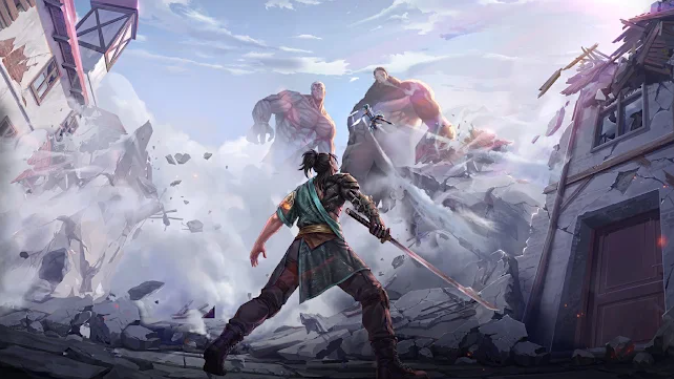
Why Titan Strike Feels Different
Standard Blood Strike combat usually rewards fast looting, clean rotations, favorable weapon ranges, and the ability to finish a weakened squad. Titan Strike introduces a much larger threat that cannot be treated like an ordinary Striker. Players must divide attention between human opponents, Titan pressure, objective progress, survival resources, and the event-specific conditions that determine victory.
That creates an asymmetric match. The Titan side wants to force panic, split the opposing formation, and deny safe firing positions. The human side wants to preserve distance, create crossfire, and concentrate damage during real openings. A team that ignores this difference often spends too much ammunition on low-value attacks or allows the Titan to reach the area where its size and pressure become overwhelming.
The mode also changes the meaning of a successful fight. Eliminating one opponent may be less important than protecting a teammate who can continue objective progress. Dealing damage without controlling space may look productive while achieving very little. Every engagement should therefore be connected to a clear purpose.
The Human-Side Win Condition
Human players should think like a hunting unit rather than six independent Duelists. The goal is not to stand in one group. A tightly packed team gives the Titan one obvious target area and makes displacement effects more dangerous. The better shape is a connected spread: players are far enough apart to create different angles but close enough to help one another.
Three jobs make that formation work.
The anchor holds the most stable firing position and keeps sight of the Titan's movement. The flanker creates a second angle so the Titan cannot face every source of damage at once. The rescue player watches the team rather than chasing the highest damage number, preserving revives, utility, or cover for the moment the Titan commits.
These are temporary jobs, not permanent classes. A flanker whose route becomes unsafe should return to the anchor. A rescue player can become the main damage source after the Titan spends a movement or control tool. Flexible role switching is more valuable than insisting on one position for the entire match.
How to Fight a Titan Without Wasting Resources
The most common mistake is firing continuously simply because the Titan is large and easy to see. A visible target is not always a valuable target. If the Titan is moving behind cover, outside your effective range, or preparing to close distance, uncontrolled fire may reveal every human position without producing meaningful pressure.
Use a damage window instead. Wait until several teammates have sightlines, confirm that the Titan cannot immediately break line of sight, and then concentrate fire. Even if the mode does not require literal weak-point mechanics in every situation, synchronized damage is still stronger because it forces the Titan to choose between continuing an attack and escaping sustained pressure.
Reload timing should also be staggered. If every player empties a magazine at the same moment, the Titan receives a free approach while the team reloads. One or two players should preserve fire during the others' reload cycle. This simple habit prevents many collapses.
Movement matters more than perfect accuracy when the Titan reaches close range. Do not back away in a straight line. Use terrain, elevation, building edges, and direction changes to force the larger model to turn. The human side wins time by making the Titan repeatedly adjust, not by trying to outlast direct pressure.
Playing the Titan: Pressure Is More Important Than Chasing
Titan players often lose by chasing the first wounded opponent too far. A long pursuit can feel successful, but it may allow the rest of the enemy team to complete an objective or occupy ideal firing positions. The Titan's greatest advantage is the ability to control several players' decisions at once.
Approach from a direction that removes safe space. If humans have two escape routes, do not always attack the nearest player. Move toward the route that forces the entire group into a worse area. The result may be no immediate elimination, but the next engagement becomes much easier.
Use terrain to break crossfire. The Titan should avoid standing where every human can shoot from a separate angle. Buildings, cliffs, and large obstacles can reduce the number of active attackers. Once the human formation is compressed, the Titan can pressure the anchor, interrupt rescues, or force several players to move simultaneously.
A good Titan also recognizes bait. One isolated player may be trying to pull the Titan away from an objective. Before committing, check whether other opponents are disappearing from view or moving toward progress points. The correct response may be a short threat followed by an immediate return to the important area.
Objective Priority by Match Phase
Match phase | Human priority | Titan priority |
|---|---|---|
Opening | Secure resources and establish separated sightlines | Identify the human formation and deny ideal positions |
Mid-match | Coordinate damage windows and protect objective progress | Split the group and punish isolated rotations |
Final phase | Preserve revives, ammunition, and one safe escape route | Force the humans into a compressed area and stop recovery |
The opening should be information-heavy. Humans need to learn where pressure is coming from before committing to a route. The Titan needs to identify which player is organizing the team and which areas offer the humans too much safe range.
The middle phase is where most matches are decided. Human teams should stop taking unrelated duels and synchronize around the objective. Titan players should create two problems at once: threaten a vulnerable player while occupying the path the rest of the team needs.
In the final phase, resource discipline becomes decisive. A human team with one protected revive and controlled ammunition can survive a stronger Titan. A Titan that prevents recovery and keeps the team moving can win without taking every fight immediately.
Weapon and Loadout Principles
Titan Strike should not be approached with one universal weapon recommendation. The best choice depends on the range the map and your role create.
Weapons with controllable sustained fire are valuable for anchors because they maintain pressure during a real damage window. Mobile players need a setup that does not punish repeated repositioning. A rescue-focused player benefits from a weapon that can quickly discourage an enemy without requiring a long exposure time.
Avoid building an entire team around the same range. If every player wants long-distance fights, the group may collapse when the Titan closes space. If every player chooses close-range pressure, the team may have no safe way to damage the Titan before it reaches the objective. Mixed effective ranges make the formation harder to counter.
Utility should serve movement and survival. A tool that creates one safe crossing can be more valuable than a small amount of extra damage. Save high-impact resources for a Titan commitment or a decisive objective moment rather than spending them on the first encounter.
Efficient Event Progression
Collaboration events often contain daily tasks, cumulative milestones, mode participation, and separate cosmetic draws. Treat those systems as different tracks.
First, complete tasks that expire daily or reset frequently. A permanent cumulative objective can be finished later, but a missed daily opportunity usually cannot be recovered. Second, group compatible tasks into the same match. If one mission asks for participation and another rewards damage, play the required mode with a loadout designed to contribute consistently.
Third, distinguish free rewards from paid cosmetics. Claim login items, mission currency, and event milestones before considering optional draws. Never assume that an event icon means every reward comes from the same pool. Read the label attached to each reward and verify whether it is earned through play, exchange, or Gold.
Finally, stop farming a mode after the useful objectives are complete unless you genuinely enjoy it. Event efficiency comes from finishing the limited requirements, not from repeating matches that no longer advance the reward track.
Common Mistakes and Direct Fixes
Fighting Alone
An isolated human gives the Titan a simple engagement. The fix is not permanent grouping; it is maintaining a route back to allied sightlines. Flank only when teammates can punish the Titan for turning toward you.
Shooting From One Angle
A line of players behind the same cover is easy to pressure. Move one player to a second elevation or side route, then synchronize fire rather than attacking separately.
Chasing Damage as the Titan
High damage does not matter if humans complete the objective. Break their formation, deny recovery, and return to important ground before the chase becomes a distraction.
Spending Every Resource Early
Players often use mobility and defensive tools at the first sign of danger. Preserve at least one answer for the Titan's real commitment. A late escape is usually more valuable than an early convenience.
Confusing Event Tasks With Match Victory
A player may need a specific mission action, but the team still needs to win. Complete personal requirements when they align with the objective. Do not sabotage the match for a small amount of progress.
A Practical Match Plan
At the beginning, identify two safe firing areas connected by cover. Do not choose positions that require crossing open ground after the Titan appears. Assign one player to watch the route behind the team and one player to preserve a rescue option.
During the first major encounter, use it as a test. Learn the Titan player's preferred approach and whether the human team can maintain crossfire. Do not spend every high-impact resource unless the objective is immediately threatened.
In the middle phase, rotate before the Titan fully occupies your next position. Late rotations force the team into a narrow path and remove the advantage of ranged fire. Keep one player moving early while the others maintain pressure.
For the final objective, shorten communication. Call the Titan's direction, the safe route, the next damage window, and any unavailable rescue tool. The team should know whether it is trying to survive, complete progress, or force the Titan away. One shared plan is better than several individually reasonable plans.
Final Takeaway
Titan Strike rewards discipline more than constant aggression. Human teams win by spreading intelligently, creating synchronized damage windows, and protecting objective progress. Titan players win by controlling routes, separating the formation, and refusing low-value chases.
The collaboration theme makes the mode visually dramatic, but the underlying decisions are clear. Every action should either improve your position, protect a teammate, create objective progress, or remove an enemy's safe option. Players who follow that rule will earn event progress more consistently and enjoy the mode without turning every match into a random damage race.
FAQ
Is Titan Strike available for the entire Attack on Titan Series 2 event?
The mode and individual missions may use their own schedules. Check the live event page and task timer before planning a long farming session, especially near the end of August.
What should human players do when the Titan reaches close range?
Stop firing in place and use terrain to force turns. Separate enough to avoid one pressure zone, maintain allied sightlines, and preserve one movement or defensive tool for the Titan's committed attack.
Is maximum damage the best way to earn rewards?
Not always. Many event rewards are tied to participation, missions, cumulative objectives, or exchange currency. Complete the exact task wording instead of assuming the highest damage score advances every reward track.
Do I need Gold to play Titan Strike or earn its free rewards?
No. Mode participation and free event objectives should be treated separately from optional cosmetic spending. Players who choose to obtain collaboration items can review recharge options through Topuplist and the Blood Strike top-up page, but purchasing Gold is not required to understand or play the mode.