

AFK Journey Resonance Level Stuck? Check Your Lowest Hero First
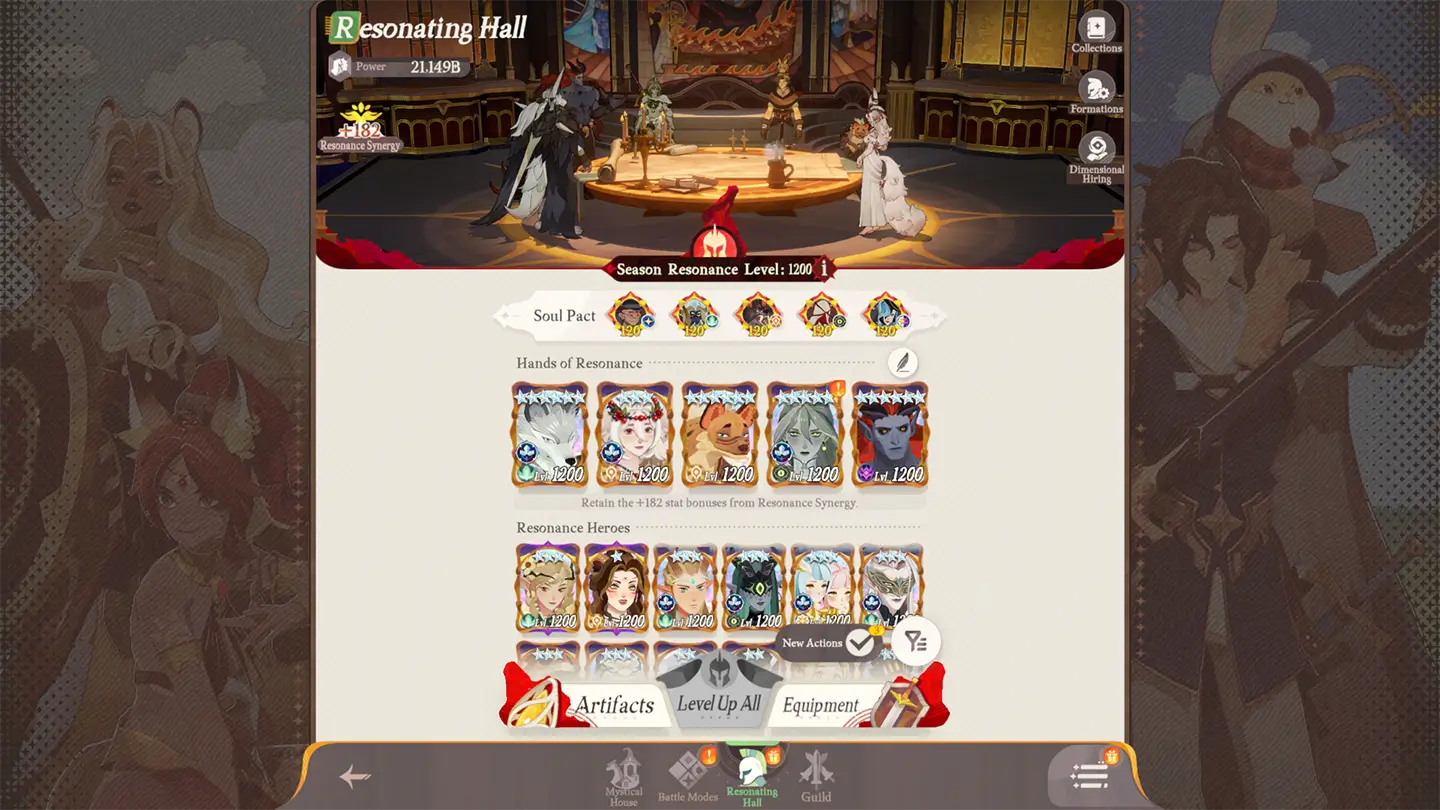
Your AFK Journey carry can gain a level while the rest of your collection stays exactly where it was. In the five-hero Hands of Resonance system, the shared Resonance Level follows the lowest-level Hand. Raising a hero who is already above that minimum does not raise the floor for everyone else.
That is the first check to make before treating a stalled roster as a recruitment problem. This explanation focuses on the ordinary five-Hand leveling system. Seasonal progression and mode-specific rules can add other layers, so compare the level display you are actually trying to improve rather than treating every number on the account as the same system.
Why one stronger carry does not raise the whole roster
Prydwen’s Resonating Hall explanation describes five Hands of Resonance, with the lowest member setting the shared level for the other heroes you own. Only the Hands are manually leveled. This concentrates routine level investment into five slots rather than requiring a separate leveling budget for every new character.
If you are also comparing optional purchases, the AFK Journey purchase page is available separately. First identify whether your immediate obstacle is the lowest Hand, a hero-specific upgrade or the battle itself; extra spending should answer an identified need.
 AFK Journey




For example, suppose your five Hands are level 100, 100, 100, 100 and 99. The shared level is 99. Upgrading one of the level-100 heroes to 101 leaves the minimum at 99; bringing the level-99 hero to 100 lifts the shared level to 100. These are example levels to explain the rule, not a claim about your current account or a specific progression cap.
You can change the Hands without rebuilding every hero
Hands of Resonance are leveling slots, not a rule forcing those exact five heroes into every battle. Prydwen notes that heroes can be swapped into and out of the Hands at any time without a cost. You can reorganize who occupies those slots instead of assuming that an early leveling choice has permanently locked your account.
This changes the decision when you obtain a new damage dealer or support. Check the shared level and the hero’s other development requirements before deciding that the new character needs a second full leveling budget. The point of the Hall is that roster flexibility and manual level investment are not the same thing.
There is also a limit to how far one Hand can run ahead: the ordinary system does not allow a Hand to exceed the Resonance Level by more than 10 levels. If your carry cannot be raised further, inspect the lowest Hand before looking for a hidden unlock. The leading hero may be held back by the shared floor.
That does not make every uneven level distribution a mistake. A stronger carry may still be useful for a particular fight. It means you should choose deliberately between strengthening that carry and lifting the level available to the rest of the roster, instead of expecting both results from every upgrade.
A shared level does not make every hero equally developed
If a newly obtained hero reaches the shared level but still performs poorly, stop using level as the only diagnosis. Ascension and Exclusive Equipment are separate parts of character development. A level match does not demonstrate that two heroes have the same skills, upgrades or suitability for the enemy lineup.
Ordinary equipment creates another check. The beginner guide explains that equipment is organized by class, and the level of equipment you can forge is tied to Resonance Level. A low shared level can therefore affect more than the number beside an individual hero: it can also hold back the level of gear you can create.
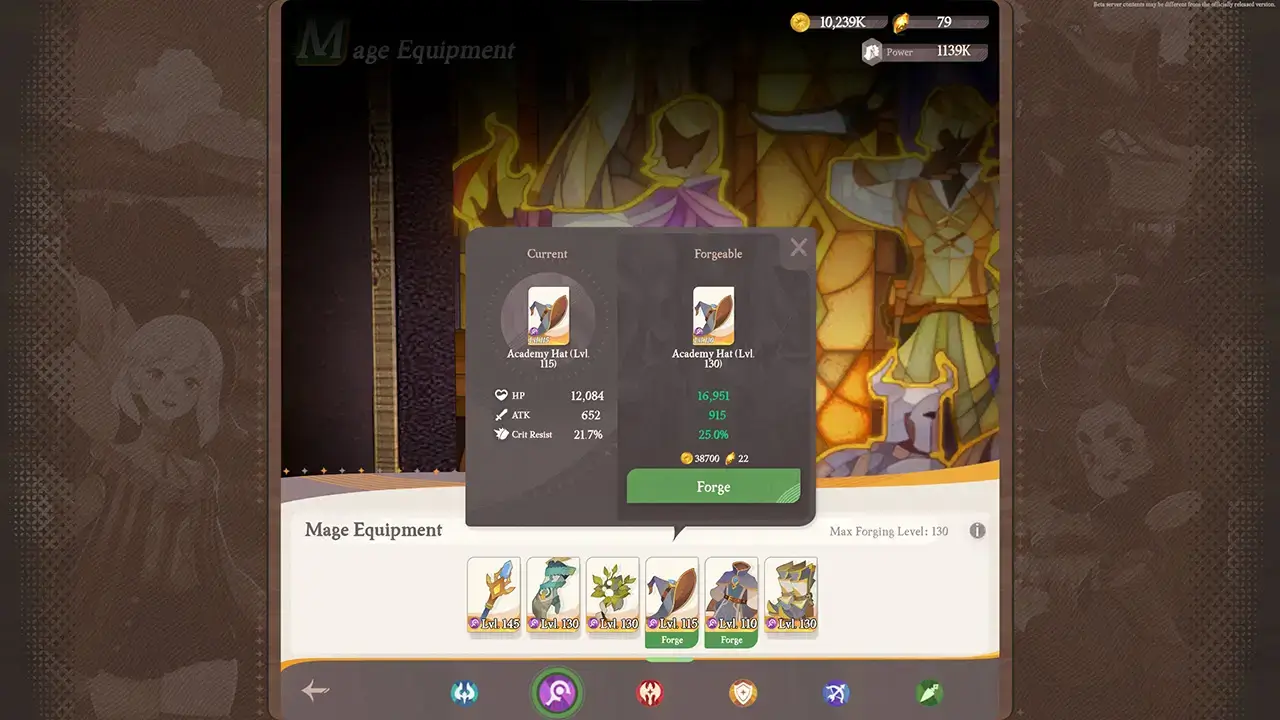
After raising your lowest Hand, inspect the equipment menu instead of assuming every related upgrade has already happened. Check what can now be forged and what materials are required. The ability to create a stronger piece and actually owning that stronger piece are separate states.
Read the bottleneck before committing more resources
When the whole reserve roster stays low, compare the five Hands and find the minimum. When only one hero cannot move further ahead, compare that hero’s level with the shared floor and its allowed lead. When the levels look right but battles still fail, examine ascension, equipment and team roles rather than repeating the same level investment.
The useful habit is to name the upgrade you need before spending toward it. “Raise the lowest Hand” is a specific action with a shared-level effect. “Recruit more because my roster feels weak” may solve a different problem—or leave the actual level bottleneck untouched.