


AFK Journey Dream Hunt Preview Guide: Confirmed Information, Roster Preparation, and Launch Checklist
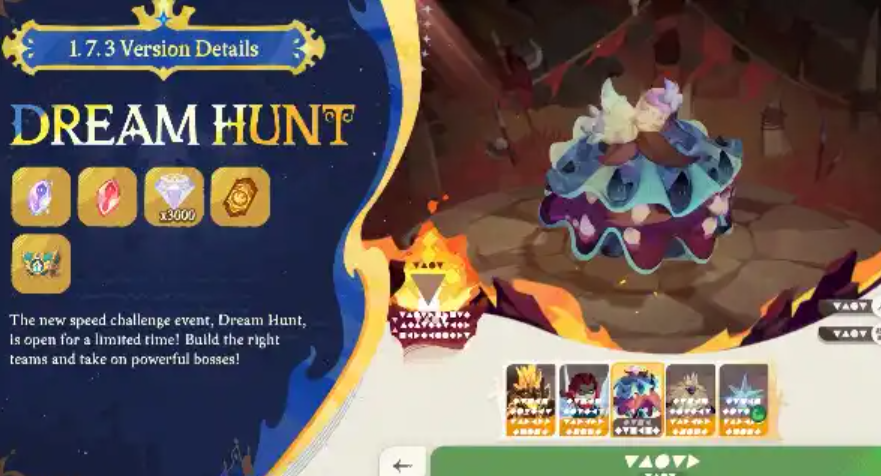
Dream Hunt is included in the official AFK Journey Version 1.7.3 preview, but its complete rules, enemy rotation, scoring, and rewards require live verification. This guide explains what is confirmed, what remains unknown, and how players can prepare a flexible roster without speculative investment.
Dream Hunt is one of the activities announced for AFK Journey Version 1.7.3. Its name suggests a mode connected with dream-themed encounters, hunting targets, or repeated challenges, but a title and preview image are not enough to establish the final rules. As of July 28, 2026, players can safely treat Dream Hunt as officially previewed content while waiting for the live client to confirm its schedule, enemy structure, scoring method, entry limits, and rewards.
The correct preparation is therefore flexibility. Players should organize a broad roster, preserve adaptable resources, and create a launch-day inspection process. They should not build a specific hero, purchase a bundle, or dismantle an existing team because an unofficial post claims to know the final Dream Hunt meta.
Confirmed Information and Current Limits
The Version 1.7.3 preview confirms that Dream Hunt belongs to the update's content lineup. That is enough to prepare account systems but not enough to publish an exact boss guide.
Several important details still require official confirmation:
Whether Dream Hunt is a solo, guild, server, or cross-server mode.
Whether it uses one target, several rotating targets, or multiple stages.
Whether scores depend on damage, survival, objectives, or clear time.
Whether heroes become locked after use.
Whether attempts refresh daily or accumulate.
Whether seasonal modifiers change team value.
Whether rewards are based on participation, milestones, or ranking.
Information | Status before launch |
|---|---|
Dream Hunt is part of Version 1.7.3 | Officially previewed |
Exact opening and closing dates | Verify in the live event calendar |
Enemy lineup and mechanics | Not confirmed by the preview alone |
Best teams and heroes | Cannot be finalized before rules and targets are known |
Reward quantities | Must be checked in the live client |
Paid progression options | Do not assume they exist |
A reliable guide should preserve these boundaries instead of turning guesses into instructions.
Build a Flexible Roster, Not One Speculative Team
The safest roster preparation covers different combat functions. A mode can change the value of a hero through positioning, damage type, crowd control, survivability, summons, sustained damage, burst timing, or faction restrictions.
Organize available heroes into role groups:
Frontline units that can survive sustained pressure.
Supports that provide healing, shielding, haste, energy, or damage amplification.
Damage dealers built for long encounters.
Burst heroes suited to short vulnerability windows.
Control or displacement heroes for multi-target stages.
Flexible substitutes from several factions.
Do not upgrade every hero equally. Identify functional representatives for each role. A developed account may prepare two complete cores; a newer account may focus on one stable core and several lower-cost substitutes.
The most useful pre-launch question is not “Who is the best Dream Hunt hero?” It is “Which combat requirement would leave my account without an answer?”
Review Existing Investment Before Spending
Open the hero roster and inspect actual development. Check level, ascension, equipment, exclusive equipment, charms, seasonal systems, and any mode-specific bonuses currently active. A famous hero at low investment may perform worse than a less popular unit already built on the account.
Create three labels:
Ready: can enter difficult content without immediate upgrades.
Functional: usable after one or two targeted improvements.
Long-term: requires too many resources for the current event window.
Only spend on the functional group after the live rules identify a need. Long-term projects should remain separate from an event that may not reward their role.
Resource choice chests are especially valuable before an unknown mode. Keep them unopened until the exact bottleneck is visible. Generic resources preserve options; converted resources do not.
Prepare Team Archetypes
Rather than predicting a single lineup, prepare several archetypes on paper.
Sustained Boss Team
This group needs stable survival, consistent damage, and buffs that remain valuable across a long encounter. It is appropriate if Dream Hunt uses a durable target and rewards total damage.
Burst Window Team
This setup stores energy and cooldowns for a short vulnerability period. It becomes useful when a boss changes phases or exposes a weakness temporarily.
Multi-Target Control Team
If the mode includes waves, adds, or protected targets, area damage and crowd control may matter more than single-target rankings.
Survival and Objective Team
Some modes reward staying alive, protecting an object, or completing mechanics. A pure damage composition may fail even with stronger heroes.
Faction-Restricted Backup
If a stage favors or requires specific factions, at least one functional substitute from each relevant faction protects the account from being locked out.
These archetypes are preparation categories, not confirmed Dream Hunt mechanics.
Create a Resource Reserve
Before Version 1.7.3, avoid spending every diamond, recruitment resource, equipment material, and upgrade chest. Establish a reserve that can solve one clear problem after the event opens.
A practical reserve may include:
Unopened choice chests.
Enough hero experience for one targeted upgrade.
Equipment resources for one functional support or damage dealer.
Diamonds kept separate from routine refreshes.
Recruitment currency reserved for confirmed account needs.
Do not pull Rolan, Voracia, or another hero solely because Dream Hunt is new. New heroes may be useful, but usefulness requires final kit information, event rules, and comparison with the existing roster.
Inspect Dream Hunt on Launch Day
When the event opens, spend the first session collecting information.
Read the rules page completely. Record start and end dates, daily reset, participation requirements, number of attempts, scoring formula, enemy information, restrictions, and reward claim deadline. Take screenshots before entering.
Then inspect the target or stage information. Look for faction bonuses, damage reduction, control immunity, summons, phase changes, and survival conditions. Check whether practice attempts consume entries.
Use the first free attempt as a diagnostic run. Do not expect a perfect score. Observe what ends the run, which hero dies first, whether damage is constant or phase-based, and whether the mode rewards manual timing.
Run a Controlled First Test
A controlled test uses an already familiar team. This creates a baseline. If the first attempt uses an unfamiliar lineup and unusual artifacts simultaneously, it becomes difficult to identify the reason for success or failure.
Record:
Team and positions.
Artifact or mode loadout.
Final score or progress.
Survival time.
First defeated hero.
Unused ultimate abilities.
Major enemy phase or mechanic.
Change one variable for the next attempt. Move a hero, replace one support, alter one artifact, or change one ultimate timing. Do not replace the entire team after every run.
Decide Whether Manual Play Matters
Some AFK Journey modes reward careful ultimate timing and positioning; others can be completed reliably through automatic combat after a correct setup. Dream Hunt's final behavior must be tested.
Compare one automatic run with one manual run using the same team. If manual timing creates a clear improvement, identify the decisive action. It may involve saving healing for a damage spike, delaying burst until a vulnerability phase, or preventing a control ability from being wasted.
If scores remain similar, use the more efficient method for daily attempts. Do not turn a small theoretical gain into excessive daily workload unless ranking rewards justify the effort.
Reward Planning Without Invented Values
Until the reward page is visible, do not publish exact currency totals. Once live, separate rewards into participation, milestone, ranking, and shop categories.
Participation rewards are usually the most accessible. Milestones reward account improvement. Ranking rewards may require significant competition and should not define the budget for most players. Shop rewards require a total currency calculation before spending.
Prioritize unique or expiring items, scarce progression resources, and account-specific needs. Basic materials available from normal AFK stages usually come later unless the account has an immediate bottleneck.
A lower rank with efficient free rewards can be more valuable than expensive attempts to reach the next bracket.
Free-to-Play Strategy
Free-to-play players should focus on guaranteed attempts and reachable milestones. Preserve diamonds until the event proves that refreshes provide worthwhile additional rewards. If refreshes exist, calculate the reward gained per diamond rather than buying them automatically.
Do not compare a developing roster with top-ranked accounts. Set a personal target based on available heroes and the reward threshold immediately above the current score. A small targeted upgrade may secure that threshold; a complete roster rebuild usually will not.
Use community teams as references only after matching investment, artifacts, faction bonuses, and enemy conditions.
Spending Strategy
Paying players should also identify the bottleneck before purchasing. A bundle of general resources may not improve Dream Hunt if the real problem is positioning, timing, or a missing role.
If a confirmed purchase fits an established account plan, players can review recharge options through Topuplist and use the dedicated AFK Journey top-up page. Verify player ID, server, product, currency, and payment total before ordering.
Set a spending ceiling before viewing event bundles. Do not chase an uncertain ranking bracket with repeated purchases. Ranking depends on other players and can change near the deadline.
Daily Routine After the Mode Is Understood
After the first day, reduce Dream Hunt to a short routine:
Check whether the target, modifier, or stage changed.
Claim accumulated or daily entries.
Use the current proven team for a baseline run.
Test one improvement only when needed.
Claim milestone rewards.
Review the next meaningful reward threshold.
Stop when additional effort has little expected value.
This keeps the event useful without allowing it to consume the entire daily session.
Recheck the Mode After the First Reset
The first reset can reveal rules that are not obvious during the tutorial. Confirm whether unused attempts carried over, whether the enemy or modifier changed, and whether one-time introductory rewards inflated the first day's income. Update the roster plan only after this comparison. A strategy based entirely on tutorial conditions may waste resources when the normal daily cycle begins.
Common Mistakes
Publishing a Best Team Before the Enemy Is Known
A preview does not confirm the final matchup, rules, or scoring system.
Converting All Choice Resources Early
Flexible resources are most valuable before the real bottleneck appears.
Changing Too Many Variables
A full team replacement prevents useful comparison between attempts.
Chasing Ranking Instead of Rewards
The next reward threshold matters more than a visually impressive rank with no meaningful additional value.
Assuming New Heroes Are Mandatory
No preview alone proves that Version 1.7.3 heroes are required for Dream Hunt.
Launch Checklist
Before entering Dream Hunt, confirm:
The mode is live on the correct server.
The schedule and claim deadline are recorded.
The scoring formula is understood.
Enemy and stage information has been read.
Practice and paid attempts are distinguished.
A familiar baseline team is ready.
Flexible resources remain unspent.
One realistic reward target has been selected.
Final Recommendation
Dream Hunt deserves preparation, but not speculation. Build role coverage, preserve adaptable resources, inspect the live rules, and use a familiar team to establish a baseline. Only then should the account make targeted upgrades or recruitment decisions.
The best early advantage is accurate information. Players who understand the scoring system and their own roster will make better decisions than players who spend heavily on an imagined meta before the mode opens.
FAQ
Is Dream Hunt officially part of AFK Journey Version 1.7.3?
Yes. It appears in the official Version 1.7.3 content preview. Full mechanics and rewards still require live confirmation.
What is the best Dream Hunt team?
There is no responsible universal answer before the live enemy, rules, restrictions, and scoring formula are known.
Should I upgrade heroes before the event opens?
Finish low-cost improvements on flexible heroes, but preserve major resources until the mode reveals its actual requirements.
Should I save diamonds?
Keeping a reserve is sensible. Do not assume paid refreshes are necessary or valuable until the event displays their cost and reward impact.
Are Rolan or Voracia required?
The preview does not establish either new hero as mandatory. Evaluate final kits, trials, event rules, and the existing roster first.
Where can I prepare an AFK Journey recharge?
After confirming a real account need, visit Topuplist and use the dedicated AFK Journey top-up page. Check the player ID, server, product, and payment information before ordering.